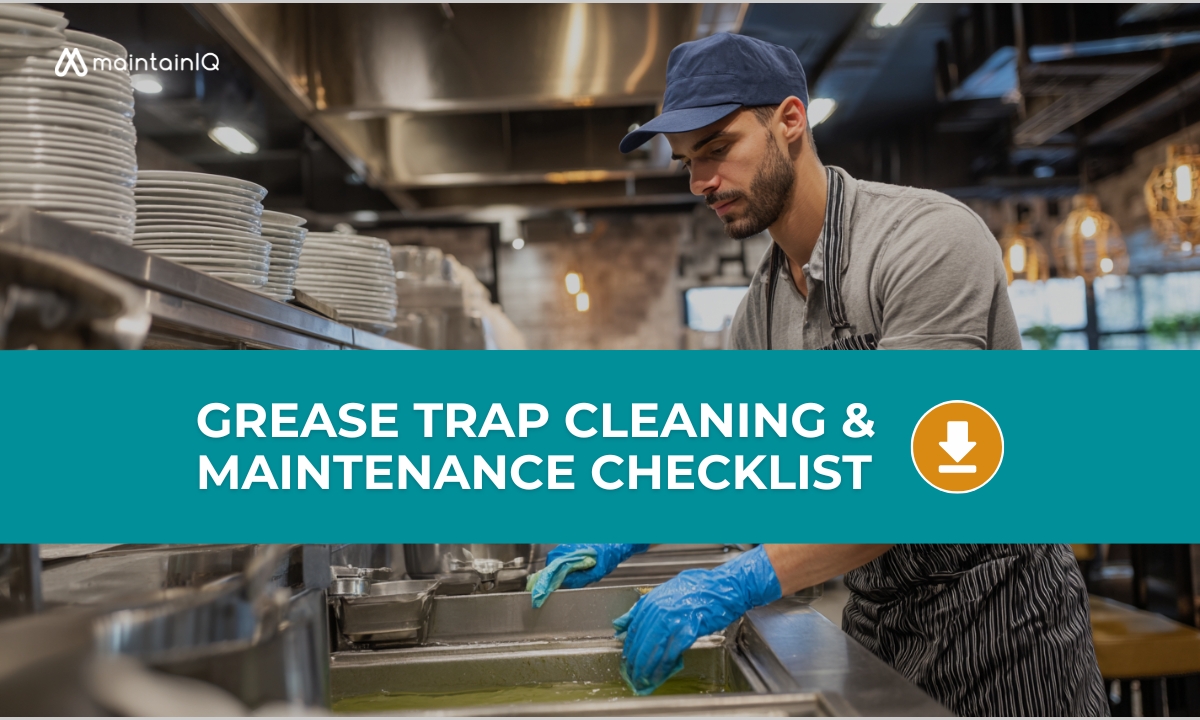
A neglected grease trap doesn’t just smell bad — it can shut your restaurant down. Clogged traps cause sewer backups, attract pests, and violate municipal FOG (fats, oils, and grease) ordinances that carry fines up to $15,000 per day in some jurisdictions.
That’s why we’ve created this comprehensive Grease Trap Cleaning & Maintenance Checklist — covering daily FOG prevention, weekly inspections, in-house cleaning procedures, professional pump-out requirements, and the documentation inspectors actually ask for.
Even better? You can digitize and automate this checklist with MaintainIQ, your all-in-one maintenance management platform.
What’s Inside This Checklist
Six pages of actionable tasks organized by frequency, so every member of your team knows exactly what to do:
- Daily FOG Prevention Tasks: Staff-level habits that keep grease out of the drain in the first place — plate scraping, oil disposal, drain strainer maintenance, and making sure nobody pours chemicals into the trap.
- Weekly Inspection Tasks: Quick visual checks of grease accumulation level, odors, lid condition, flow restrictor, and pipe connections to catch problems early.
- In-House Cleaning Procedure: Step-by-step instructions for cleaning the trap when FOG reaches 25% capacity — including PPE requirements, scooping technique, baffle removal, interior scrubbing, and proper waste disposal.
- Professional Pump-Out Service: What to expect and verify when your licensed grease hauler arrives — complete emptying (not just skimming), structural inspection, manifest handling, and hauler documentation.
- Quarterly / Seasonal Inspection: Deeper checks including FOG depth measurement with a dipstick, structural integrity, flow rate testing, and seasonal schedule adjustments for peak periods.
- Documentation & Compliance: Maintenance log requirements, hauler manifest retention (3–5 years), repair tracking, and what inspectors actually ask to see during a visit.
Why Grease Trap Maintenance Matters
- Avoid Sewer Backups: A grease trap that exceeds 25% capacity can no longer effectively separate FOG from wastewater. The result: grease escapes into your municipal sewer lines, causing blockages that get traced back to your business.
- Stay Compliant: Most U.S. municipalities require grease trap cleaning at least every 90 days. Inspectors check trap condition, FOG levels, and your maintenance records. Missing documentation is treated the same as missing maintenance.
- Prevent Fines: FOG violations carry serious penalties. Depending on your jurisdiction, fines range from $1,000 to $15,000+ per day. Repeat violations can result in forced closure or sewer line repair costs billed directly to your business.
- Protect Your Reputation: A backed-up grease trap creates foul odors, attracts pests, and can cause wastewater to flood your kitchen during service. One incident like this during a busy night can cost thousands in lost revenue and lasting reputation damage.
The 25% Rule
The industry standard for grease trap cleaning is the “25% rule”: when FOG and solids fill 25% of the trap’s total capacity, it’s time to clean. At this point, the trap can no longer effectively separate grease from wastewater, and FOG begins escaping into the sewer system.
How often you hit 25% depends on your kitchen’s volume and menu. As a general guide:
| Operation Type | Typical Cleaning Frequency |
| Fast food / high-volume frying | Every 2–4 weeks |
| Full-service restaurants | Every 4–6 weeks |
| Moderate-volume (cafes, diners) | Every 6–8 weeks |
| Low-volume (bakeries, coffee shops) | Monthly to quarterly |
| Large in-ground interceptors (500+ gal) | Every 90 days (per most local codes) |
Tip: Check your trap’s FOG level weekly for the first month to establish your kitchen’s unique fill rate. Then lock in a recurring schedule based on actual data, not guesswork.
How to Use This Checklist
- Post the daily page in the kitchen near the 3-compartment sink for staff accountability.
- Use the weekly inspection page during your manager walkthrough.
- Follow the in-house cleaning procedure step-by-step whenever the trap approaches 25% capacity.
- Hand the professional pump-out page to your grease hauler to verify they complete every step.
- Keep the documentation page in your compliance binder — it’s the first thing inspectors ask for.
- Or go digital with MaintainIQ and automate the entire process with reminders, task assignments, and audit trails.
Go Digital with MaintainIQ
A paper checklist is a great start — but digitizing your grease trap maintenance with MaintainIQ takes compliance to the next level:
- Customizable digital checklists tailored to your trap size and cleaning frequency.
- Automated reminders so daily, weekly, and pump-out tasks never get missed.
- Mobile-friendly logging with photos and notes — complete inspections from any device.
- Real-time progress tracking so managers can verify completion without being on-site.
- Centralized recordkeeping for audits, inspections, and insurance documentation.
Whether you manage one kitchen or dozens, MaintainIQ ensures consistency, compliance, and peace of mind. Download your free checklist today and pair it with MaintainIQ to automate, streamline, and simplify your grease trap maintenance program.