
Helpful Articles

Time as a Public Health Control, the 4 Hour and 6 Hour Rules Explained
Most of what is written about this online is a county health department PDF. Accurate, usually, but written for inspectors rather than for the person running a lunch service. Here is the operator version. What the rule actually permits, what has to be written down before you start, what has to be...

Xenia Alternatives, an Honest Look for Food Service Operators
We build MaintainIQ, which competes directly with Xenia. Weigh what follows accordingly. Xenia also publishes an article about alternatives to us, so you can read both and decide who is being straighter with you. Our attempt at that is to source every price from the vendor's own live pricing page...

Per Location Pricing vs Per User Pricing, Which Costs Multi-Unit Operators Less
Two software vendors quote you. One says $79 per location per month. The other says $24 per seat per month. The second number is smaller, so it looks cheaper. It usually is not, and the reason is arithmetic you can do in about ninety seconds. This article does that arithmetic with real published...
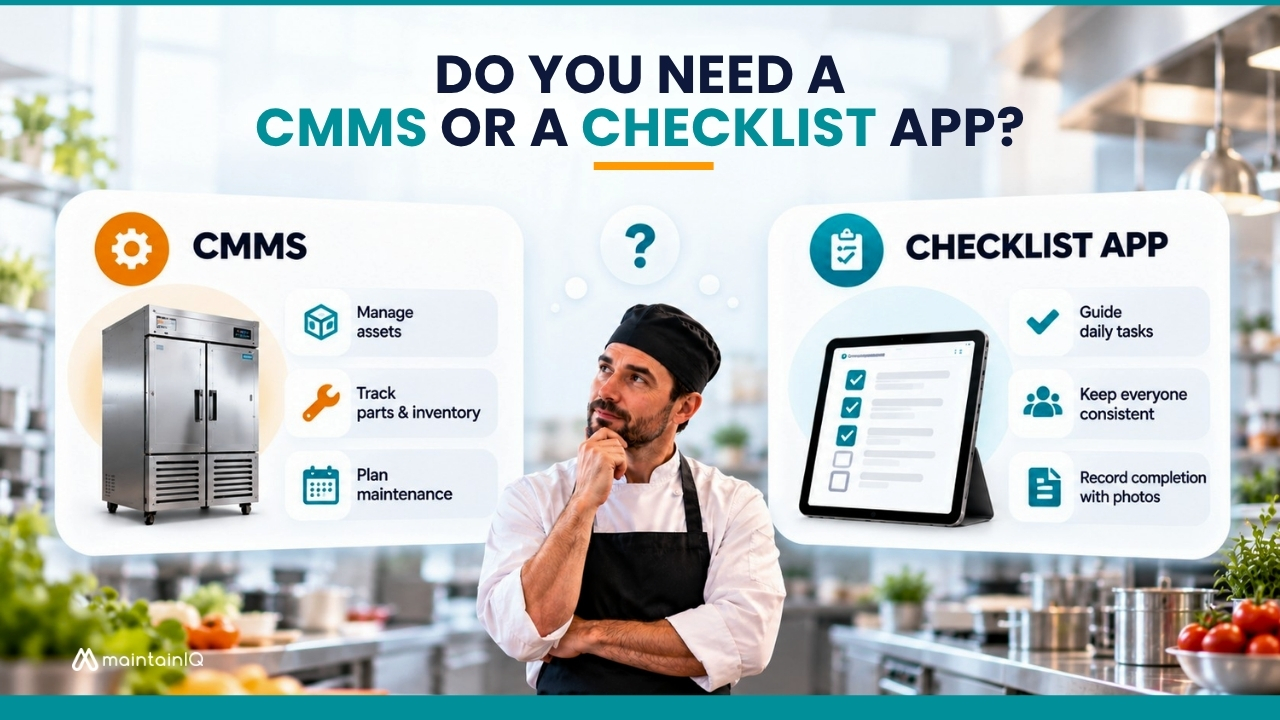
Do You Need a CMMS or a Checklist App
This question comes up constantly, and almost nobody answers it, because most of the people writing about it sell one or the other. We sell something that does both, which is its own kind of bias, so here is the version with our thumb off the scale. There is a section below on when you should buy...
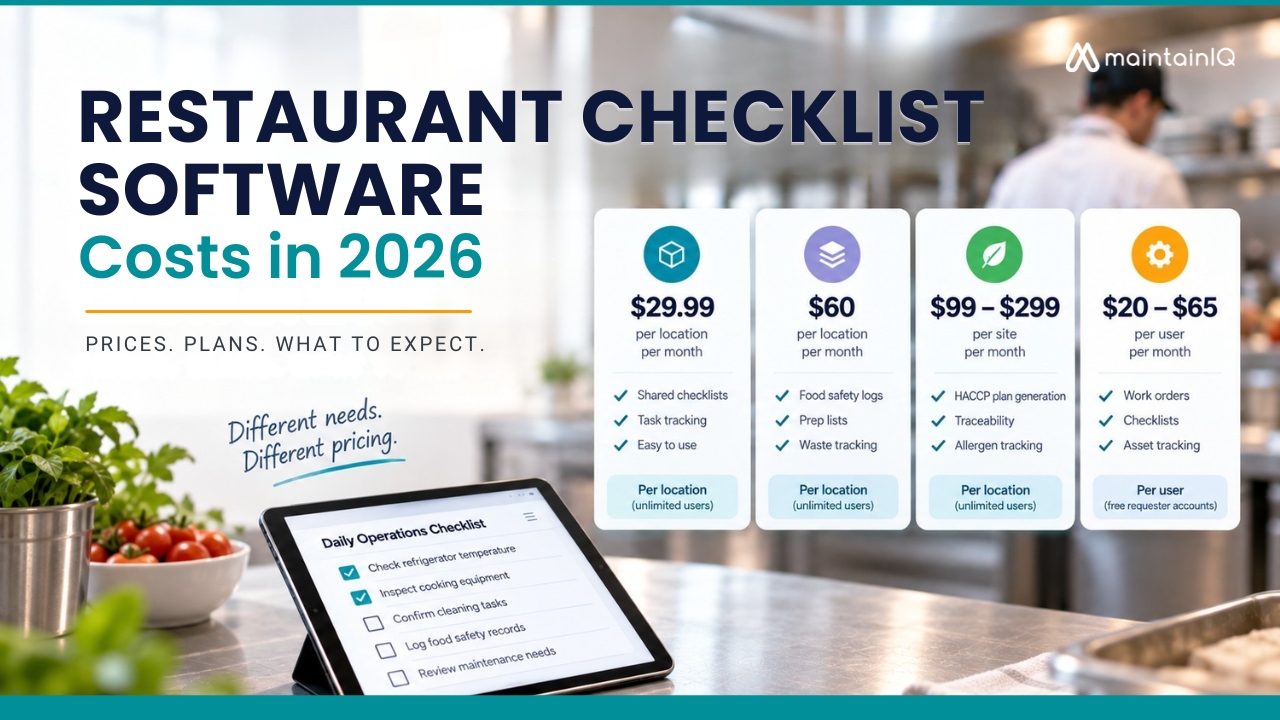
How Much Restaurant Checklist Software Costs in 2026
Search this question, and you mostly get articles about point-of-sale systems, which cost a completely different amount and solve a completely different problem. This is an attempt at the actual answer. We build MaintainIQ, one of the products listed below, so weigh this accordingly. Every figure...

How to Build a Preventive Maintenance Budget for Restaurants
Most restaurant maintenance budgets aren't built — they're discovered, one surprise invoice at a time. A fryer goes down in March, a walk-in compressor in July, a rooftop HVAC unit in the first heat wave of August. The bills arrive one at a time, each one handled as its own small emergency, and...
Jolt Alternatives, What Changed After the Digi Acquisition
We build MaintainIQ, which competes with Jolt. Weigh what follows accordingly. We have tried to be accurate rather than flattering. Every price below is either taken from the vendor's own live pricing page or marked as not published, and the section on what Jolt does well is not a courtesy; it is...

Recipe Management for Multi-Location Restaurants: Ensuring Consistency at Scale
A regular orders their favorite dish at your Dallas location on Monday and the same dish in Denver on Friday, and gets two noticeably different plates — bigger here, saltier there, plated another way entirely. That small gap is the multi-location problem in miniature, and it's more expensive than...
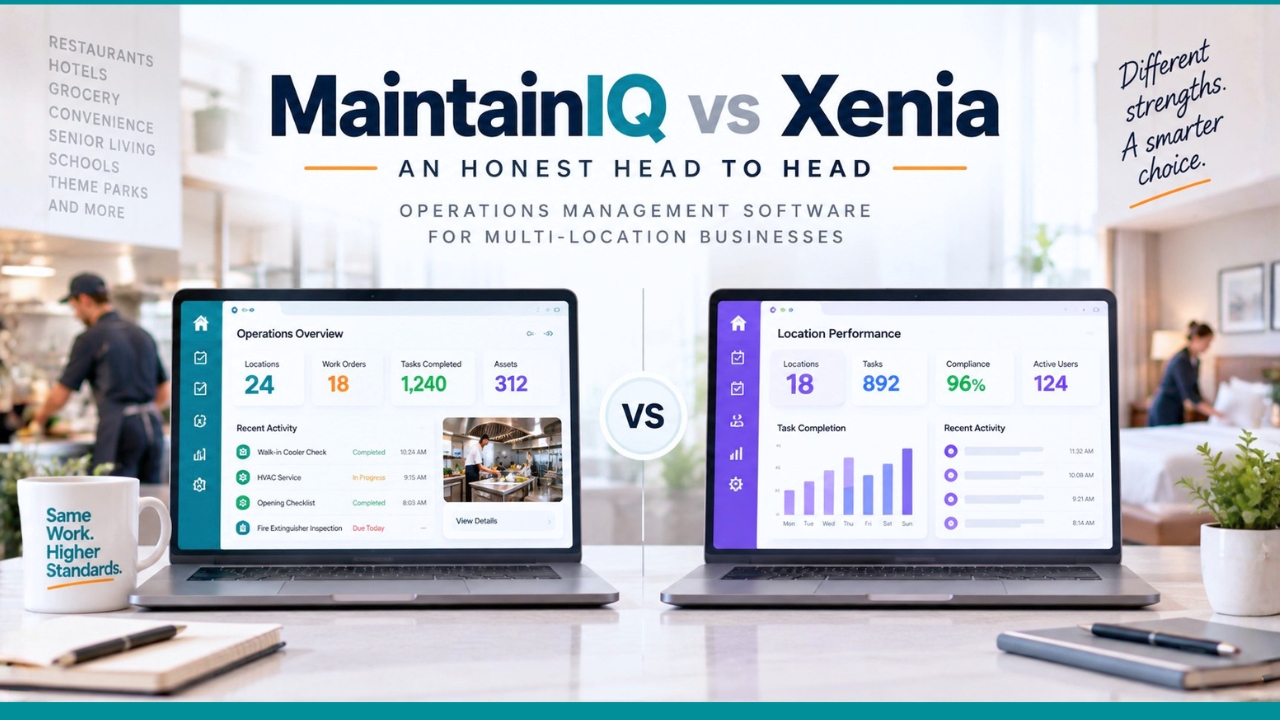
MaintainIQ vs Xenia, an Honest Head to Head
We build MaintainIQ. This is our comparison of ourselves against our closest competitor, so read it with that in mind and check anything that matters to you. We have tried to make it the comparison we would want if we were buying. Every claim about Xenia comes from Xenia's own public pages. Where...

MaintainIQ Alternatives, an Honest Comparison for 2026
We build MaintainIQ. Weigh what follows accordingly. Most pages ranking for this search are written by software companies who want the same thing we do, which is for you to buy their product instead. We are no different in motive. Where we have tried to be different is in method. Every price below...
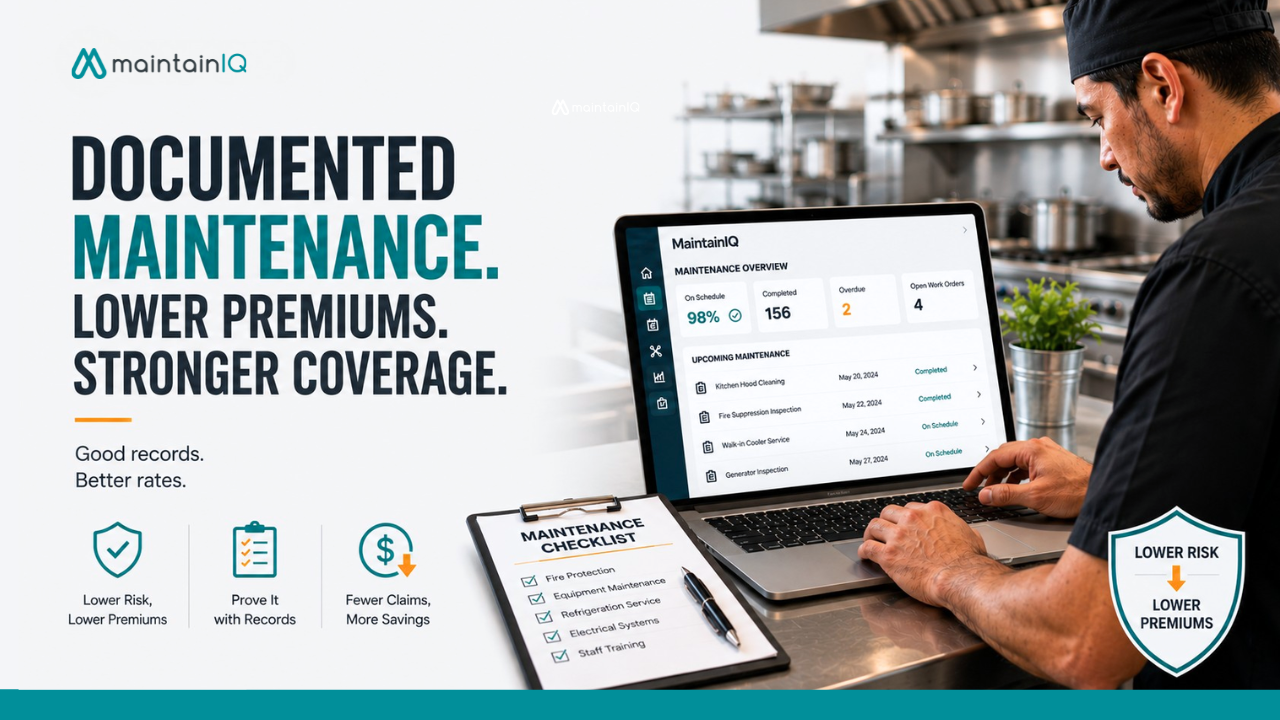
Restaurant Insurance Premiums: How Documented Maintenance Lowers Your Rates
Most operators file maintenance under one line item: repair and maintenance, the cost of keeping equipment running. But maintenance quietly shows up in a second, larger place on your P&L — your insurance. It affects the premium you pay every year, and it affects the size of the check your...

Prep List Automation: How to Cut Food Waste and Labor Costs in Your Kitchen
The prep list is the most overlooked document in the kitchen, and it quietly controls two of the three biggest costs you have. Prep too much, and tomorrow morning you're scraping product into the trash. Prep too little, and you're 86'ing items mid-rush, pulling cooks off the line to catch up, and...

How to Track Vendor Performance & Warranty Claims Without Spreadsheets
A walk-in cooler compressor fails at one of your locations. The service tech quotes $1,800 for the repair, and you approve it — the alternative is a night of spoiled inventory. Three weeks later, someone finds the original invoice in a filing cabinet: that unit was four years old, and the...
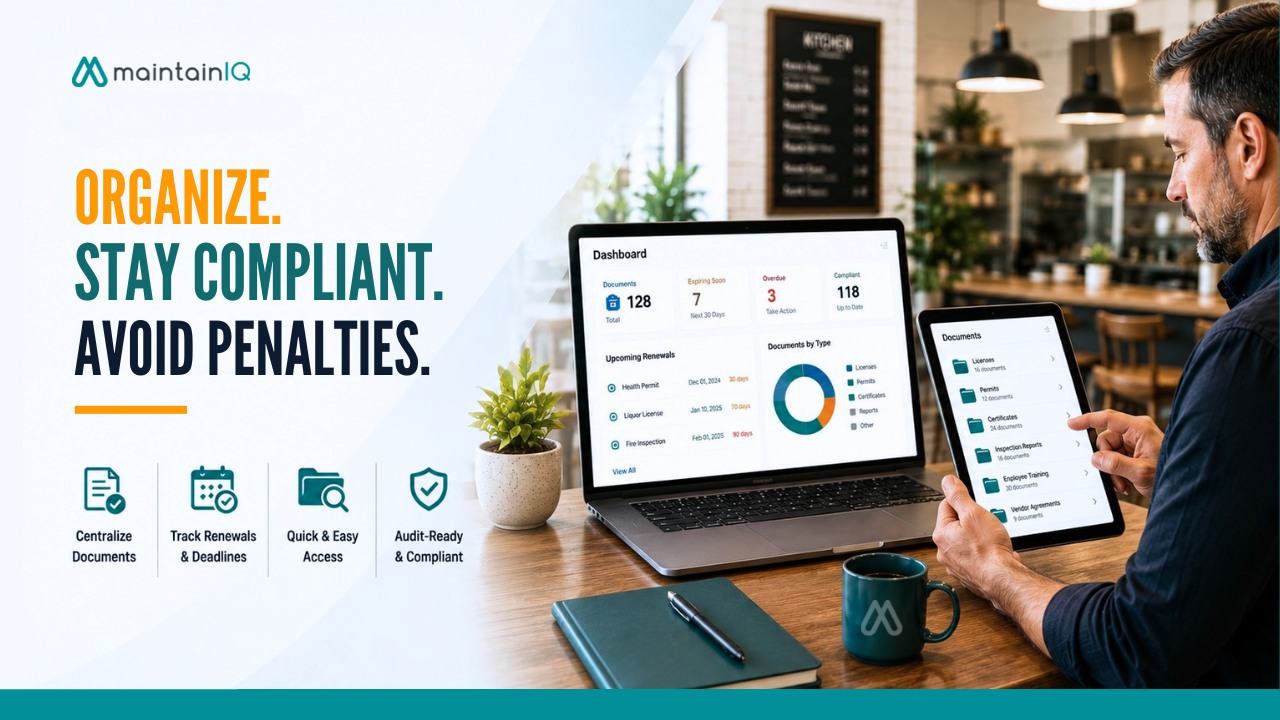
Document Management for Restaurants: Organizing Licenses, Permits & Compliance Records
Every restaurant runs on a stack of documents that most operators only think about when something goes wrong. The business license, the health permit, the liquor license, the certificate of occupancy, the food handler cards, the fire inspection certificate, the equipment warranties, the vendor...
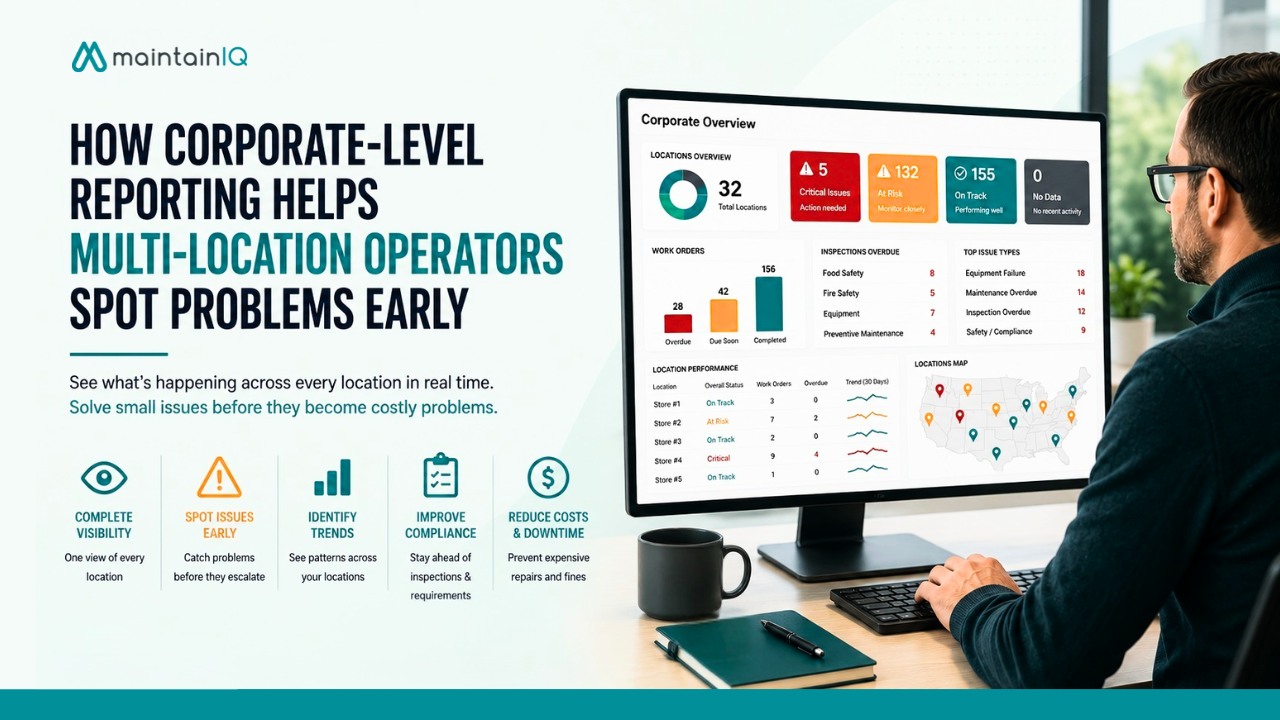
How Corporate-Level Reporting Helps Multi-Location Operators Spot Problems Early
The hardest part of running multiple locations isn’t managing any single one. It’s not being able to see them all at once. A district manager can be standing in Store #4 while Store #11’s walk-in cooler is slowly failing, Store #7 hasn’t completed a food safety checklist in three days, and Store...
