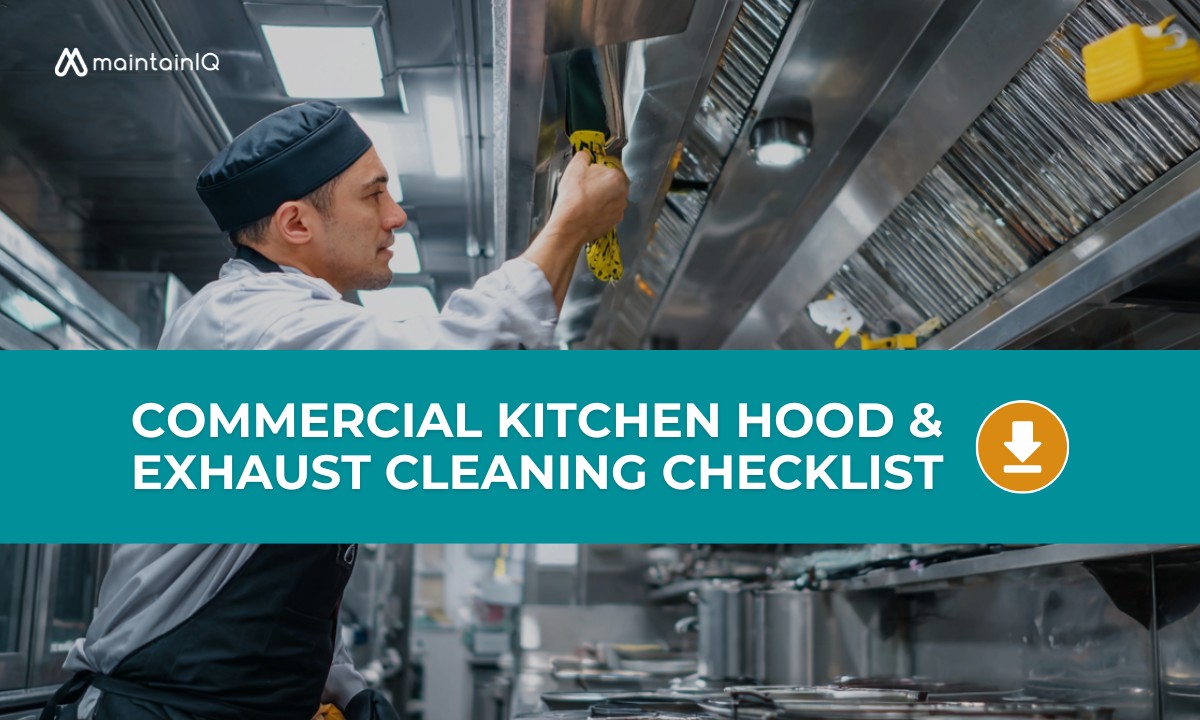
Grease buildup inside kitchen hoods and ductwork is the leading cause of commercial kitchen fires in the United States. According to the U.S. Fire Administration, cooking equipment is involved in over 60% of all restaurant fires — and dirty exhaust systems are a major contributor.
Regular hood cleaning isn’t just good practice — it’s required under NFPA 96, the national standard for ventilation control and fire protection in commercial kitchens. Failure to comply can result in fines, forced closure, or voided insurance coverage if a fire occurs.
That’s why we’ve created this comprehensive Commercial Kitchen Hood & Exhaust Cleaning Checklist — designed to help restaurant owners, kitchen managers, and facility teams stay organized, stay compliant, and prevent costly emergencies.
Even better? You can digitize and automate this checklist with MaintainIQ, your all-in-one maintenance management platform.
What’s Inside This Checklist
We’ve broken this checklist into clear, actionable sections so every member of your team — from line cooks to your professional hood cleaning vendor — knows exactly what to do and when.
Daily Cleaning Tasks (Staff)
Quick end-of-shift tasks your kitchen staff should complete every day to prevent grease buildup between deep cleanings.
- Wipe down hood exterior surfaces with a degreaser.
- Empty and clean grease drip cups and troughs.
- Check that all baffle filters are properly seated with no gaps.
- Wipe grease from the hood lip and exposed interior surfaces.
- Verify the exhaust fan is running during all cooking operations.
- Ensure the makeup air unit is operating and not blocked.
- Check the fire suppression system pull station is accessible.
Tip: MaintainIQ helps you set daily reminders and log findings instantly from any mobile device.
Weekly Deep Cleaning (Staff)
Deeper cleaning tasks that should be scheduled during slower service periods to keep grease from accumulating.
- Remove, soak, scrub, and rinse all baffle filters.
- Clean grease troughs and channels thoroughly.
- Wipe down all accessible interior hood surfaces.
- Inspect filters for damage, warping, or bent baffles.
- Clean hood lighting covers and verify all lights work.
- Check rooftop grease collection container (if accessible).
Monthly Inspection Tasks
Monthly tasks combine deeper cleaning with inspection of critical safety components. Some of these should only be performed by trained staff.
- Deep clean the entire hood canopy interior to bare metal.
- Inspect fire suppression system nozzles for grease blockage.
- Verify fire suppression system pressure gauge is in the green/normal range.
- Check fusible links for grease buildup (do NOT apply chemicals to links).
- Inspect rooftop grease containment system for overflow or damage.
- Review the hood cleaning log and confirm the next professional cleaning date.
Professional Cleaning (Per NFPA 96 Schedule)
This section covers the full professional cleaning scope required under NFPA 96. Hand this page directly to your hood cleaning vendor to ensure they hit every requirement.
- Disassemble all removable components: filters, grease cups, troughs, end caps.
- Pressure wash and scrape the hood canopy interior to bare metal.
- Access and clean all ductwork sections through access panels (every 12 ft per NFPA 96).
- Remove rooftop exhaust fan from duct opening and degrease to bare metal.
- Inspect exhaust fan belts, bearings, and condition.
- Clean rooftop grease containment system and drain.
- Inspect all duct joints and seams for gaps or deterioration.
- Reinstall all access panels. Place a dated NFPA 96 compliance sticker on the hood.
NFPA 96 Cleaning Frequency Reference
A quick-reference table showing exactly how often your exhaust system needs professional cleaning based on your cooking type and volume.
Documentation & Compliance
Everything you need to keep your records inspection-ready — from cleaning logs and professional certificates to what fire marshals actually ask to see during inspections.
Why Kitchen Hood Maintenance Matters
Fire Prevention
Grease is fuel. When it accumulates inside your hood, ductwork, and exhaust fan, a small kitchen flare-up can ignite the entire system. Regular cleaning removes this fuel before it becomes a hazard. Over 20% of restaurant fires originate from dirty hoods and ducts.
Health Code Compliance
Fire marshals and health inspectors routinely check hood systems and ask for cleaning records. If you can’t show documentation of regular cleaning by a certified company, you’re looking at a violation — and potentially a forced closure until the system is brought up to code.
Insurance Protection
If a grease fire occurs and you can’t prove NFPA 96 compliance, your insurance company may deny the claim entirely. A current compliance sticker on your hood and cleaning certificates on file are your proof.
Air Quality & Kitchen Comfort
A clogged exhaust system traps heat, smoke, and odors in your kitchen. This makes the work environment uncomfortable and unsafe for staff, and can affect food quality. A clean system keeps airflow strong and the kitchen cooler.
Cost Savings
A scheduled professional cleaning costs a fraction of what you’ll pay for an emergency duct cleaning, fire damage repair, or a shutdown. Preventive maintenance is always cheaper than reactive repair.
NFPA 96 Required Cleaning Schedule
Under NFPA 96 (Table 11.4), your kitchen exhaust system must be professionally cleaned at these minimum intervals based on your cooking type:
| Cooking Type | Minimum Cleaning Frequency |
| Solid fuel cooking (wood, charcoal, mesquite) | Monthly |
| High-volume (24-hour kitchens, charbroiling, wok cooking) | Quarterly |
| Moderate-volume (standard restaurants, casual dining) | Every 6 Months |
| Low-volume (churches, day camps, seasonal operations) | Annually |
Note: Your local fire authority (AHJ) may require more frequent cleaning based on your specific operation. These are minimum intervals only.
How to Use This Checklist
- Print and post the daily/weekly pages in the kitchen for staff accountability.
- Use the monthly inspection page during your manager walkthrough.
- Hand the professional cleaning page directly to your hood cleaning vendor — it ensures they hit every NFPA 96 requirement.
- Keep the documentation page in your compliance binder for fire marshal and health inspector visits.
- Or go fully digital with MaintainIQ — automate reminders, assign tasks to team members, and keep a complete audit trail.
Go Digital with MaintainIQ
A paper checklist is a great start — but digitizing your hood cleaning program with MaintainIQ takes your compliance and accountability to the next level:
- Customizable digital checklists tailored to your kitchen’s specific setup.
- Automated reminders so daily, weekly, and monthly tasks never get missed.
- Mobile-friendly logging with photos and notes — complete inspections from any device.
- Real-time progress tracking so managers can verify completion without being on-site.
- Centralized recordkeeping for audits, inspections, and insurance documentation.
Whether you manage one kitchen or dozens, MaintainIQ ensures consistency, compliance, and peace of mind.