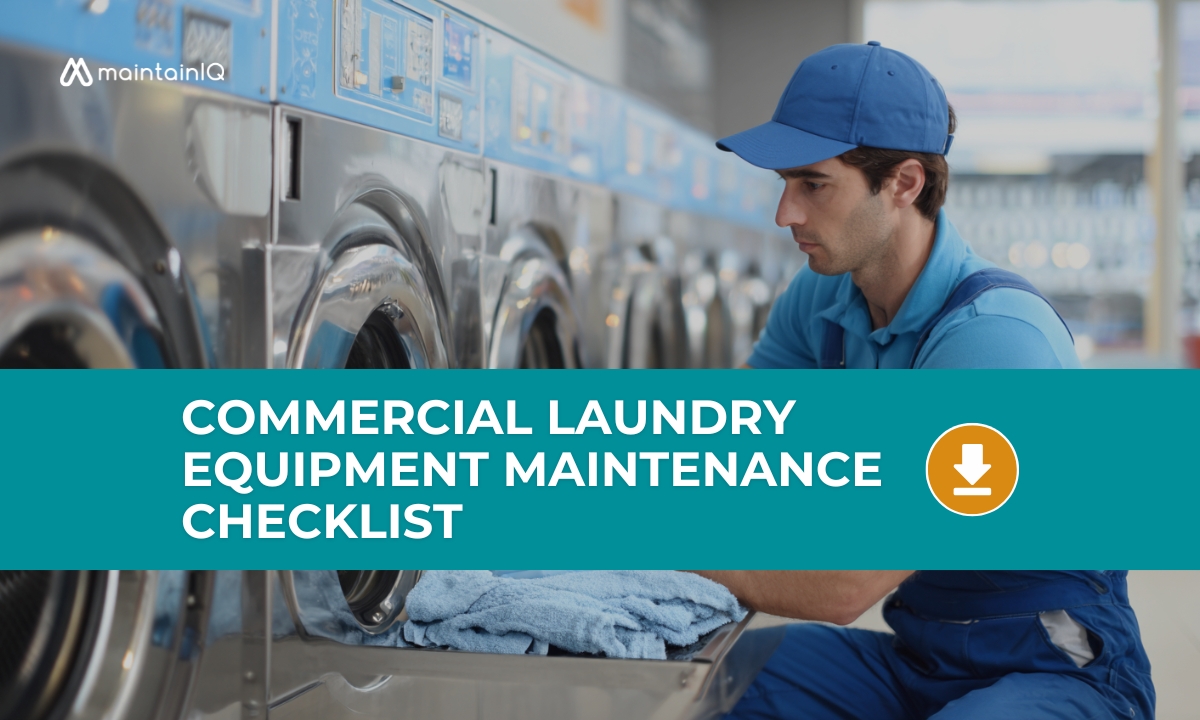
Lint buildup is the leading cause of dryer fires, and a burst inlet hose can flood an entire laundry room in minutes. Most commercial laundry equipment failures are preventable — caused by clogged lint ducts, worn belts, leaking hoses, or skipped cleaning cycles.
That’s why we’ve created this Commercial Laundry Equipment Maintenance Checklist — with separate pages for washers and dryers, covering daily operator tasks, weekly deep cleaning, monthly inspections, quarterly technician service, and the documentation you need for fire safety compliance and insurance.
Digitize and automate this checklist with MaintainIQ, your all-in-one maintenance management platform.
What’s Inside This Checklist
- Daily Washer Tasks: Drum inspection, dispenser check, door seal cleaning, leak check, cycle monitoring, exterior wipe-down, and end-of-day door-open protocol to prevent mold.
- Daily Dryer Tasks: Lint filter cleaning (the #1 fire prevention task), surrounding area inspection for flammable materials, drum check, door seal inspection, exhaust vent damper verification.
- Weekly Maintenance: Washer cleaning cycle, inlet hose inspection, drain check, dispenser deep clean. Dryer lint duct vacuuming, exterior vent hood clearing, moisture sensor cleaning, machine leveling.
- Monthly Inspection: Belt and pulley check, water inlet valve filter, shock absorbers, burner/heating element area cleaning, electrical cords, gas leak check, and log update.
- Quarterly / Semi-Annual Technician Service: Full technician inspection, belt replacement, pump/motor check, exhaust duct cleaning (full run), drum roller and bearing inspection, sensor calibration.
- Annual Professional Service: Hose replacement (every 3–5 years), deep drum cleaning, gasket replacement, internal cabinet cleaning, fire suppression test, and end-of-life assessment.
- Documentation & Compliance: Per-machine maintenance logs, technician reports, lint/duct cleaning records, error code tracking, and hose replacement scheduling.
Why Laundry Equipment Maintenance Matters
- Fire Prevention: Dryer lint is highly flammable. Clogged lint filters, ducts, and exhaust vents are the leading cause of commercial dryer fires. Daily lint cleaning and quarterly duct service are non-negotiable.
- Prevent Flooding: Inlet hoses deteriorate from the inside out — they can look fine externally and fail suddenly. A burst hose in an unattended laundry room can cause thousands in water damage. Replace hoses every 3–5 years.
- Equipment Life: Commercial washers and dryers last 10–15 years with proper care. Neglected machines fail years earlier, and replacements cost $3,000–$20,000+ per unit.
- Energy Efficiency: A dryer with a clogged lint system runs longer cycles, uses more gas or electricity, and produces more heat. Clean machines dry faster and cost less to operate.
- Customer Satisfaction: Machines that smell, leave residue on clothes, or take too long to dry drive customers away. Routine maintenance keeps performance consistent and complaints low.
How to Use This Checklist
- Post the daily washer and dryer pages in the laundry room for staff accountability.
- Use the weekly and monthly pages during manager walkthroughs.
- Hand the quarterly and annual pages to your equipment technician as a service verification tool.
- Keep the documentation page with your maintenance binder for insurance and fire safety records.
- Or go digital with MaintainIQ — automate reminders per machine, track lint cleaning dates, and maintain a complete audit trail.
Go Digital with MaintainIQ
A paper checklist is a great start. Digitizing your laundry maintenance with MaintainIQ takes it further — automated reminders per machine, lint cleaning tracking, mobile logging, and centralized records for fire safety compliance and insurance. Whether you manage a hotel laundry room, laundromat, or multi-site operation, MaintainIQ ensures consistency, compliance, and peace of mind.