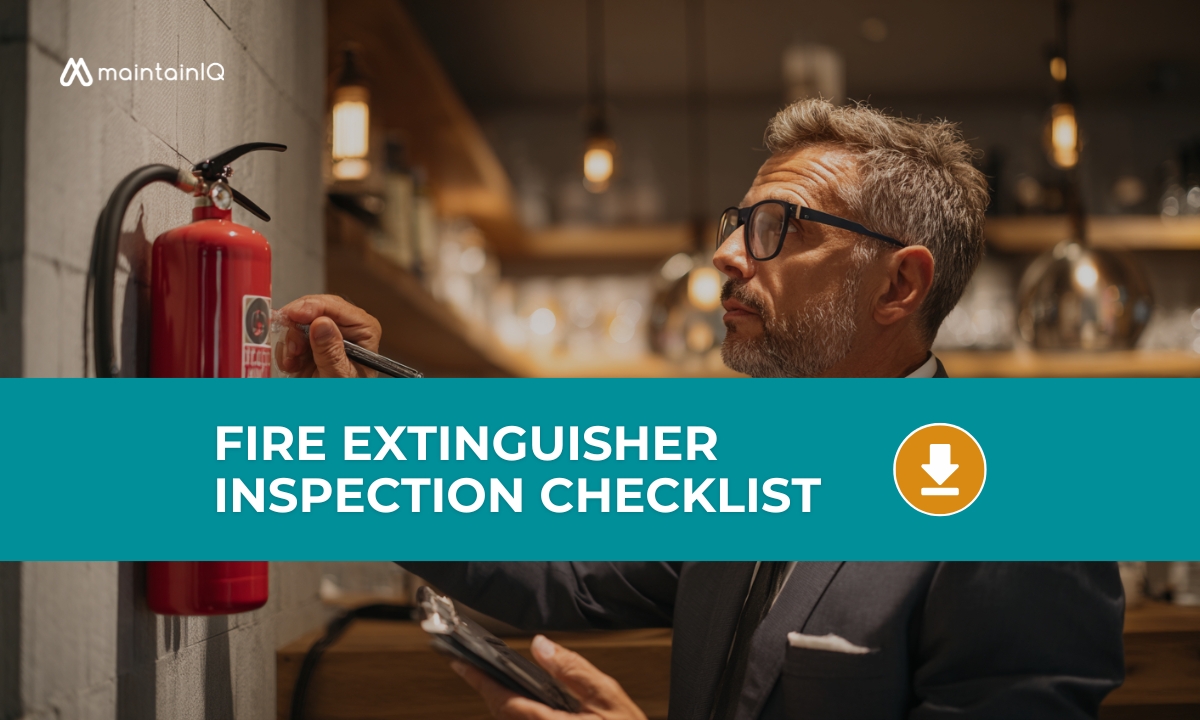
A fire extinguisher that doesn’t work when you need it is worse than having none at all — it gives a false sense of safety. Under NFPA 10 and OSHA 29 CFR 1910.157, building owners are required to inspect, maintain, and document every portable fire extinguisher on their property.
That’s why we’ve created this Fire Extinguisher Inspection Checklist — covering monthly visual inspections, annual professional maintenance, 6-year internal exams, hydrostatic testing, placement audits, and the documentation fire marshals actually ask for.
Digitize and automate this checklist with MaintainIQ, your all-in-one maintenance management platform.
What’s Inside This Checklist
- Monthly Visual Inspection: 12-month tracking grid for pressure gauge, tamper seal, physical condition, hose/nozzle, weight check, powder compaction prevention, and tag signing. Performed by building staff.
- Annual Professional Maintenance: Certified technician tasks include full external exam, mechanism testing, agent condition, recharging, new tamper seals, and service tags.
- 6-Year Internal Examination: Required for stored-pressure dry chemical units. Discharge, disassemble, inspect cylinder interior, replace worn parts, recharge, and install verification collar.
- Hydrostatic Testing: Pressure test intervals by extinguisher type (5-year or 12-year). Failed cylinders must be destroyed and replaced.
- Placement & Compliance Audit: 75-foot travel distance, correct class per hazard, Class K in kitchens, mounting height, signage, temperature range, and staff PASS method training verification.
- Documentation & Compliance: Master inventory, inspection tags, service reports, training records, and NFPA 10 owner responsibility requirements.
Why Fire Extinguisher Inspections Matter
- Life Safety: Portable fire extinguishers are often the first line of defense in a fire. A non-functional extinguisher during the critical first minutes can mean the difference between a contained incident and a catastrophe.
- Compliance: NFPA 10 and OSHA require monthly visual inspections, annual professional maintenance, and periodic testing. Fire marshals check for current tags, proper placement, and documentation during routine inspections.
- Insurance: Fire insurance policies typically require proof of extinguisher maintenance. Missing records or expired service tags can lead to denied claims after a fire.
- Liability: Building owners are personally responsible for extinguisher maintenance per NFPA 10 Section 7.1.1. Documented inspections are your defense in litigation.
NFPA 10 Required Maintenance Schedule
| Service Type | Frequency | Performed By |
| Visual inspection | Monthly (every 30 days) | Building staff |
| Professional maintenance | Annually | Certified technician |
| Internal examination (dry chemical) | Every 6 years | Certified technician |
| Hydrostatic test (CO2, wet chemical) | Every 5 years | Approved test facility |
| Hydrostatic test (dry chem, water, foam) | Every 12 years | Approved test facility |
How to Use This Checklist
- Use the monthly page year-round. Inspect every extinguisher on the same day each month for consistency.
- Hand the annual, 6-year, and hydrostatic pages to your fire protection company as verification tools.
- Conduct the placement audit annually or whenever your building layout changes.
- Keep the documentation page in your fire safety binder for fire marshal and insurance reviews.
- Or go digital with MaintainIQ — automate reminders, track every unit by serial number, and maintain a complete audit trail.
Go Digital with MaintainIQ
A paper checklist is a great start. Digitizing your fire extinguisher program with MaintainIQ takes it further — automated monthly reminders, mobile inspection logging, serial number tracking, and centralized records for fire marshal visits and insurance audits. Whether you manage one building or a portfolio, MaintainIQ ensures consistency, compliance, and peace of mind.