Restaurant Health Code Violations, What You Need to Know
Learn the common health code violations restaurants receive and why. Get tips on spotting issues and how violations affect food safety.
Key takeaways
- Hold cold food at 41°F or below and hot food at 135°F or above, and check both with a calibrated thermometer every shift.
- Store raw meat on the bottom shelf, keep chemicals in labeled containers away from food and rotate stock so older items go first.
- Critical violations like unsafe temperatures or poor handwashing need fixing on the spot, while non-critical ones can follow soon after.
- Train staff regularly on handwashing, food storage, allergens and cross-contamination, and recheck those habits in your own audits.
On this page
The most common restaurant health code violations are food held at the wrong temperature, improper food storage, poor staff hygiene, cross-contamination, unsafe chemical storage, facility and pest problems, and gaps in staff training. A health code violation can mean fines, a lower inspection grade, lost customers and, for serious or repeated problems, a temporary closure.
The good news is that most violations are preventable. Daily checks, trained staff and a habit of fixing small problems right away keep your kitchen safe and your inspection results strong. This guide covers why violations matter, the eight areas where restaurants most often slip, what inspectors look for and how to stay ahead of them.
Why Health Code Violations Matter
Health code violations put public safety and your restaurant’s reputation at risk.
Ignoring food safety standards can lead to fines and lost customer trust.
Those fines, along with the cost of fixing the problem, can eat into your profit.
That is why following health codes is a basic part of running a successful restaurant.
Impact on Business Reputation
Never underestimate how much a health code violation can hurt your restaurant’s standing. Even a small violation can quickly undo years of work building customer trust and loyalty.
The effects reach far:
- Customer satisfaction: Guests expect a clean restaurant. Violations can drive them away and cut revenue.
- Legal consequences: Fines add up, especially for repeat violations, and can threaten the business.
- Brand image: Inspection results are often public, and bad news travels fast. Rebuilding a damaged reputation takes time.
- Customer loyalty: Once trust is broken, it is hard to win back.
Losing customers and money is not the only risk. Serious or repeated violations can lead to a closure order until the problem is fixed.
Above all, this is not only a business concern. It is a matter of public health and safety, which we cover next.
Public Health and Safety at Stake
Health code violations caused by poor food handling and storage put diners at risk of foodborne illnesses.
Health codes exist to protect the public from these hazards by setting clear rules for preventing contamination.
Ignoring these rules breaks a restaurant’s basic duty to protect the people it serves.
Strict compliance with food safety rules is the only way to avoid putting guests at needless risk.
Financial Implications and Penalties
Failing to follow food safety rules can cost a restaurant far more than a fine. Disruptions, repeat inspections and closures all hit the bottom line, and many of the hidden costs of a failed health inspection do not show up until later.
The financial impact can include:
- Fines, which vary by city and state and usually grow with repeat violations.
- The cost of the repairs and changes needed to meet health standards.
- Lost customer confidence and loyalty, which reduces future sales.
- A temporary closure if the violations are serious enough.
Keeping the restaurant clean and safe avoids penalties, protects your guests and keeps the business financially stable.
Diving Deep: Common Health Violations in Restaurants
Knowing the most common health violations is key to running a safe restaurant.
Monitoring time and temperature, storing food properly and handling chemicals safely all protect the health of your employees and guests. Here is a quick overview before we go through each one:
| Violation | What inspectors look for | Daily habit that prevents it |
|---|---|---|
| Time and temperature control | Cold food above 41°F, hot food below 135°F, slow cooling | Temperature checks at set times, logged every shift |
| Improper food storage | Raw meat above ready-to-eat food, open or unlabeled containers | Correct shelf order, sealed and dated containers, stock rotation |
| Poor personal hygiene | Missed handwashing, bare-hand contact with ready-to-eat food, dirty uniforms | Handwashing reminders, glove use, a clean uniform policy |
| Cross-contamination | Shared cutting boards, unwashed tools between tasks | Separate boards and tools, cleaning between tasks |
| Unsafe chemical use and storage | Chemicals near or above food, unlabeled spray bottles | Separate chemical storage, labeled containers |
| Facility maintenance | Pests, leaks, broken equipment, damaged surfaces | Regular walk-throughs and quick repairs |
| Gaps in employee training | Staff who cannot explain basic food safety rules | Regular training and refreshers |
| Illness and sanitation protocols | Sick staff at work, dirty high-touch surfaces | A clear illness policy and a cleaning schedule |
1. Time and Temperature Control
Good time and temperature control stops bacteria from growing in food. Without regular temperature checks, your restaurant could become a source of foodborne illness.
The FDA Food Code, which most US health departments base their rules on, sets these limits:
- Hot holding: keep food at an internal temperature of 135°F (57°C) or above.
- Cold holding: keep food at 41°F (5°C) or below.
- Cooling: bring cooked food from 135°F to 70°F within 2 hours, then to 41°F within the next 4 hours.
- Use a calibrated thermometer for regular temperature checks, and record every reading.
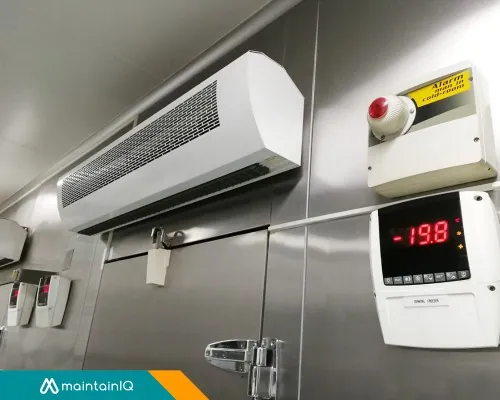
A few degrees can be the difference between safe food and a health risk. A digital temperature log makes it easy to see who checked each unit and when, and to spot a cooler that is starting to drift.
Next, let’s look at another common but often overlooked area: improper food storage.
2. Improper Food Storage
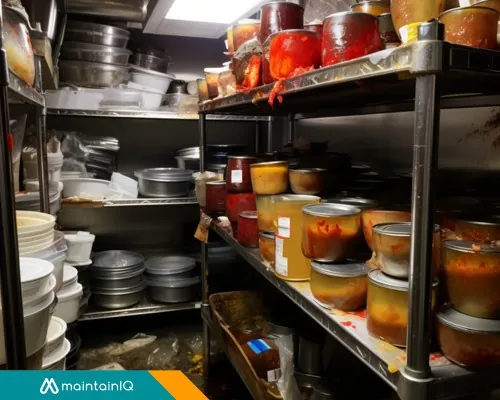
Improper food storage raises the chance of cross-contamination, which can lead to serious illness.
- Store raw meat on the bottom shelf of the refrigerator so juices cannot drip onto other foods.
- Use separate cutting boards for different food types and clean them thoroughly after each use.
- Seal all containers, check expiration dates regularly and rotate stock so older products are used first.
Good storage practices are not just about passing an inspection; they protect your guests’ health.
3. Poor Personal Hygiene among Staff
Poor personal hygiene among staff can spread foodborne illness, so clear hygiene rules that everyone follows are essential.
- Handwashing: Your team should wash their hands thoroughly and often, for at least 20 seconds in total, especially after using the restroom and before preparing food.
- Uniforms: Staff should always wear clean uniforms at work.
- Contact with food: Use gloves or utensils when needed, and avoid touching ready-to-eat food with bare hands.
- Personal cleanliness: Hair, nails and facial hair should be clean and kept in check.
Sick employees are part of this too. The FDA Employee Health and Personal Hygiene Handbook explains which symptoms workers must report and when they need to stay away from food.
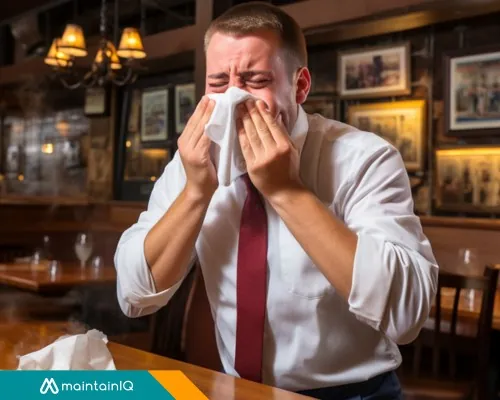
These rules are not only about passing inspections; they protect your guests.
Now let’s turn to another key area of food safety: cross-contamination.
4. Issues of Cross-Contamination
Cross-contamination spreads harmful bacteria from one food or surface to another. Strict food handling and cleaning habits prevent it.
- Always wash your hands after handling different foods, especially raw meat.
- Clean and sanitize cutting boards, knives and utensils between tasks.
- Train employees to prevent cross-contamination. It helps you meet health regulations, keep customer trust and protect your restaurant’s reputation.
5. Unsafe Chemical Use and Storage
Restaurant owners need to store and handle cleaning chemicals properly, because mistakes here can contaminate food.
Build these steps into your routine:
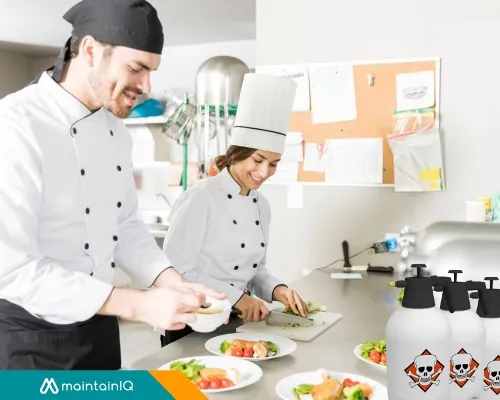
- Never store chemicals next to or above food.
- Keep chemicals in labeled containers.
- Train staff on what to do if a chemical spills or leaks.
- Check your storage areas regularly for leaks or containers in the wrong place.
These steps help you avoid penalties and protect the health and safety of your customers and employees.
6. Facility Maintenance Concerns
Keeping the building and equipment clean and in good repair is essential for food safety.
Regular equipment and facility maintenance helps keep harmful bacteria away from food.
Pest control is a major concern, because insects and rodents carry disease and are a common reason for health code violations. Seal gaps, keep doors closed, take trash out often and have a licensed pest control company visit on a regular schedule.
Fix plumbing issues and structural damage quickly to prevent unsanitary conditions and accidents.
Staying on top of these areas protects your restaurant’s reputation and your customers’ health and safety.
7. The Gap in Employee Training
Without proper training, your team may not know how to handle food safely or understand why certain rules matter. That gap can lead to serious health code violations.
Make employee training a priority for food safety and for meeting health regulations. Focus on these basics:
- Understanding and applying cleaning standards.
- Correct procedures for storing and handling food.
- Controlling allergens.
- Recognizing cross-contamination risks.

Training staff on safety rules keeps you compliant and protects your reputation. Keep training up to date as rules and menus change.
8. Adhering to COVID-19 Protocols
Most pandemic-era emergency rules have ended, but several habits from that time are still worth keeping, and some local rules may still apply. Check with your health department if you are unsure. Menus built around dishes that travel well for takeout and delivery are one lasting change.
- Keep ventilation systems working well so fresh air moves through the dining room and kitchen.
- Tell customers clearly about any changes to service or safety measures, which helps keep their trust.
- Train staff on sanitizing methods and standard food safety procedures, and keep cleaning high-touch surfaces on a set schedule.
With these basics in place, you are ready for the next step: understanding health inspections and what inspectors expect today.
Health Inspections: What to Expect
To prepare for health inspections, it helps to understand the inspector’s role and point of view. Knowing the difference between critical and non-critical violations also shows you which problems matter most.
The Role and Perspective of a Health Inspector
Health inspectors are not there to nitpick; their job is to protect public health. From their side, an inspection includes:
- A full review of sanitation and food handling practices.
- Spotting possible health code violations.
- Enforcing the code with fines or closure orders when necessary.
- Follow-up inspections to confirm problems were fixed.
Inspectors focus on public health, and many will explain how to fix a problem rather than simply write it up.
Now let’s look at the difference between critical and non-critical violations.
Differentiating Critical from Non-Critical Violations
The difference comes down to risk. Critical violations, like food held at the wrong temperature or poor employee hygiene, pose a direct threat to public health and need to be fixed right away. Left alone, they can lead to a closure.
Non-critical violations, such as minor structural issues or areas that need cleaning, show weak practices but do not pose an immediate health risk. They still need fixing, usually by the next inspection. The FDA Food Code uses the terms priority, priority foundation and core items for these levels, and many health departments still say critical and non-critical.
| Critical violations | Non-critical violations | |
|---|---|---|
| Risk | Can directly cause foodborne illness | Weak practice, no immediate health risk |
| Examples | Unsafe holding temperatures, no handwashing, sick staff handling food | Worn flooring, a dirty storage area, a missing light shield |
| What to do | Fix on the spot, for example discard or reheat food | Fix by the date the inspector gives you |
Knowing how serious each violation is helps you decide which fixes come first and stay in line with health regulations.
Next, let’s cover proactive ways to avoid the most frequent violations.
Proactive Measures: Avoiding Common Violations
As the owner, you are responsible for your restaurant’s health ratings, and a few proactive habits help you stay ahead.
Utilizing Online Resources for Better Ratings
Online resources can help you improve your health inspection results.
Customer feedback and published inspection reports show you where cleanliness and daily practices need work.
Consider these online resources:
- Customer review sites: Look for comments about cleanliness in your restaurant.
- Online forums: Pick up tips from other owners who have improved their ratings.
- Government websites: Read official inspection reports to compare and benchmark.
- Webinars on food safety: Learn new ways to keep sanitation standards high.
Engaging in Regular Health Department Check-ins
Staying in touch with your local health department keeps you up to date on rules and guidance. It also builds a working relationship, so it is easier to raise questions before they become problems.
What you learn from these conversations can prevent violations and keep food safety standards high. Think of it as a partnership that protects your customers and your business.
Training Programs and Workshops for Staff
Investing in training programs for staff on food safety builds their skills, prevents violations and keeps people engaged in doing things right.
Focus on these areas:
- Safe food handling.
- The consequences of cross-contamination.
- Proper cleaning and sanitizing of equipment.
- Why personal hygiene matters and how to practice it.
A well-trained team is your first line of defense against health code violations. Time spent on ongoing training protects both your guests and your business.
In Conclusion: Upholding the Trust of Your Patrons
Following health codes builds customer trust, helps you avoid penalties and supports a growing business.
Keep your standards high every day, not just before an inspection. That is what keeps customers happy, fines away and your restaurant’s future secure.
If you want to catch these problems before an inspector does, MaintainIQ, a checklist and maintenance app, puts temperature logs, cleaning checklists and internal audits on a phone or tablet. Failed items can create follow-up tasks, audits are scored by section, and you can see each location’s last health inspection date and score in one place, which helps you keep every location inspection-ready.