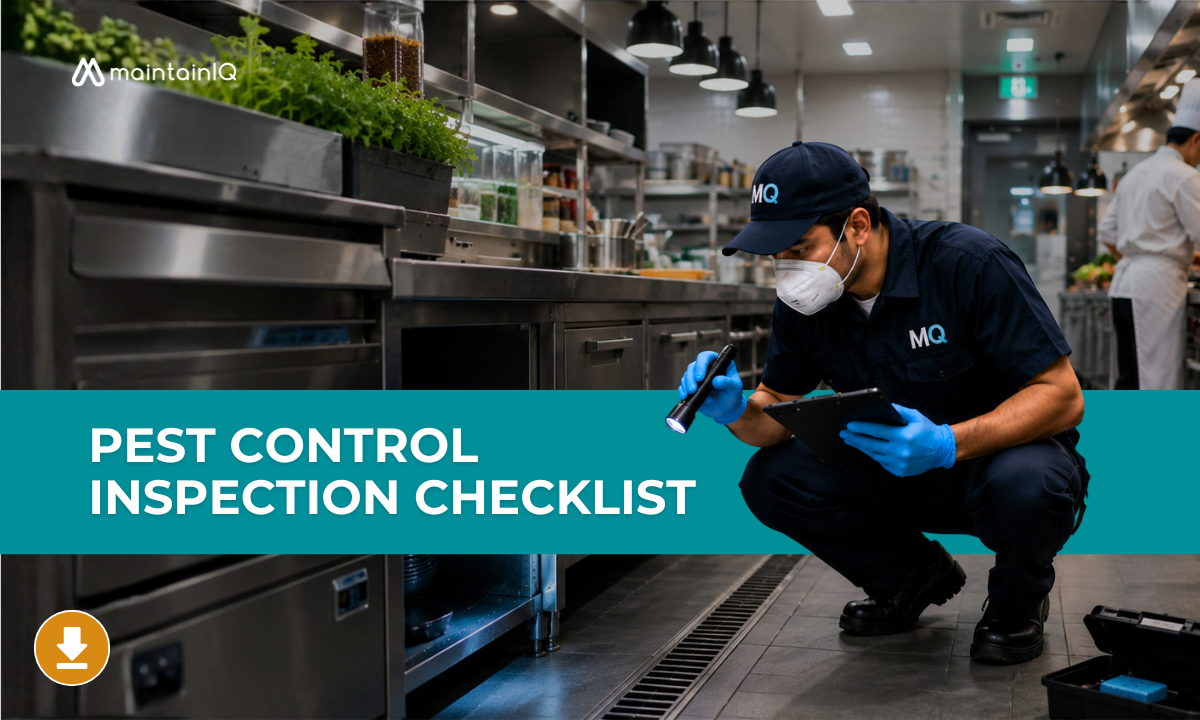
Your pest control provider visits monthly or quarterly. Your staff walks the building every day. Between those professional visits, it’s your team that spots the droppings under the prep table, the gap under the dock door, or the drain flies hovering in the restroom. The difference between a minor issue and a full infestation is how quickly it gets reported and addressed.
That’s why we built this Pest Control Inspection Checklist — not for your exterminator, but for your facility team. It covers interior and exterior inspections your staff performs between service visits, quarterly exclusion audits, sanitation practices that eliminate what pests need to survive, and how to hold your pest provider accountable for results.
Digitize and automate this checklist with MaintainIQ, your all-in-one maintenance management platform.
What’s Inside This Checklist
- Monthly Interior Inspection: Room-by-room pest evidence check (droppings, gnaw marks, cockroach signs, drain flies, ants, stored-product insects), bait station/trap monitoring, and same-day reporting protocol — 12-month tracking grid.
- Monthly Exterior Inspection: Building perimeter gap audit (¼ inch = mice, ½ inch = rats), door/weather stripping, dock doors, window screens, vent covers, dumpster area, standing water, vegetation, exterior bait stations, and bird nesting — 12-month tracking grid.
- Quarterly Exclusion & Structural Audit: Full building envelope walk with pest provider, pipe/conduit sealing, floor-to-wall junctions, roof openings, self-closing doors, ceiling voids, and 7-day repair scheduling for critical gaps.
- Sanitation & Storage Practices: Food storage (6 inches off floor, sealed containers, FIFO), trash handling (foot-pedal lids, emptied before overflowing), grease trap records, floor drain cleaning, break room compliance, and pest reporting procedure training.
- Pest Provider Service Verification: License verification, IPM approach confirmation, written report review, bait station labeling, SDS documentation, service frequency for your facility type, recurring issue escalation, and trap replacement schedule.
- Documentation & Compliance: Pest sighting log, service reports binder, license/insurance/SDS files, exclusion repair records, sanitation actions, bait station map, trend tracking, and retention per health department requirements.
Why Pest Control Inspections Matter
- Health Code Compliance: Health inspectors check pest control records at every visit. Droppings, live insects, or missing documentation result in violations that can lead to closure. In food service, pest-related violations are among the most heavily weighted.
- Early Detection: A single rodent sighting means more are hidden. A few cockroaches on a sticky trap means dozens in the walls. Monthly inspections by your team catch problems between provider visits — when they’re still small and containable.
- Exclusion Over Chemicals: Sealing a gap costs a few dollars and lasts permanently. Spraying for pests that keep re-entering through the same opening is expensive and ineffective. Quarterly exclusion audits reduce chemical reliance and address root causes.
- Reputation: One pest sighting by a customer can generate an online review that costs you far more than any treatment program. Consistent inspections and fast response prevent that moment from happening.
How to Use This Checklist
- Assign the monthly interior and exterior pages to your maintenance or management team.
- Walk the building quarterly with your pest control provider for the exclusion audit.
- Review the sanitation page during manager walkthroughs.
- Use the provider verification page to hold your vendor accountable for results, not just visits.
- Or go digital with MaintainIQ — log sightings instantly, track trends by location, and keep inspection-ready pest control records.
Go Digital with MaintainIQ
Paper pest logs get lost, sightings go unreported, and by the time your provider visits next month the problem has spread. MaintainIQ replaces all of that with instant pest sighting logging from any device, automated inspection scheduling, trend tracking by location, and centralized records that are ready when a health inspector asks for your pest control binder. Whether you manage one facility or dozens, MaintainIQ keeps your pest program organized, documented, and inspection-ready.