Fast-growing companies are cutting ramp-up time in half. The secret? Digital onboarding.
If you’re still using paper forms and manual checklists, you’re falling behind. New hires miss key training. Managers waste time chasing documents.
A structured, automated onboarding process fixes that. It gets employees productive faster.
Table of Contents
The True Cost of Poor Employee Onboarding
When you fail to implement structured onboarding processes, you’re setting new hires up for failure before they’ve even started contributing meaningful work.

Poor onboarding directly correlates with decreased productivity in those critical first 90 days, as employees struggle to understand their roles, navigate company systems, and build essential relationships.
You’ll face the costly reality of early turnover when frustrated new hires leave within their first year, forcing you to restart the entire recruitment and training cycle.
Lost Productivity and Early Turnover
Your new hires face a critical window during their first 90 days that directly determines whether they’ll become productive team members or costly departures.
Poor onboarding creates a cascade of hidden expenses through inconsistent training protocols that leave employees unprepared and disengaged.
You’re not just losing the investment in recruiting and hiring—you’re hemorrhaging productivity while scrambling to fill positions that could’ve been retained with structured onboarding processes.
First 90 Days Make or Break Employee Retention
Because new employees form lasting impressions about your organization within their first 90 days, this critical window determines whether you’ll retain top talent or watch them walk out the door.
Strategic onboarding process improvement addresses employee adaptation challenges while engaging new hires through structured retention strategies. This systematic approach directly impacts long-term employee satisfaction and transforms your workplace culture.
Hidden Costs of Inconsistent Training
How much revenue slips through your fingers when inconsistent onboarding creates a domino effect of decreased productivity and accelerated turnover?
Unstructured onboarding and disorganized procedures trigger these hidden costs:
- Training quality issues delay competency milestones
- Failure to onboard increases error rates
- Lack of guidance extends ramp-up periods
- Inconsistent processes fragment team cohesion
Essential Features of Onboarding Checklist Software
Onboarding software automates task assignment and tracks completion across all stakeholders to eliminate manual coordination bottlenecks.

That must include robust compliance and documentation management capabilities that guarantee regulatory requirements are met while creating an audit trail for every new hire.
These core features transform chaotic onboarding processes into streamlined workflows that deliver consistent results and protect your organization from compliance risks.
Automated Task Assignment and Tracking
You’ll maximize onboarding efficiency when your software automatically assigns tasks based on specific roles and coordinates seamlessly across departments.
Role-based templates guarantee new hires receive position-relevant activities while eliminating unnecessary steps that don’t apply to their function.
Multi-department coordination features synchronize IT, HR, and management tasks to prevent bottlenecks and confirm critical handoffs occur on schedule.
Role-Based Onboarding Templates
What transforms a generic onboarding checklist into a strategic workforce integration tool?
Role-based workflows that eliminate one-size-fits-all approaches while delivering scalable processes.
Your customizable templates guarantee cross-team alignment through:
- Department–specific task sequences
- Position–level competency requirements
- Automated stakeholder notifications
- Real-time metrics tracking
This targeted approach accelerates productivity while maintaining consistency across your organization.
Multi-Department Coordination
Successful onboarding requires seamless coordination between HR, IT, facilities, and hiring managers—yet 73% of organizations struggle with departmental silos that delay new hire productivity. You’ll break these barriers through cross-functional coordination enabled by a centralized checklist.
This collaborative onboarding approach streamlines communication while standardizing workflows across departments, eliminating bottlenecks that throttle your team’s potential.
Compliance and Documentation Management
While manual compliance tracking creates unnecessary risk and administrative burden, robust onboarding checklist software transforms documentation management into a streamlined, audit-ready process, eliminates compliance gaps while maintaining complete audit trail management for regulatory reporting requirements.
Essential compliance capabilities include:
- Automated Documentation Requirements – Track I-9 forms, tax documents, and certifications
- Digital Policy Attestation – Capture electronic signatures for handbook acknowledgments
- Cross-Functional Handoffs – Route approvals between HR, IT, and department managers
- Real-Time Compliance Dashboards – Monitor completion rates and identify bottlenecks
You’ll reduce administrative overhead by 60% while ensuring bulletproof compliance documentation.
Building Your Digital Onboarding Process
You’ll need structured timeline templates that guide new hires through critical milestones from their first day through the 90-day mark.
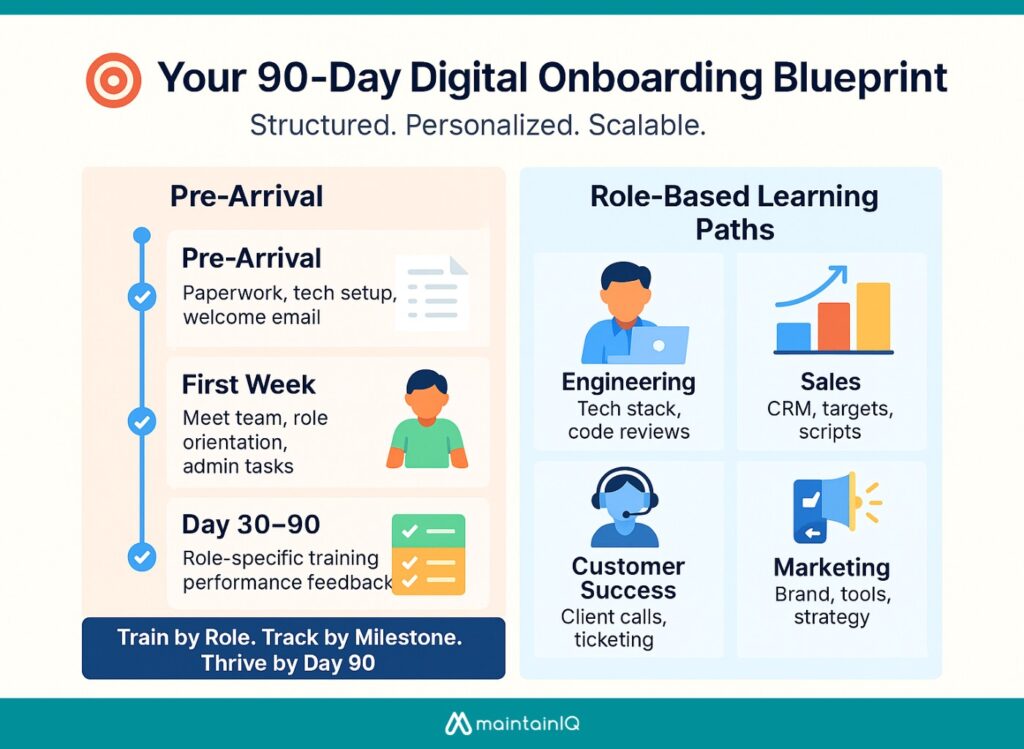
Your onboarding software should enable you to create department-specific learning paths that align with each role’s unique requirements and responsibilities.
These customized frameworks guarantee consistent delivery while allowing you to tailor the experience based on position, seniority level, and team objectives.
Day 1 to Day 90 Checklist Templates
Structured templates for the 90-day pre-arrival tasks lay the groundwork by ensuring that equipment, accounts, and workspace preparations are completed before the employee arrives.
First-week essentials focus on immediate integration activities that set clear expectations, introduce key stakeholders, and start meaningful work assignments that demonstrate your organization’s commitment to their success.
Pre-Arrival Tasks
Pre-arrival preparation eliminates first-day friction while accelerating productivity.
Your digital checklist should include:
- New hire paperwork completion through secure portals
- Equipment setup logistics for seamless technology access
- Remote onboarding workspace preparation and testing
- Pre-start communications introducing team connections
This foundation transforms overwhelming beginnings into confident starts.
First Week Essentials
While pre-arrival preparation sets the stage, your new hire’s first week determines whether they’ll thrive or struggle in their role. You’ll need strategic first impression management through structured culture immersion experiences.
Focus on administrative setup completion, schedule optimization for maximum learning, and meaningful team-building activities. This systematic approach accelerates integration and builds lasting organizational connections.
Department-Specific Training Paths
How can your organization guarantee new hires receive relevant training that aligns with their specific role requirements?
Department-specific training paths eliminate generic approaches that waste time and dilute effectiveness. You’ll accelerate competency development through targeted learning experiences.
- Engineering Teams: Focus on technical stack proficiency, code review processes, and cross-functional collaboration protocols
- Sales Departments: Emphasize product knowledge, CRM systems, and goal-setting milestones for quarterly targets
- Customer Success: Prioritize mentorship programs, client communication frameworks, and escalation procedures
- Marketing: Integrate brand guidelines, campaign tools, and continuous upskilling opportunities
Post-onboarding check-ins validate training effectiveness and identify skill gaps.
How MaintainIQ Transforms Employee Onboarding
Onboarding implementation with MaintainIQ’s pre-built, industry-specific templates can eliminate the guesswork of creating processes from scratch.
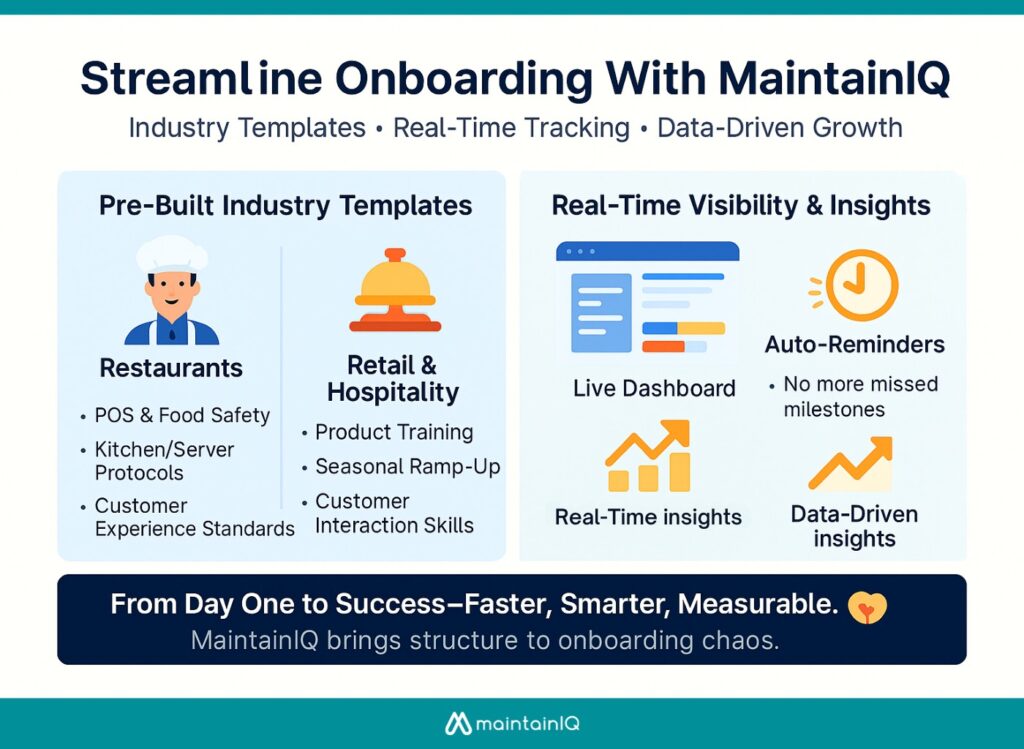
The platform’s real-time progress tracking gives you instant visibility into each new hire’s advancement through critical milestones.
You can make data-driven decisions about your onboarding effectiveness through detailed reporting that identifies bottlenecks and measures completion rates across your entire workforce.
Pre-Built Industry-Specific Onboarding Templates
Onboarding processes from scratch is critical, while MaintainIQ’s pre-built templates deliver immediate, industry-tested solutions.
Restaurant staff onboarding checklists guarantee your servers master food safety protocols and POS systems within their first week, while retail and hospitality templates accelerate product knowledge training and customer service standards.
These specialized frameworks reduce your onboarding timeline by 60% and eliminate the guesswork that leads to inconsistent employee preparation.
Restaurant Staff Onboarding Checklists
Every restaurant faces unique onboarding challenges that generic checklists can’t address—from food safety protocols and POS system training to customer service standards and kitchen workflow procedures.
Restaurant-specific templates streamline your deployment:
- Kitchen setup requirements with equipment protocols
- Server training objectives covering dining room procedures
- Back-of-house processes for seamless operations
- Customer service protocols ensuring consistent experiences
You’ll accelerate competency while maintaining operational excellence.
Retail and Hospitality Templates
Retail and hospitality environments demand specialized onboarding approaches that address high turnover rates, seasonal hiring surges, and complex customer interaction standards.
You’ll accelerate integration through on-site training programs paired with skill assessment surveys.
MaintainIQ’s templates include tailored development plans, departmental socialization activities, and personalized mentorship initiatives that transform new hires into productive team members faster.
Real-Time Progress Tracking and Reporting
Real-time visibility into onboarding progress replaces guesswork, transforming chaotic manual tracking into streamlined, measurable performance tracking results.
MaintainIQ’s detailed reporting system empowers you with:
- Live Dashboard Analytics – Monitor completion rates and identify bottlenecks instantly
- Automated Reminders – Trigger notifications when tasks fall behind schedule
- Data Driven Insights – Access onboarding analytics that reveal optimization opportunities
- Real Time Progress Reviews – Conduct meaningful check-ins based on actual performance data
You’ll break free from outdated spreadsheets and email chains, gaining complete control over your talent development pipeline while accelerating new hire success rates.
Measuring Success: ROI of Digital Onboarding
Concrete metrics to validate your digital onboarding investment and demonstrate tangible business value.

Track time-to-productivity measurements to quantify how quickly new hires reach performance standards, while monitoring compliance completion rates and retention improvements across your first-year cohorts, and transform onboarding process from a cost centre into a measurable competitive advantage that drives organizational growth.
Time-to-Productivity Metrics
Digital onboarding delivers measurable outcomes that impact your bottom line. Track:
- Role Competency Achievement – Days until new hires demonstrate required skills
- System Proficiency Timeline – Hours needed for technology mastery
- Performance Milestone Completion – Weeks to reach productivity benchmarks
- Integration Success Rate – Percentage achieving full workflow participation
Digital onboarding metrics reveal how onboarding workflow optimization accelerates employee experience improvement. You’re no longer guessing when productivity peaks occur.
Employee satisfaction data correlates directly with faster competency acquisition, giving you concrete measurement tools that justify your investment while liberating your organization from inefficient traditional processes.
Compliance and Retention Improvements
Beyond productivity metrics, compliance adherence and employee retention rates provide the most compelling ROI evidence for digital onboarding investments.
Consistent compliance tracking eliminates retention risks, engaging experiences, and boosts employee satisfaction from day one.
Automated compliance tracking verifies regulatory oversight requirements are met without manual intervention, reducing legal exposure while improving process efficiency.
Digital onboarding creates standardized touchpoints that strengthen workforce continuity. You’re building systematic approaches that prevent costly turnover cycles.
When employees feel properly welcomed and equipped, they’re 82% more likely to stay beyond their first year, transforming your onboarding investment into sustained organizational growth.
Get Started: Your 30-Day Implementation Plan
Implementing employee onboarding checklist software requires a systematic approach that transforms your hiring process within 30 days.
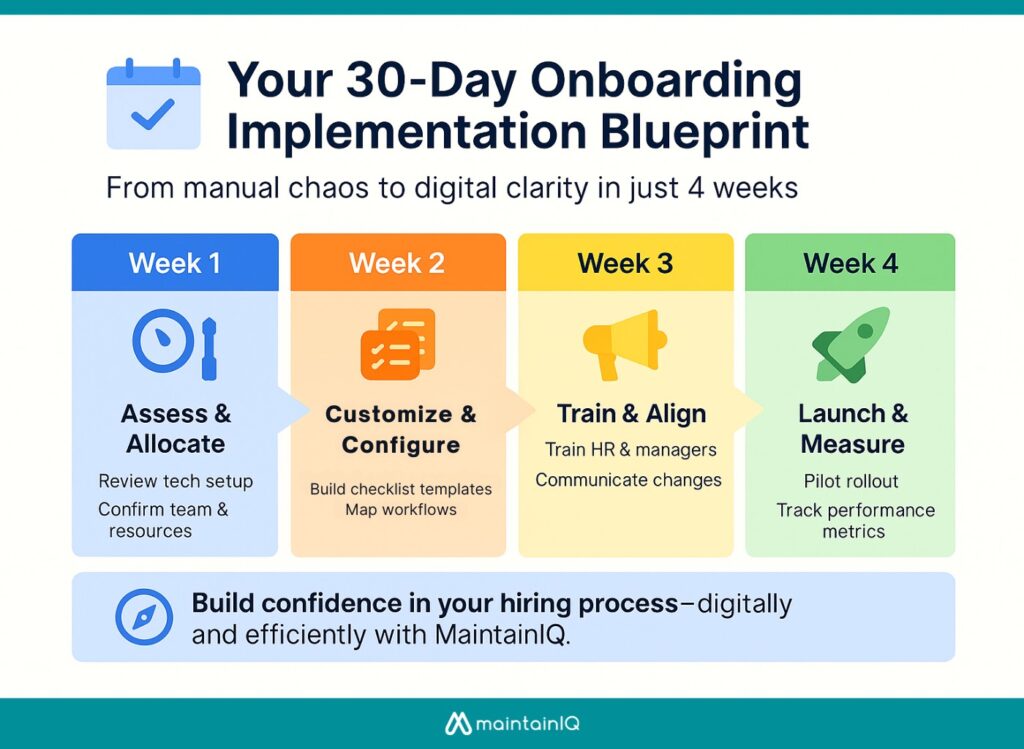
You’ll break free from inefficient manual processes through strategic pre-implementation considerations and focused stakeholder engagement.
Breaking free from manual inefficiencies, strategic onboarding software implementation transforms your entire hiring process in just one month.
- Week 1: Assess technical requirements and guarantee resource allocation for seamless integration
- Week 2: Design workflows and customize checklists to match your organizational needs
- Week 3: Execute change management strategies while training your HR team and managers
- Week 4: Launch pilot program with select new hires and collect performance metrics
This structured timeline ensures you capture maximum value while minimizing disruption to existing operations.
Frequently Asked Questions
Can Onboarding Checklist Software Integrate With Our Existing HRIS System?
What Happens if New Employees Don’t Complete Their Onboarding Tasks on Time?
How Do We Handle Onboarding for Remote Employees Versus In-Office Workers?
Can Managers Customize Onboarding Checklists for Different Roles and Departments?
What Level of Technical Support Is Provided During Software Implementation?