New Hire Restaurant Training Checklist, Free PDF
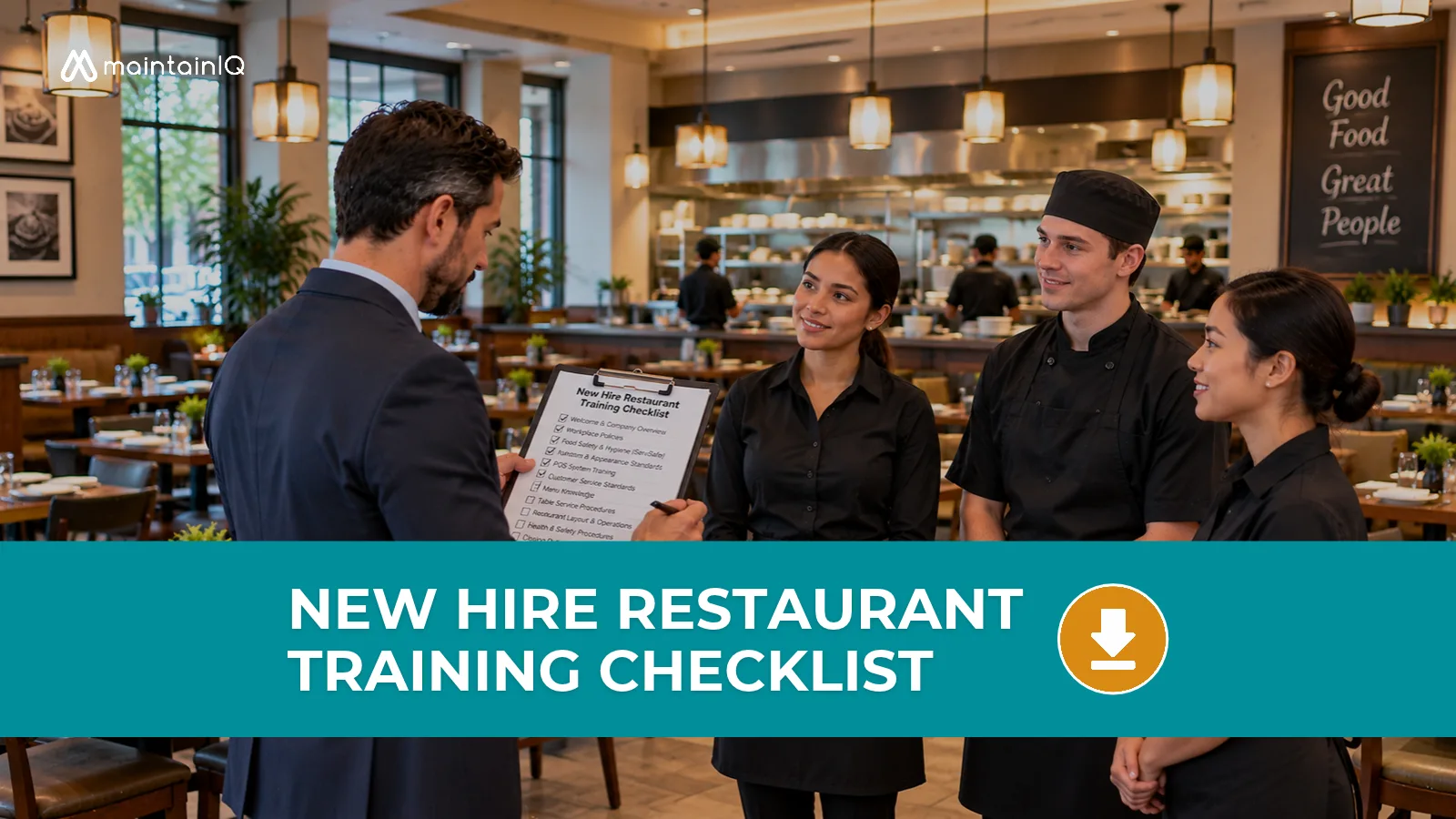
Free new hire restaurant training checklist PDF covering pre-boarding, Day 1, Week 1 and 30, 60 and 90 day milestones, with allergen and food safety sign-offs.
Download the free PDF
PDF · 4 pages · 615 KB · No email required
Key takeaways
- Collect Form I-9 Section 1 by the first day of work and complete Section 2 within three business days of the start date.
- Teach the nine major allergens, sesame included, before a new hire serves guests or works the line alone.
- Train on a shadow, assist, solo path, and move someone to solo only when their training buddy confirms they are ready.
- Check in at 30, 60 and 90 days with a signed record, so problems surface while they are still easy to fix.
On this page
A server who does not know the allergens in your most popular dish is a risk the moment they work alone, and a cook who was never walked through your temperature rules is a health inspection problem waiting to happen. The goal of a new hire’s first week is not speed. It is making sure they are accurate and safe before they go solo. Rush it and you pay later, with a compliance gap, a confused employee, or someone who quits because they never felt ready.
This New Hire Restaurant Training Checklist gives you a structured onboarding path with sign-offs: pre-boarding and paperwork, Day 1 orientation and safety, Week 1 role training on a shadow, assist, solo path, and check-ins at 30, 60 and 90 days.
Run this checklist on any phone or tablet with MaintainIQ, the checklist and maintenance app for single and multi-location operators.
What’s inside this checklist
- Pre-boarding and paperwork: The offer, I-9 timing, tax paperwork, the handbook, the tip policy notice, food handler and alcohol service certifications, and tools and a buddy ready before Day 1, each with a date and trainer initials.
- Day 1, orientation and safety: Welcome and tour, food safety and workplace safety basics, emergency exits and first aid, POS basics, and a clear plan for the next shift.
- Week 1, role training: Menu and allergen knowledge, safe food handling, equipment, POS skills, guest service, and the shadow, assist, solo progression.
- Milestones and sign-off: Completion criteria before solo work, and 30, 60 and 90 day check-ins with a signed record.
Why structured onboarding matters
- Safety before speed: The point of Week 1 is accuracy and safety before anyone works alone. Allergen and temperature knowledge are not extras. They protect guests and the business from real harm.
- Paperwork has a deadline: Form I-9 Section 1 is due by the first day of work and Section 2 within three business days of the start date. Late or incomplete I-9s create compliance risk, so the timing has to be built into the routine.
- Allergen training is expected: The FDA Food Code expects the person in charge to make sure staff are trained in food allergy awareness, and many state codes go further. A checklist makes sure every new hire learns the major allergens before serving guests.
- A buddy helps people stay: New hires settle in faster with an experienced partner to learn from and ask questions. Pairing each one with a buddy speeds up training and improves the odds they stay.
- Catch problems early: You want to know someone is struggling on Day 3, not Day 14. The shadow, assist, solo path and the milestone check-ins show the gaps while they are still easy to fix.
Onboarding phases at a glance
| PHASE | FOCUS | KEY ITEM |
|---|---|---|
| Pre-boarding | Paperwork, tools, buddy | I-9 Section 1 by Day 1 |
| Day 1 | Orientation, safety, tour | Exits, food safety basics |
| Week 1 | Role training, menu, allergens | Shadow, assist, solo |
| Solo readiness | Meet the completion criteria | Buddy confirms, not the calendar |
| 30, 60 and 90 days | Check-ins and performance | Signed record |
These are common good practices, not legal advice. Form I-9 timing follows USCIS rules, and allergen training follows the FDA Food Code and state health codes. The nine major allergens are milk, eggs, fish, shellfish, tree nuts, peanuts, wheat, soybeans and sesame. Confirm certification, tip and labor requirements with counsel and your local health department.
How to use this checklist
- Pre-boarding page: Complete the I-9 and paperwork on the clock, and have the uniform, POS access and a buddy ready before Day 1.
- Day 1 page: Lead with the tour, emergency exits, and food safety and workplace safety basics, and keep the admin short. The staff safety training checklist goes deeper on workplace safety.
- Week 1 page: Use shadow, assist, solo, and move to solo only when the buddy confirms the person is ready, not on a fixed date. Our guide to building an employee training program for restaurants covers the bigger picture.
- Or go digital with MaintainIQ: Assign each phase to the new hire’s trainer or manager, collect e-signatures at each sign-off, and keep training records and certificates in one place for every location. See how employee onboarding checklists work in the app.
Go digital with MaintainIQ
A paper training checklist gets lost between shifts and cannot prove the allergen training was covered. MaintainIQ replaces it with an onboarding checklist assigned to a person or a role, signature items and e-signatures for each sign-off, training records, and a document library for handbooks and certificates. Whether you are onboarding one hire or staffing up across locations, it keeps onboarding consistent and every step on record, so new hires are accurate before they go solo. Read more about onboarding and training with digital checklists.
Frequently Asked Questions
What are the phases of restaurant onboarding?
Pre-boarding (paperwork, POS setup and a training buddy), Day 1 orientation (the I-9, handbook, a tour and POS basics), Week 1 role training (menu, allergens, food safety and a first solo shift), and check-ins at 30, 60 and 90 days.
When is the I-9 due for a new hire?
Form I-9 Section 1 must be completed no later than the employee's first day of work, and Section 2 within three business days after work begins. Late or incomplete I-9s create compliance risk, so build both deadlines into your onboarding routine.
What allergens do restaurant staff need to be trained on?
The nine major food allergens are milk, eggs, fish, shellfish, tree nuts, peanuts, wheat, soybeans and, since the FASTER Act, sesame. Staff should be able to answer guest allergen questions accurately before they work alone, and your state or local code may set its own training rules.
How do you know when a new hire is ready to work solo?
Use a shadow, assist, solo path and move to solo only when the training buddy confirms the person is ready, not on a fixed date. Some hires are ready by Day 4 and others need until Day 10, so write down clear completion criteria to keep the call fair.