Preventive Maintenance Checklist For Commercial Water Heaters
A preventive maintenance checklist for commercial water heaters, covering what to inspect, clean and replace, how often, and when to call a pro.
Key takeaways
- Drain the tank, clean the burners or heating elements and test the valves at least once a year. That is the core of water heater upkeep.
- Keep the thermostat between 120°F and 140°F to balance energy use against scalding risk, and adjust it following the manufacturer's guidance.
- Check the temperature and pressure relief valve and the venting at every service, because a blocked vent can let carbon monoxide build up.
- Call a professional when water temperature swings, the unit makes new noises, or you find leaks or corrosion around connections.
On this page
A preventive maintenance checklist for commercial water heaters comes down to a few jobs: drain sediment from the tank, inspect and clean the burners or heating elements, test the temperature and pressure relief valve, check the thermostat setting, and look over the anode rod, connections and venting. Most of these tasks happen at least once a year, with quick checks for leaks and odd noises in between.
Doing this on schedule prevents hazards, keeps energy use down and makes the unit last longer, which saves you money on emergency repairs and early replacements. Below is the full checklist, what each part does, how to clean the unit, and when to hand the job to a professional.
Understanding the Importance of Preventive Maintenance for Commercial Water Heaters
Commercial water heaters supply hot water for handwashing, dishwashing, cleaning and cooking, so your business depends on them every shift. That is why preventive maintenance for restaurants always includes the water heater.
Regular check-ups and servicing keep the unit running efficiently and extend its life, saving you time, money and headaches down the road.
The Role of Commercial Water Heaters
Commercial water heaters are the unsung heroes of your business, working all day to provide hot water for many operations. As an owner or facilities manager, you need to understand the role they play in your building and which steps keep them running smoothly. The water heater belongs on your wider commercial kitchen maintenance checklist alongside the fryers, ovens and refrigeration.
Preventive maintenance on a hot water heater extends its life, improves its efficiency and lowers energy costs. With a planned maintenance routine for your commercial water heaters, you avoid most unexpected breakdowns and the disruption they cause.
Water heater preventive maintenance usually means:
- Inspecting key components for wear or damage
- Cleaning sediment out of the tank
- Checking that the pressure relief valves work
- Replacing worn parts as needed
Here are the main areas to focus on and how often to service them:
| Component | Maintenance Task | Frequency |
|---|---|---|
| Tank | Drain sediment | Annually |
| Burners | Inspect & clean | Annually |
| Valves | Test & replace | Annually |
| Thermostat | Confirm the setting is between 120°F and 140°F | At every service |
| Anode rod | Inspect, replace when worn | Replace every 3 to 5 years |
When you put time into regular upkeep, with an emphasis on safety checks such as valve testing and looking for leaks or corrosion, you prevent accidents and keep this basic piece of equipment ready for your daily operations. If you want a printable version, start with our free water heater preventive maintenance checklist PDF.
Why Preventive Maintenance Matters
Regular care for your hot water system keeps daily operations smooth and pays off over the long term.
A preventive maintenance program for your commercial water heater extends its lifespan, keeps it efficient and reduces energy use, which saves you money over time.
A complete program covers routine checks and servicing of every part of the system. That includes:
- Inspecting and cleaning burners
- Checking pipes and connections for leaks or corrosion
- Testing safety valves and thermostats
- Monitoring pressure in the system
- Descaling heat exchangers or tanks when needed
- Checking electrical parts for wear or damage
Key Components of Commercial Water Heaters
Before you start servicing, get to know the key components. The heating element (or burner on gas units), the thermostat and the tank work together to heat water and hold it at the right temperature.
Knowing what each one does helps you make better decisions when you choose, maintain or repair a water heater for your needs.
The Heating Element
Examine the heating element for wear, corrosion or other problems as part of your preventive maintenance checklist.
Keeping an eye on its condition protects your investment and keeps the unit performing well.
Regular Inspection of the Heating Element
Preventive maintenance on hot water heaters includes checking the heating element for wear, corrosion or damage. A simple table like this one helps you track what to look for:
| Inspection Area | Potential Issues | Recommended Action |
|---|---|---|
| Heating Element Surface | Corrosion or scaling | Clean or replace if necessary |
| Wiring Connections | Loose connections or frayed wires | Tighten or replace as needed |
| Continuity Test | No continuity between terminals | Replace the damaged heating element |
The Thermostat
Checking and adjusting the thermostat is a key part of commercial water heater maintenance.
A correctly set thermostat prevents overheating and saves energy, which lowers your bills over time.
Checking and Adjusting the Thermostat
Watch the thermostat settings on your commercial water heater. The right setting keeps performance steady and prevents safety hazards. To check that the thermostat is working correctly:
- Locate the thermostat: Find the thermostat dial or digital display, usually near the control panel or behind an access panel.
- Check the temperature setting: Most commercial water heaters should be set between 120°F and 140°F (49°C and 60°C) to balance energy efficiency against scalding risk. Confirm that your current setting falls within this range.
- Adjust if necessary: If the setting is too high or too low, adjust it following the manufacturer’s guidelines, using a screwdriver for dials or the instructions for digital displays.
Water held too cool can let Legionella bacteria grow in the tank and pipes. The CDC’s guidance on Legionella water management programs explains how larger buildings keep that risk under control.
These steps keep your system safe and efficient while keeping energy costs down.
Once the thermostat is set, move on to the next key component: the tank.
The Tank
The tank itself needs attention too.
Regular cleaning and inspection of the tank keeps the system performing well and makes it last longer.
Cleaning and Inspecting the Tank
A thorough cleaning and inspection of the tank can make a noticeable difference to efficiency and lifespan. Here is what regular tank maintenance gives you:
| Benefit | What It Means for You | Importance |
|---|---|---|
| Improved efficiency | Less energy to heat the same water | Energy savings |
| Longer lifespan | The unit lasts closer to its full service life | Cost savings |
| Fewer breakdowns | Fewer days without hot water | Less downtime |
| Enhanced safety | Valves and vents that work when needed | Avoid hazards |
Looking after the tank keeps your staff and customers safe and keeps the unit performing well.
Steps for Preventive Maintenance of Commercial Water Heaters
Follow these steps to keep your water heater working well and avoid costly repairs or downtime.
Regular Inspection
Regular inspections catch problems early. Check for leaks, corrosion and whether the safety devices work. A preventive maintenance checklist written for your specific equipment prevents costly issues and keeps your water heating system running.
What to Look for During Inspection
Many commercial water heaters fail early because they are not maintained, so it pays to know what to look for.
Start with the outside of the unit. Look for corrosion, leaks or damage that could mean a repair or replacement is due. Inspect all connections and valves to make sure they are in good condition and free from leaks.
Check the temperature and pressure relief valve (TPR). It should open at a set temperature or pressure to prevent overheating and excess pressure. Examine the venting system to make sure it is clear, as blocked vents can lead to dangerous carbon monoxide buildup inside your building.
Also listen for unusual noises from the water heater, since they can point to internal problems that need attention.
Write down what you find each time: the date, who checked the unit, the thermostat setting, and anything that needs a follow-up. A simple log shows whether a small drip is getting worse, tells the next technician what has already been done, and gives you a record if an inspector or insurer asks how the equipment is maintained.
Cleaning the Water Heater
Cleaning your commercial water heater keeps it efficient and extends its life. Here is how to do it properly, so you prevent mineral buildup and keep energy use down.
How to Properly Clean a Commercial Water Heater
A thorough cleaning helps your commercial water heater run efficiently and spares you breakdowns and costly repairs. To clean it properly:
- Shut it down safely. Turn off the power supply and let the unit cool down. For electric heaters, switch off the circuit breaker or remove the fuse that supplies power to the unit. For gas heaters, turn off the gas valve and disconnect the unit from any electrical outlets.
- Drain the remaining water by attaching a hose to the drain valve and opening it until the tank is empty. Be careful, as this water may still be hot.
- Open the access panels and clean the components. Use a vacuum cleaner with a soft brush attachment to carefully clean the inside of the combustion chamber on gas-fired units. Remove sediment in electric models with a long brush, or flush the debris out with fresh water.
- When you are done, refill the tank, reconnect the power or gas, and return the unit to normal operation.
Replacing Worn Out Parts
Identify and replace worn parts promptly as part of your maintenance routine.
Inspect valves, burners and heating elements regularly for signs of wear or damage. This keeps the unit performing well and extends the life of your equipment.
It also prevents costly breakdowns and downtime.
Identifying and Replacing Worn-Out Parts
Routinely check for worn parts and replace them promptly to keep your system running. Learn the key components of your water heater and monitor their condition. That habit keeps the unit safe and reliable for your business.
| Component | Signs of Wear |
|---|---|
| Heating Elements | Burnt or corroded terminals, weak or no heat |
| Pressure Relief Valve | Leaking, rusting, or inability to open |
| Anode Rod | Eroded more than 50% or coated in calcium |
When a part fails again and again, or the tank itself is corroding, it may be time to weigh when to repair, replace or schedule service for the whole unit. Staying on top of these tasks extends the life of your commercial water heater and protects the people who rely on it.
Professional Maintenance Services for Commercial Water Heaters
Knowing when to call a professional, and choosing the right service company, matters as much as the checks you do yourself.
Ask for expert help if you are unsure about any part of your preventive maintenance routine, or if a problem goes beyond what your team can safely handle.
When to Call a Professional
Call a professional when you find a problem beyond your team’s skills or notice warning signs during routine checks. Common signs that need a technician:
- Inconsistent water temperature
- Strange noises from the unit
- Leaks
- Less hot water than usual
Use this quick reference table to decide when to call:
| Warning Sign | Potential Issue |
|---|---|
| Inconsistent water temperature | Thermostat malfunction or sediment buildup |
| Strange noises | Sediment buildup, broken valves, or damaged heating element |
| Leaks | Corrosion, loose connections, or damaged components |
Watching for these signs and calling an expert in time keeps your commercial water heater efficient, long-lasting and safe.
Choosing the Right Maintenance Service
The right service provider keeps your water heating system working well for years. A reliable company helps prevent costly breakdowns, extends the life of your equipment and makes sure you have hot water when you need it.
When you choose a maintenance service, look at these factors:
- Experience: Look for a company with a proven record of maintaining commercial water heaters. An experienced team spots potential issues before they become major problems.
- Certifications: Make sure the technicians working on your equipment are certified and trained in preventive maintenance for commercial water heaters.
- Customer Reviews: Read online reviews from other clients. They tell you what to expect on quality and reliability.
- Range of Services Offered: Choose a company that handles installation, repairs, replacements and regular maintenance for commercial water heaters.
Once you pick a company, keep its visit dates, invoices and warranty details in one place. Our guide to vendor maintenance tracking for restaurants shows how to stay on top of every service contract.
Conclusion
Don’t underestimate preventive maintenance for your commercial water heater. A well-maintained system saves you money, prevents downtime and makes your equipment last longer.
Make these steps a priority and bring in professional help when you need it. You will get better performance and avoid costly problems down the road.
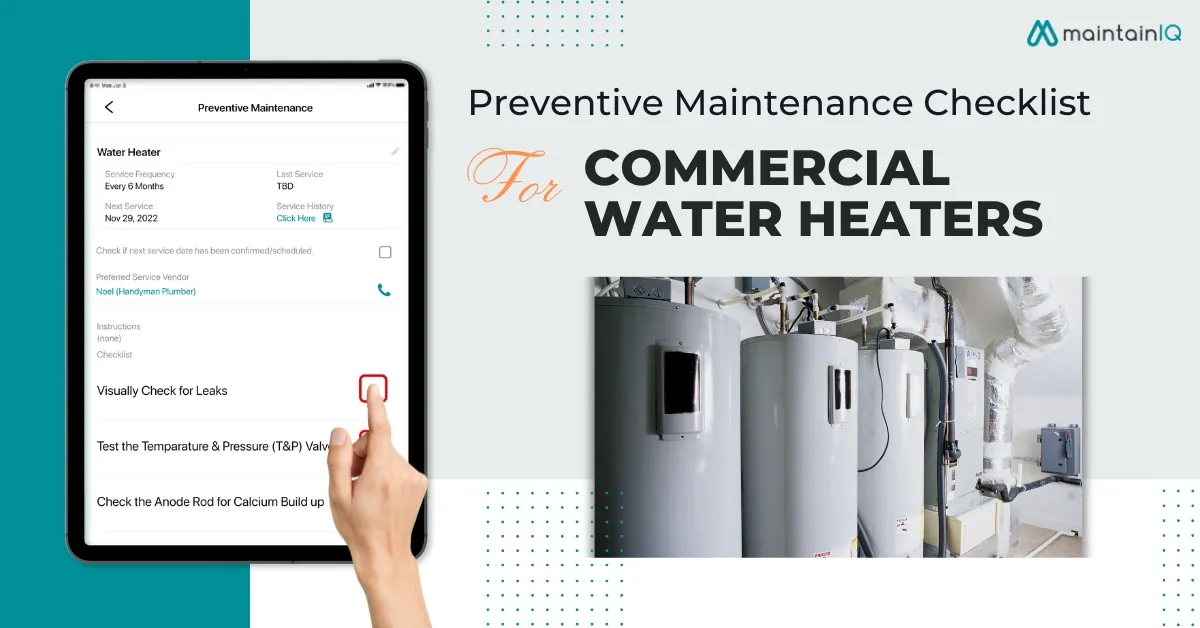
Whether you run one location or several, a preventive maintenance app keeps the water heater from slipping off the list. In MaintainIQ you set a service frequency for each water heater, see when it was last serviced and when it is next due, store the preferred vendor and instructions, and keep a service history for every unit. If something breaks, you can open a work order straight from that piece of equipment.
Helpful Resources
- U.S. Department of Energy, Maintaining Your Water Heater: tips and guidelines from the U.S. Department of Energy on maintaining water heaters, both residential and commercial, so they keep performing well and use less energy.
- Plumbing-Heating-Cooling Contractors Association (PHCC): a professional trade association that provides resources, training and networking for plumbing, heating and cooling professionals. Its website can help you find a certified professional for commercial water heater maintenance.
- ASHRAE (American Society of Heating, Refrigerating, and Air-Conditioning Engineers): a global organization focused on building systems, energy efficiency, indoor air quality and sustainability. Its website offers resources and guidelines on building systems, including commercial water heating.
- ENERGY STAR, Commercial Water Heaters: information about ENERGY STAR certified commercial water heaters designed to save energy and reduce operating costs, plus tips for choosing an energy-efficient water heater for your business.
- OSHA (Occupational Safety and Health Administration): the government agency responsible for safe and healthy working conditions for employees. Its website has guidelines and resources on workplace safety that help prevent accidents and hazards around equipment such as water heaters.
Frequently Asked Questions
How often should a commercial water heater be serviced?
Service a commercial water heater at least once a year to keep it working well and make it last longer.
What does water heater maintenance include?
Water heater maintenance includes checking for leaks, flushing the tank, inspecting the anode rod, and testing the safety valves.
What is the maintenance practice for the hot water system?
Maintenance for a hot water system includes regular inspections, cleaning, and replacing worn parts as needed.
What is the lifespan of a commercial water heater?
A commercial water heater typically lasts 10 to 20 years, depending on how hard it works and how well it is maintained.
How often must you replace the anode rod on a hot water heater?
Replace the anode rod on a hot water heater every 3 to 5 years to prevent corrosion inside the tank.
What is the common problem with hot water heaters?
Common problems with hot water heaters include not enough hot water, leaks, and strange noises.
Do water heaters require annual maintenance?
Yes. Water heaters generally need maintenance once a year to keep performing well and to extend their lifespan.
How often do you need to drain a hot water heater?
Drain a hot water heater at least once a year to remove sediment buildup and improve efficiency.
What shortens the life of a water heater?
Poor installation, skipped maintenance, and high water pressure all shorten a water heater’s life.