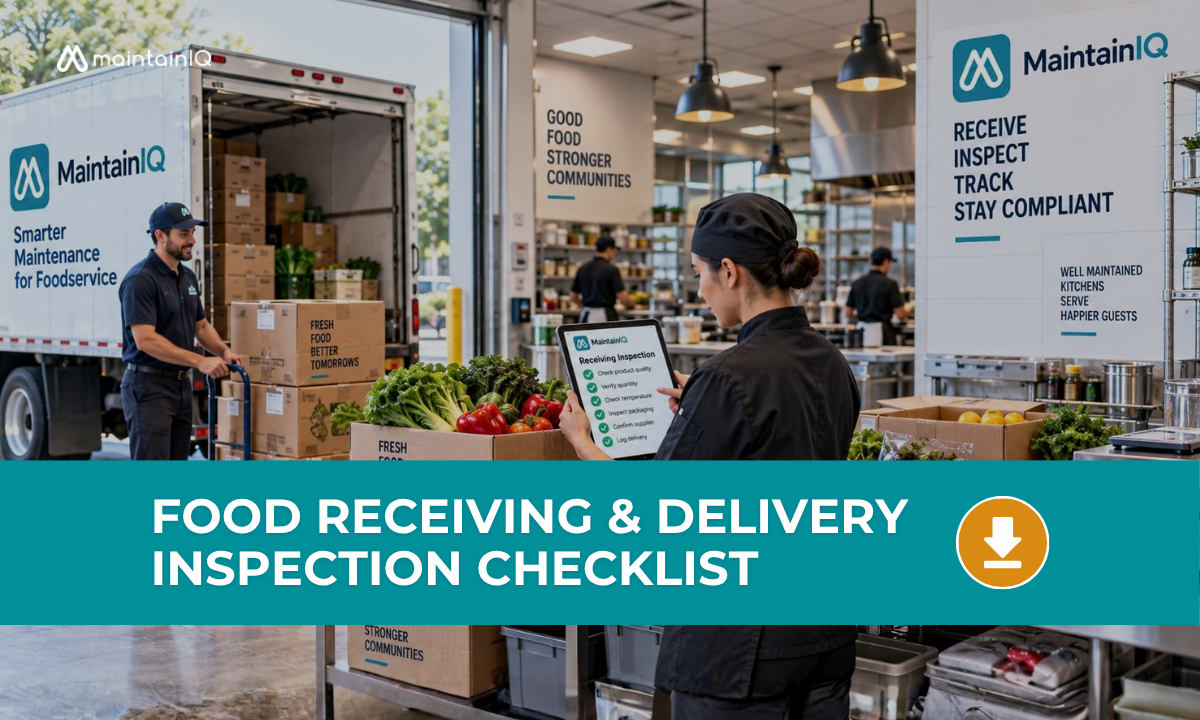
Receiving is the single moment a food handler can stop unsafe food before it enters the kitchen. Once a temperature-abused or contaminated delivery gets past the dock and into storage, it can be used by mistake — so “accept it and sort it out later” is exactly the wrong move. The right move is a fast, consistent inspection with a calibrated thermometer and a clear reject-or-accept decision.
This Food Receiving & Delivery Inspection Checklist gives restaurants and grocery operators a structured acceptance process built on FDA Food Code receiving rules: truck and supplier checks, temperature verification, packaging and condition inspection, and a documented accept/reject and storage step.
Digitize and automate this checklist with MaintainIQ, your all-in-one maintenance management platform.
What’s Inside This Checklist
- Before & At the Truck: Delivery scheduling, vehicle cleanliness, invoice/PO match, approved-supplier check, and thermometer prep — with pass/fail and temp fields.
- Temperature Verification: Cold TCS ≤41°F, hot TCS ≥135°F, frozen solid, shellfish and raw-fish rules, and how to probe internal temperature correctly.
- Condition, Packaging & Documentation: Package integrity, pest signs, color/texture/odor, poultry and can rejection criteria, dates, and required documents.
- Acceptance, Rejection & Storage: Documenting rejections, cold-chain storage, date-marking, FIFO, and raw-below-ready-to-eat separation.
Why Receiving Inspection Matters
- It’s the First Line of Defense: Receiving is a prevention step. Unsafe food caught at the dock never reaches a guest; unsafe food waved through gets used. This is where a food handler stops the problem.
- Temperature Is the Core Control: Cold TCS food at 41°F or below, hot TCS at 135°F or above, frozen solid. Between 41°F and 135°F is the danger zone where microorganisms multiply rapidly — verify the food’s internal temperature, not just the truck’s air reading.
- Some Damage Is a Hard Reject: A swollen can can signal dangerous contamination; ice crystals or water stains mean a frozen item thawed and refroze. These are automatic rejections even if the item looks or feels fine now.
- Documentation Is HACCP: A receiving log — date, item, supplier, temperature — is your HACCP proof. In the eyes of the FDA and inspectors, if it isn’t documented, it didn’t happen.
- Approved Suppliers Matter: Sourcing from inspected suppliers with HACCP and good manufacturing practices reduces risk before the truck even arrives.
Receiving Temperature Quick Reference
| ITEM | RECEIVE AT | REJECT IF |
| Cold TCS food | ≤ 41°F (5°C) | Above 41°F |
| Hot TCS food | ≥ 135°F (57°C) | Below 135°F |
| Frozen food | Frozen solid | Ice crystals / water stains (thaw-refreeze) |
| Live shellfish | Air ≤45°F, internal ≤50°F | No shellstock ID tags |
| Poultry | ≤ 41°F | Purple/green neck, sticky, off odor |
| Canned goods | Intact seams | Swollen ends, deep dents, rust, leaks |
| Any TCS item | Correct temp + condition | Damaged packaging, off odor, expired |
Source: FDA Food Code 2022, Sections 3-202.11 and 3-501.11 (receiving temperatures), and HACCP prerequisite programs. Shellstock ID tags must be retained 90 days from last use. Always follow your state and local health code.
How to Use This Checklist
- At the truck: A trained receiver inspects TCS and frozen items first, with a calibrated, sanitized probe thermometer ready.
- Temperature page: Probe the food’s internal temperature; for vacuum-sealed packages, read between two packages rather than puncturing.
- Condition page: Reject leakers, swollen cans, off odors, ice crystals, and expired dates at the dock — don’t accept and sort later.
- Or go digital with MaintainIQ — log every delivery’s temperatures and accept/reject decisions on a phone, attach photos of rejected product, and keep a HACCP-ready receiving record across every location.
Frequently Asked Questions
At what temperature should cold food be received?
Cold TCS (Time/Temperature Control for Safety) food should be received at 41°F (5°C) or lower unless otherwise specified. Hot TCS food should be received at 135°F (57°C) or higher, and frozen food should be frozen solid.
Should I check the truck temperature or the food temperature?
Check the food’s internal temperature with a calibrated probe. A truck’s air gauge might read 38°F while the product has absorbed heat during frequent stops. For reduced-oxygen or vacuum-sealed packages, place the probe between two packages instead of puncturing the seal.
Why reject a frozen item that’s still hard-frozen?
Large ice crystals or fluids and water stains in the case indicate the food thawed and was refrozen — a sign of time-temperature abuse. The item is rejected even if it’s hard-frozen at inspection, because the abuse already happened.
What makes a canned good an automatic reject?
Swollen or bulging ends, deep dents in the body, dents on the seam, rust, or leakage. A swollen can can indicate dangerous contamination and should never be accepted.
Go Digital with MaintainIQ
Paper receiving logs get skipped during a busy delivery, can’t attach a photo of the swollen can you rejected, and won’t produce a clean temperature history when a health inspector asks. MaintainIQ replaces the clipboard with per-delivery receiving logs on a phone, temperature capture for every TCS item, photo documentation of rejections, and a HACCP-ready record organized by date and supplier. Whether you receive for one kitchen or a portfolio of locations, MaintainIQ ensures every delivery is inspected, every rejection is documented, and every record is ready.