You’ve probably relied on a kitchen cleaning checklist PDF for years—printing it out, checking boxes, and filing it away.
But health inspectors in 2026 aren’t just looking for completed tasks. Digital systems ensure health inspection readiness by delivering real proof: time-stamped records, temperature logs, and an unalterable audit trail that paper simply can’t provide.
If you’re still depending on printable forms, you’re one surprise inspection away from discovering exactly what’s at stake.
Table of Contents
Why a PDF Checklist Isn’t Enough in 2026
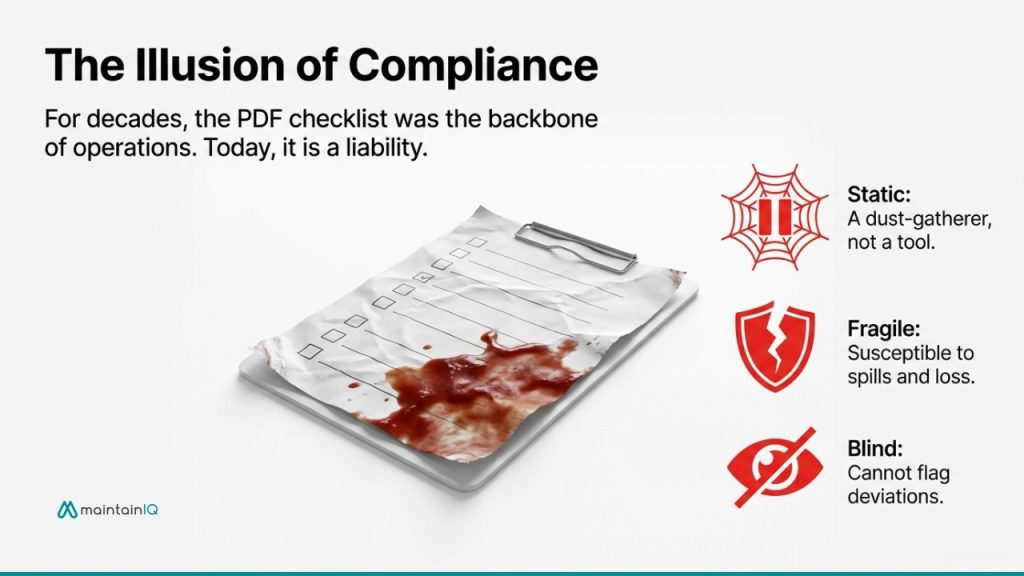
For decades, the humble kitchen cleaning checklist PDF served as the backbone of restaurant compliance programs. But in 2026, this static tool can’t keep pace with modern regulatory demands or protect your operation from preventable failures.
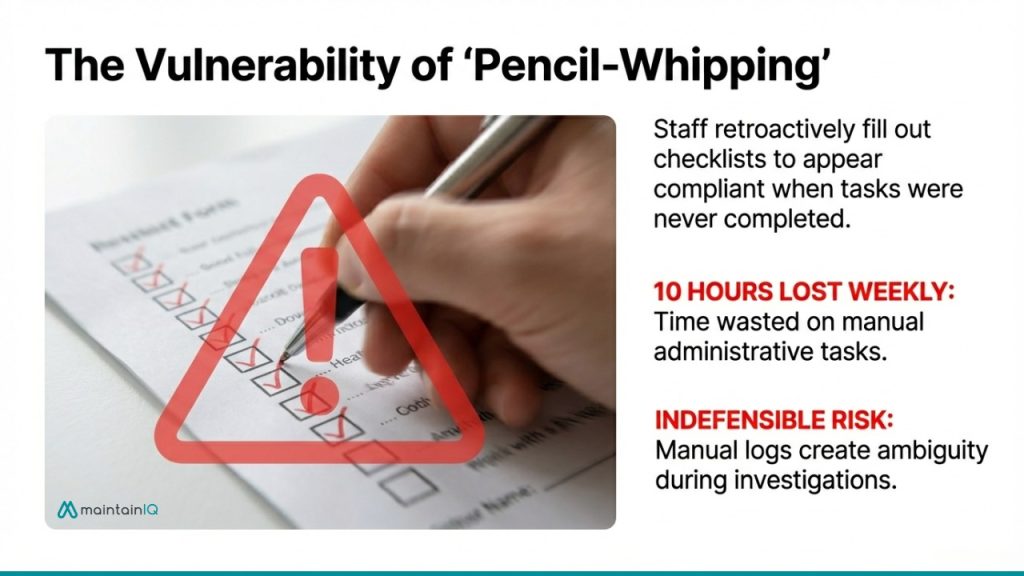
Your paper logs are vulnerable to pencil-whipping—staff retroactively filling out checklists to appear compliant when tasks weren’t actually completed. They’re also prone to kitchen spills, physical damage, and simple human error. Worse, you won’t know a critical task was missed until a health inspector walks through your door.
Manual systems impose a hidden cost, too. Managers lose an average of 10 hours weekly on administrative tasks that digital platforms handle automatically. A PDF can’t flag deviations before they become public health incidents—and that reactive approach puts your brand at risk.
The Anatomy of a Modern Health Audit
When an auditor walks through your doors today, they’re not just checking for clean surfaces—they’re verifying your digital accountability trail.
Your system needs to capture digital time-stamps with PIN-signing features that prove exactly who completed each task and when, eliminating the ambiguity of handwritten initials.
You’ll also want real-time alerting for temperature deviations, which demonstrates to inspectors that your operation catches and addresses food safety risks the moment they occur.
Digital Time-Stamps and PIN-Signing Accountability.
Auditors consistently scrutinize one element above all others: proof that your team completed critical food safety tasks at the right time.
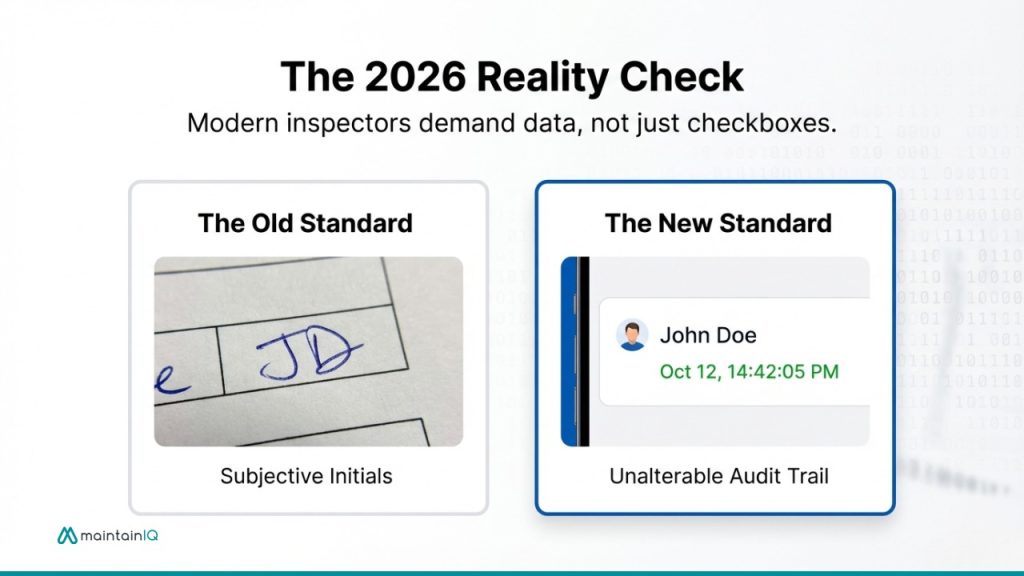
Digital time-stamps paired with unique employee PINs create an unalterable chain of accountability that paper logs simply can’t match. When your staff completes a task, the system automatically records who did it and the precise moment it was finished.
This defensible record of care becomes invaluable during investigations. Paper signatures can be forged, and entries can be added after the fact.
Digital logs eliminate these vulnerabilities by creating a transparent history that’s impossible to manipulate retroactively.
It is just not about checking boxes, but building documented proof that your team adheres to safety protocols every single shift, protecting both public health and your brand’s reputation.
Real-Time Alerting for Temperature Deviations.
Temperature deviations don’t wait for convenient moments—mechanical failures strike most often during overnight hours when managers aren’t on-site to catch them.
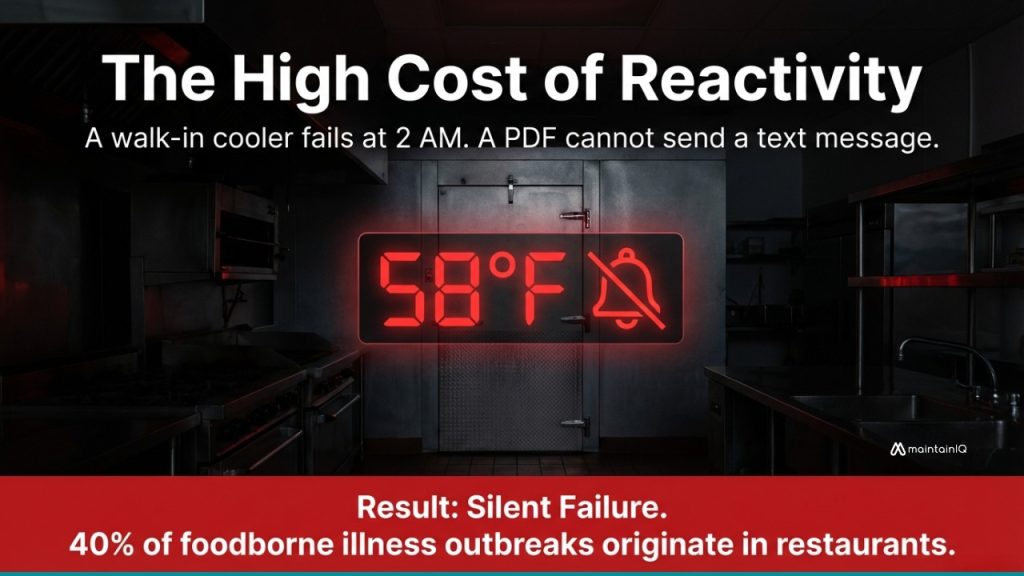
Your cold chain represents one of the most vulnerable points in food safety, and a walk-in cooler failing at 2 AM can destroy thousands of dollars in inventory while creating conditions for deadly pathogens to spread.
Advanced digital systems like MaintainIQ integrate with IoT sensors and Bluetooth thermometers like Cooper-Atkins probes to monitor your refrigeration units around the clock.
When temperatures drift outside safe ranges, you’ll receive immediate alerts via text or app notification—giving your team the window they need to intervene before product loss occurs.
This continuous monitoring transforms reactive crisis management into proactive protection, safeguarding both your inventory investment and your customers’ health.
FSMA and HACCP Compliance Readiness
Accountability in food safety has undergone a fundamental transformation under FSMA, which replaced reactive contamination responses with mandatory preventive controls. You’re now required to maintain detailed HACCP plans that document every critical control point in your operation.
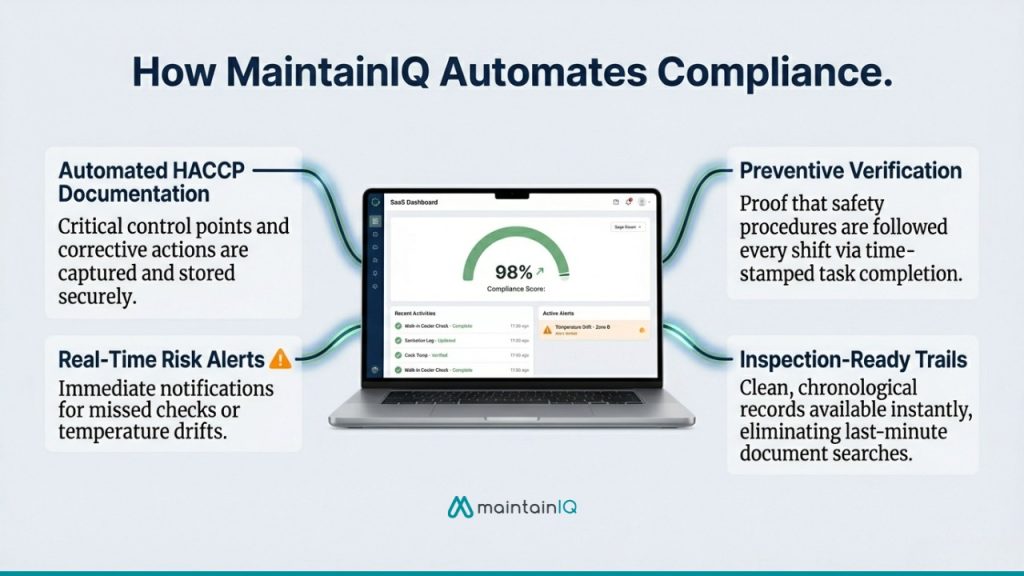
This shift matters because 40% of foodborne illness outbreaks originate in restaurants, contributing to 48 million annual illnesses across the U.S.
Digital compliance software like MaintainIQ automates your HACCP documentation by providing complete traceability—tracking every food product from raw material through final delivery. When regulations change, your standards update automatically, eliminating manual policy reviews that often fall through the cracks.
How MaintainIQ Supports FSMA and HACCP Compliance in 2026
As FSMA shifts food safety toward preventive control and documented verification, MaintainIQ helps restaurants maintain continuous compliance without relying on manual records.
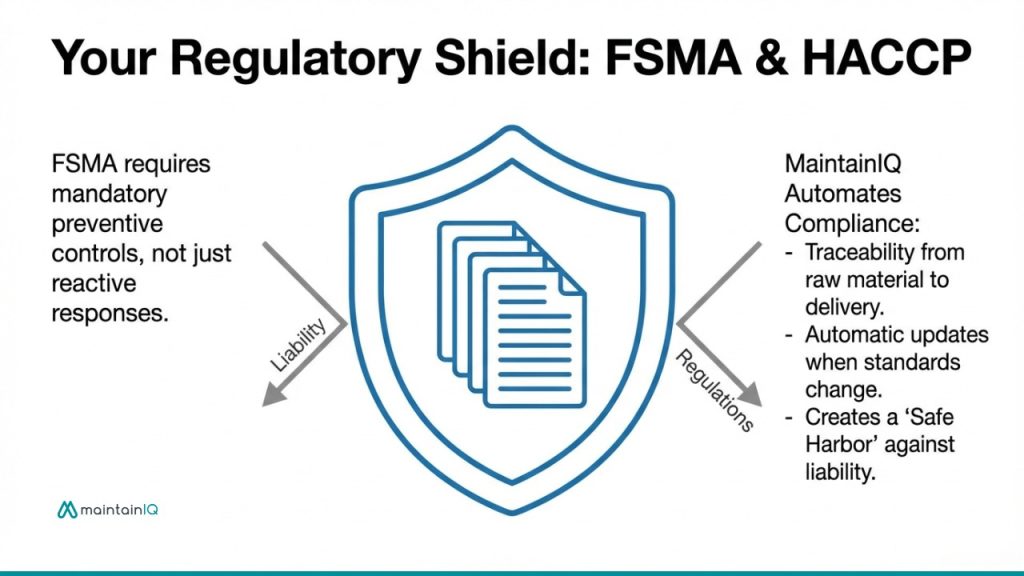
- Automated HACCP documentation: Critical control points, monitoring logs, and corrective actions are captured digitally and stored securely.
- Preventive control verification: Time-stamped task completion and staff accountability provide proof that safety procedures are followed every shift.
- Real-time risk alerts: Temperature deviations and missed checks trigger immediate notifications, enabling corrective action before violations occur.
- Inspection-ready audit trails: Clean, chronological records are available instantly, eliminating last-minute document searches during inspections.
This creates a reliable Safe Harbor protecting you from legal and financial liability. You’re not just checking boxes; you’re building verifiable proof that your preventive controls work exactly as regulators expect.
Frequently Asked Questions
How Long Does It Take to Transition From Paper Checklists to Digital Systems?
You can typically move from paper checklists to digital systems within two to four weeks. Your timeline depends on team size, training needs, and how quickly you’ll configure workflows to match existing processes.
Can Digital Compliance Systems Integrate With Existing Restaurant Management Software?
Yes, you can integrate digital compliance systems with your existing restaurant management software. Modern platforms like MaintainIQ connect seamlessly with POS systems, inventory tools, and scheduling apps, creating unified workflows that eliminate redundant data entry.
What Happens to Compliance Data if the Digital System Experiences Downtime?
You won’t lose your compliance data during downtime. Modern systems like MaintainIQ store records in secure cloud environments with automatic backups, so you’ll access everything once connectivity’s restored—keeping your inspection readiness intact.
How Do Digital Systems Handle Multi-Location Restaurant Chains With Different Local Regulations?
You’re not juggling a dozen rulebooks anymore. Digital systems let you configure location-specific compliance protocols, automatically applying different local health regulations to each restaurant while maintaining centralized oversight across your entire chain.
What Training Do Staff Members Need to Use Digital Compliance Platforms Effectively?
You’ll need training on task completion workflows, photo documentation protocols, and real-time alert responses. Staff should understand how to log corrective actions and navigate mobile interfaces for daily compliance verification across all stations.