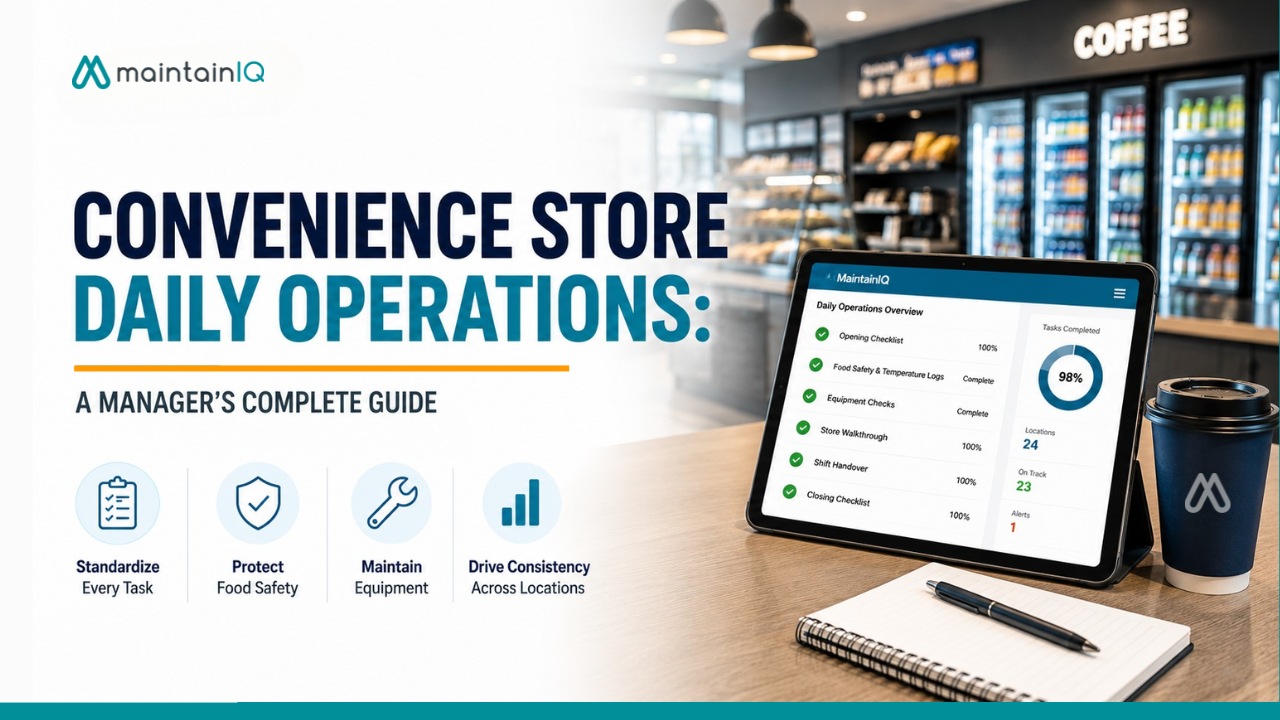
Convenience store daily operations run on speed, consistency, and trust. Customers walk in expecting clean facilities, stocked shelves, fresh food, and a fast transaction — every single visit. Delivering that experience requires a level of operational discipline that’s easy to underestimate from the outside.
The U.S. convenience store industry generated $837.4 billion in total sales in 2024, with in-store sales hitting a record $335.5 billion, according to NACS. Foodservice — prepared food, commissary items, and dispensed beverages — accounted for 28.7% of in-store sales and nearly 40% of in-store gross margin dollars.
That growth means more food safety requirements, more equipment to maintain, more compliance to document, and more operational complexity than the traditional grab-and-go model ever required.
For managers running one or multiple c-store locations, the daily operations challenge comes down to this: how do you make sure every task gets done, every shift, at every store — without being physically present at all of them?
This guide covers every operational area a c-store manager needs to control, from opening procedures through closing, and the systems that make consistency possible at scale.
Table of Contents
Opening Procedures: Setting the Day Up Right
The first 30 minutes of a convenience store’s day determine how the rest of it goes. A rushed or incomplete opening means the team spends the morning catching up instead of serving customers.
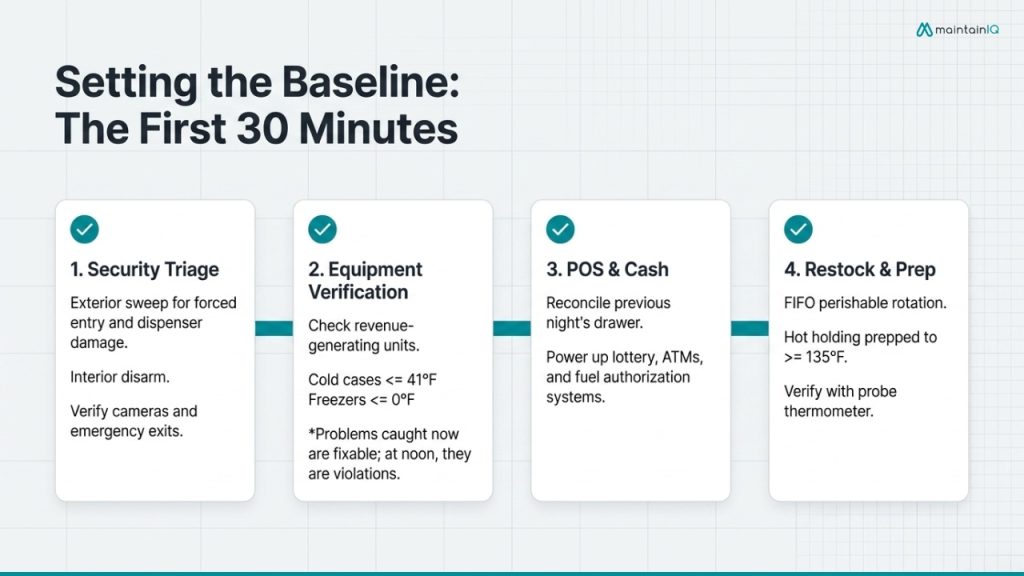
Security and Facility Check
Before anyone enters the store, the opening team should do an exterior walk. Check for broken windows, signs of forced entry, damage to fuel dispensers, and any overnight issues with signage or lighting. If anything looks wrong, don’t enter — call law enforcement first.
Once inside, disarm the security system and do a quick interior walk-through before turning on lights. Verify no unauthorized persons are present, emergency exits are clear, fire extinguishers are accessible, and cameras are operational.
Equipment Verification
Every piece of revenue-generating equipment needs a status check at opening. Walk the store and verify that refrigerated cases — beverage coolers, dairy, beer caves — must run 41°F or below for refrigerated, 0°F or below for frozen. Check hot food equipment: roller grills, warmers, hot dog stations, and coffee brewers. Verify that fountain drink machines are dispensing correctly and ice machines are producing.
This is where temperature documentation starts. Record cooler and freezer temperatures on your opening digital checklist. If any unit is out of range, document the reading, take corrective action (adjust thermostat, check power, move product), and notify your district manager or maintenance team.
Equipment problems caught at opening are fixable. Equipment problems discovered by a health inspector at noon are violations.
Cash and POS
Count the opening cash drawer and verify it matches the expected starting amount. Reconcile against the previous night’s closing report. Power on POS systems, verify connectivity, and confirm that lottery terminals, ATMs, and fuel authorization systems are online. Run a test transaction if your system supports it.
Restocking and Merchandising
Check the sales floor for gaps. Restock shelves, cooler facings, and impulse displays from backroom inventory. Pull forward any product that was pushed back during the previous day’s traffic. Rotate perishable items — first in, first out — and pull anything past its sell-by date. Restock the coffee station: fresh pots, cups, lids, creamers, sugar, stir sticks.
For stores with foodservice programs, prep the day’s food items according to your food safety plan, date-label all items, set hot holding equipment to 135°F or above, and verify with a probe thermometer before loading product.
Exterior and Fuel Area
Sweep the forecourt. Empty trash cans at fuel islands. Check that pump nozzles, screens, and card readers are functioning. Verify that price signs match the current fuel price in your POS system. If your store has a car wash, verify it’s operational and supplies are stocked.
Mid-Shift Operations: Maintaining Standards During Peak Traffic
The opening sets the standard. Mid-shift is where that standard gets tested — especially during morning and lunch rushes when customer volume peaks and staff are pulled in multiple directions.
Temperature Monitoring
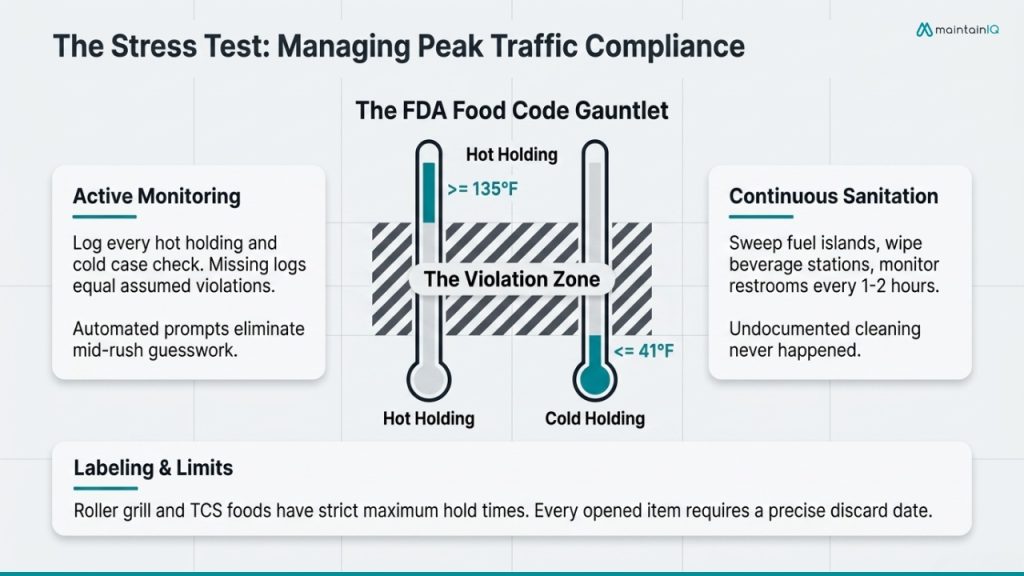
Mid-shift temperature checks are critical, particularly for any store selling prepared food. Check hot holding equipment to verify food is at 135°F or above. Check refrigerated display cases and walk-in coolers. Document every reading. If something is out of range, take immediate corrective action and log it.
Convenience stores that sell food — and the majority now do — are subject to the same FDA Food Code requirements as restaurants. Health inspectors make no distinction. Hot food below 135°F, cold food above 41°F, or missing temperature logs are all citable violations.
Digital temperature checks eliminate the guesswork here. Staff receive automated prompts at scheduled intervals, readings are time-stamped, and managers get alerts if checks are missed or readings are out of range.
Food Safety and Date Labeling
Walk the foodservice area and check date labels on all prepared items. Pull anything that has passed its discard time. Check the roller grill — items have a maximum hold time (typically 4 hours for most TCS foods under time-as-a-control provisions, though your local code may differ). Verify that condiment stations, self-serve areas, and fountain machines are clean and stocked.
For stores with fresh food programs (sandwiches, salads, cut fruit), verify that cold-held items are below 41°F and hot-held items are above 135°F. These are the items inspectors target because they carry the highest food safety risk in a convenience store setting.
Cleaning and Sanitation
High-traffic stores need continuous cleaning, not just opening and closing deep cleans. Core mid-shift tasks:
- Restroom checks every one to two hours during peak periods
- Floor sweeping and mopping in high-spill areas
- Beverage station wipe-downs
- Fuel island trash collection
- Coffee station upkeep — spills, empty pots, and dirty counters are the first thing customers notice
Document all cleaning tasks on your shift checklist. Undocumented cleaning is, from a compliance standpoint, cleaning that didn’t happen.
Inventory and Vendor Deliveries
Most c-store deliveries arrive mid-shift. When they do, check delivery temperatures for refrigerated and frozen items. Verify quantities against the invoice. Inspect product condition — reject anything damaged, expired, or delivered at incorrect temperatures. Document receiving temperatures in your log.
When stocking, always rotate new product behind existing inventory — new stock pushed to the front means older product expires unseen in the back, which is where shrinkage quietly starts.
Closing Procedures: Securing the Store and Setting Up Tomorrow
Closing is not just about locking the door. It’s about documenting the day, securing assets, and ensuring the next shift starts clean.
Sales Floor and Backroom
Do a complete walk of the sales floor. Restock anything that’s low — the opening crew shouldn’t have to start their day restocking shelves. Face all products forward. Check for misplaced items, damaged packaging, or spills that need cleaning.
In the backroom, organize receiving areas, break down boxes, and take out trash. Verify that walk-in cooler and freezer doors are fully sealed. Check that all equipment that should be running (coolers, freezers, ice machines) is on, and anything that should be off (roller grills, coffee brewers, fryers) is shut down and cleaned.
Cash Reconciliation and Reporting
Count the cash drawer and reconcile against POS sales for the shift. Document any discrepancies and prepare the bank deposit if applicable. End-of-day reports to run:
- Total sales and fuel gallons dispensed
- Lottery sales and payouts
- Foodservice sales
- Voided transactions and refunds
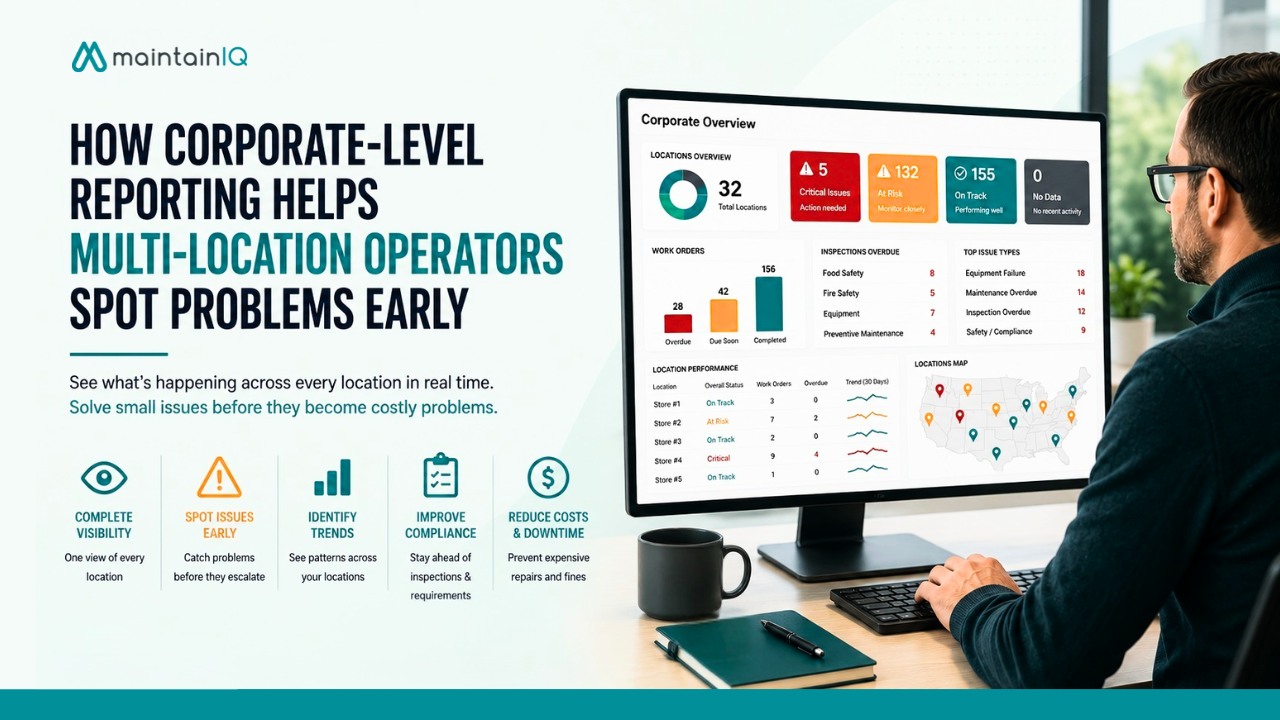
For multi-location operators, these daily reports feed into corporate-level reporting that tracks store performance across the network. Patterns in cash discrepancies, fuel shortages, or sales variances only become visible when every store reports consistently.
Security and Lockup
Verify that all customers and non-closing staff have left the store. Arm the security system. Lock all doors, including back entrances and receiving doors. Verify that exterior lighting and security cameras are functioning — a well-lit, camera-monitored exterior deters overnight break-ins.
Turn off interior lights according to your store’s protocol (some operators leave select lights on for security visibility. Do a final walk of the fuel area to verify pumps are locked out or set to after-hours authorization mode, depending on your operation.
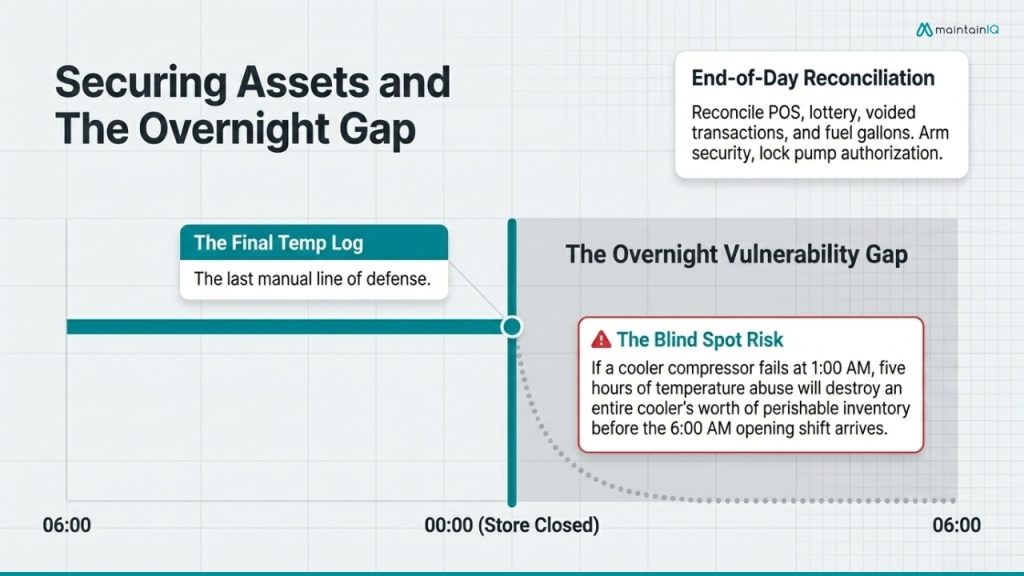
Final Temperature Log
Take closing temperature readings on all refrigeration and freezer equipment. This is the last documented check before the overnight gap — the period when equipment failures go undetected. If a cooler fails at 1 AM and nobody checks until 6 AM, five hours of temperature abuse can destroy an entire cooler’s worth of perishable inventory.
For stores with automated temperature monitoring, this overnight gap is covered by sensors that alert the manager’s phone if temperatures breach safe thresholds. For stores still on manual checks, the closing temperature log is the last line of defense.
Equipment Maintenance: Preventing the Breakdowns That Kill Revenue

Convenience stores run on equipment — and most of it runs 24/7. Beverage coolers, walk-in coolers and freezers, ice machines, fountain dispensers, coffee brewers, roller grills, HVAC systems, fuel dispensers, car wash equipment, and ATMs all need scheduled maintenance to avoid the unplanned failures that shut down revenue.
Daily Equipment Tasks
Clean fountain machine nozzles and drip trays. Wipe down roller grill surfaces. Empty and clean coffee station drip areas. Check cooler door gaskets for damage. Verify ice machine bin levels and cleanliness.
Weekly to Monthly Tasks
Deep-clean coffee brewers (backflush, descale). Clean condenser coils on refrigeration units — dirty coils force compressors to overwork, shortening equipment life. Inspect fuel dispenser filters and nozzle screens. Check HVAC filters. Test emergency lighting and exit signs. Inspect fire extinguishers (monthly visual check per NFPA 10).
Scheduled Preventive Maintenance
Quarterly and semi-annual tasks — refrigeration professional service, HVAC system service, hood cleaning (if your store has a kitchen), fuel dispenser calibration verification, and fire suppression inspection — should be automated so they generate work orders without anyone having to remember them.
For multi-location operators, preventive maintenance scheduling across all stores keeps every location on the same service calendar. A cooler compressor that fails at one store because it missed its quarterly coil cleaning is a problem you shouldn’t have — and wouldn’t have, if the PM system had triggered the work order automatically.
Compliance: What Inspectors Check in a Convenience Store
C-store operators are subject to the same health department inspections as restaurants — especially as foodservice programs expand. Here’s what inspectors target:
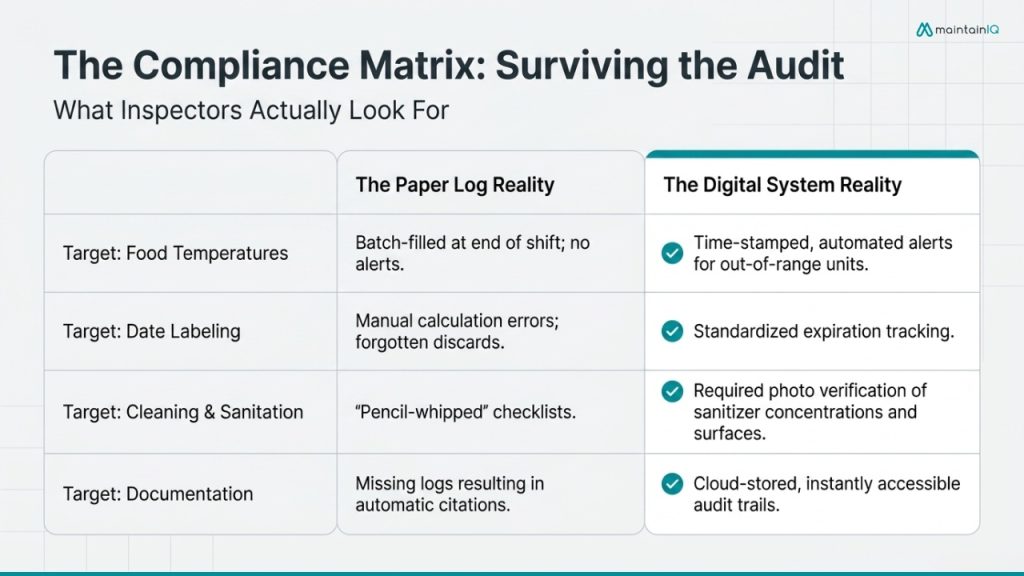
Food temperatures. Cold holding at 41°F or below, hot holding at 135°F or above. Inspectors probe the food, not the case thermometer. This is the #1 area of critical violations in c-stores.
Date labeling. Every prepared item and opened TCS food must have a discard date. Items past their date on the shelf or in the display case are automatic violations.
Employee hygiene. Handwashing, glove use, and illness policies. The person in charge (PIC) must be able to answer food safety questions and demonstrate knowledge of the FDA Food Code.
Cleaning and sanitation. Sanitizer concentrations, food contact surface cleanliness, restroom conditions, and pest evidence. Inspectors check behind equipment and underneath counters.
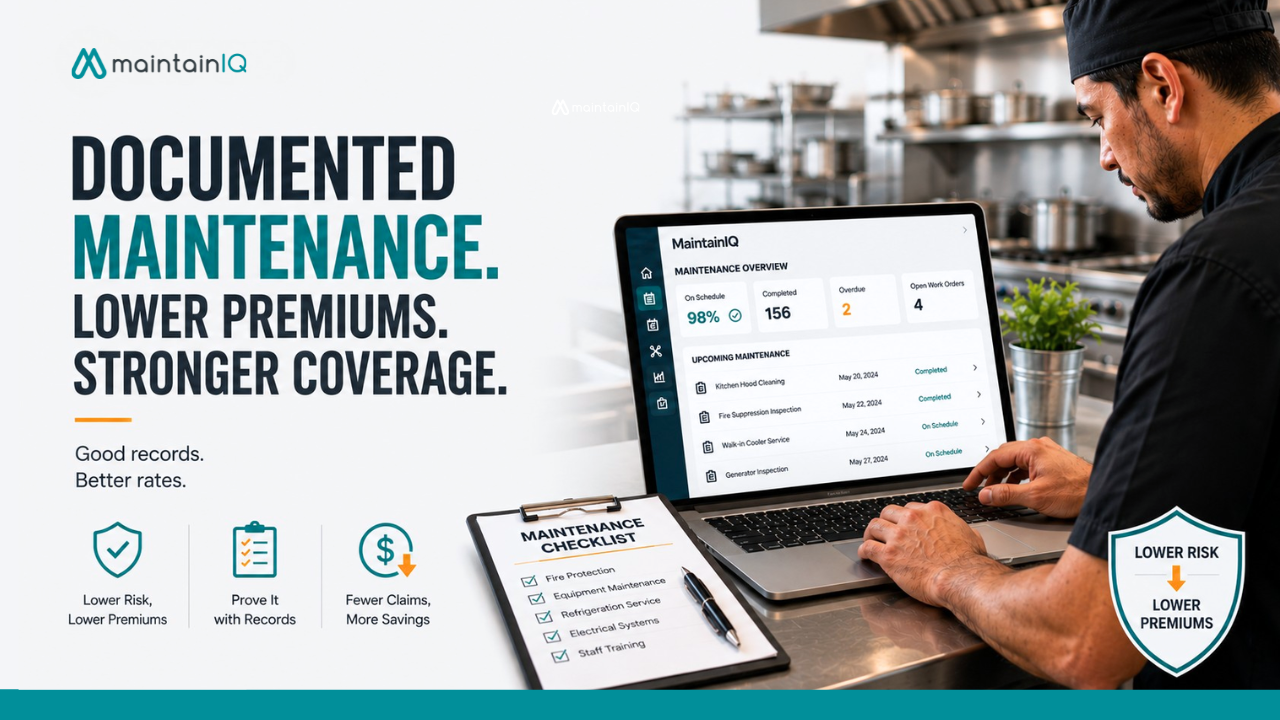
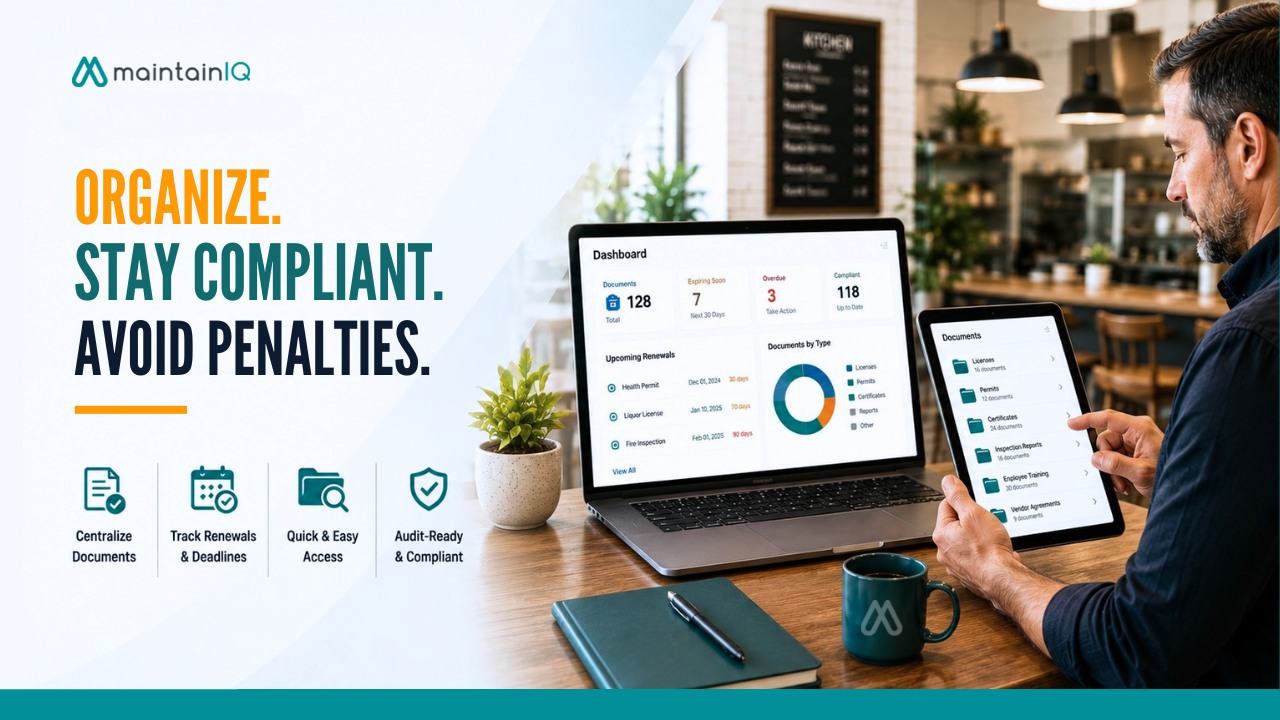
Documentation. Temperature logs, cleaning records, employee training records, and corrective action logs. Missing or incomplete documentation is treated as evidence of non-compliance — even if your actual practices are sound.
Running regular internal audits that mirror the health department’s inspection criteria catches these issues before the inspector does. Audit monthly, at minimum — and vary the timing so you see real operating conditions, not a store that’s been prepped for a visit.
Managing Multi-Location Consistency
The operational challenge of one convenience store is manageable. The challenge of five, ten, or twenty is fundamentally different — because you can’t be everywhere at once, and the quality of daily operations depends on every manager and every shift lead executing the same standard.
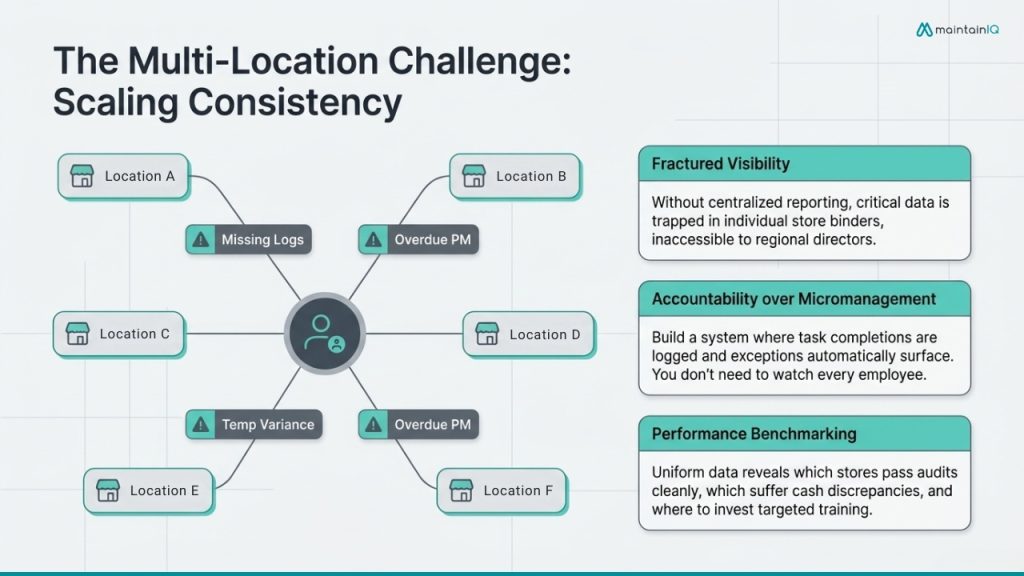
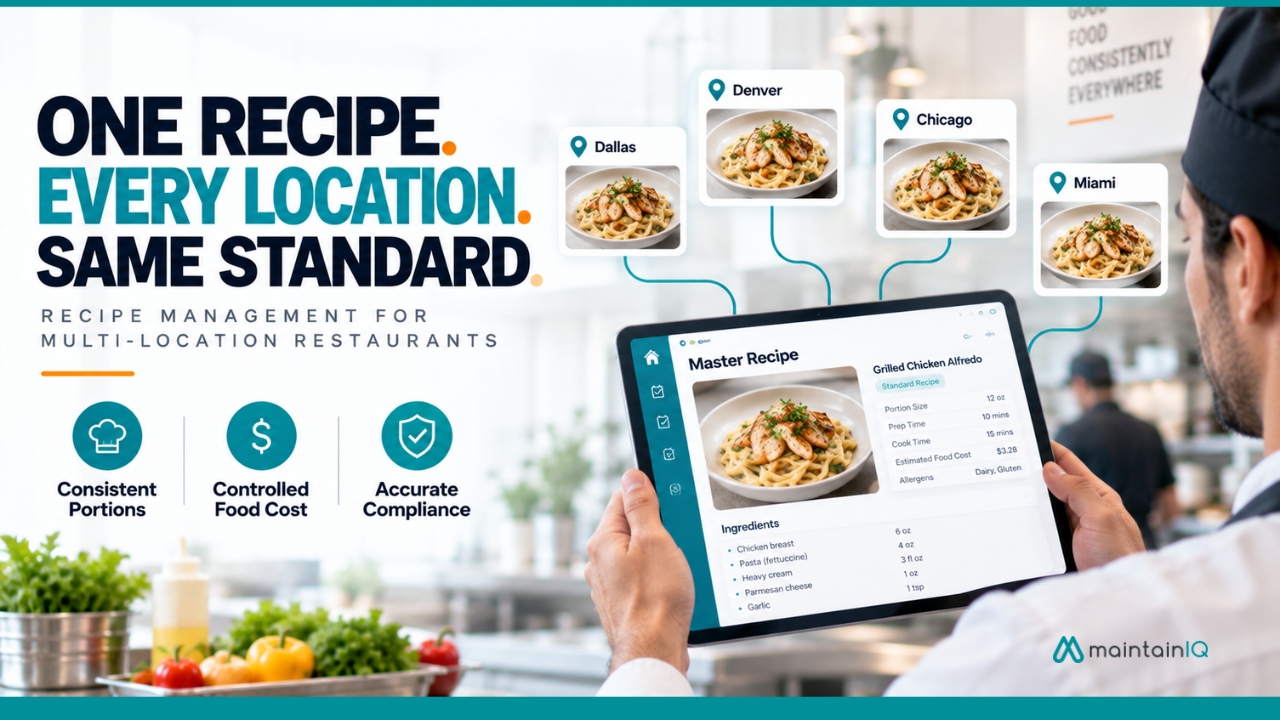
Standardized checklists across all locations. Every store should run the same opening, mid-shift, and closing checklists with the same tasks, the same temperature monitoring points, and the same documentation requirements. Digital checklists enforce this consistency — every store completes the same workflow, and completion data is visible to district and corporate management in real time.
Centralized visibility. A district manager overseeing 10 stores needs to know, at a glance, which stores completed their morning checks, which have open maintenance requests, and which haven’t logged temperatures today. Without centralized reporting, that information lives in individual store binders — inaccessible and unverifiable from a distance.
Accountability without micromanagement. The goal isn’t to monitor every employee’s every action. It’s to build a system where tasks are prompted, completion is logged, and exceptions surface automatically. A checklist that wasn’t completed by 10 AM generates a notification. A temperature that’s out of range triggers a corrective action. A maintenance task that’s overdue escalates to the next level. The system creates accountability — the manager doesn’t have to.
Performance benchmarking. When every store reports the same data, you can compare them. Which stores consistently complete checklists on time? Which have the most equipment issues? Which locations pass health inspections cleanly and which get repeat citations? This data drives decisions about where to invest in training, equipment, and management attention.
Getting Started
You don’t need to digitize everything overnight. Start with the highest-impact areas:
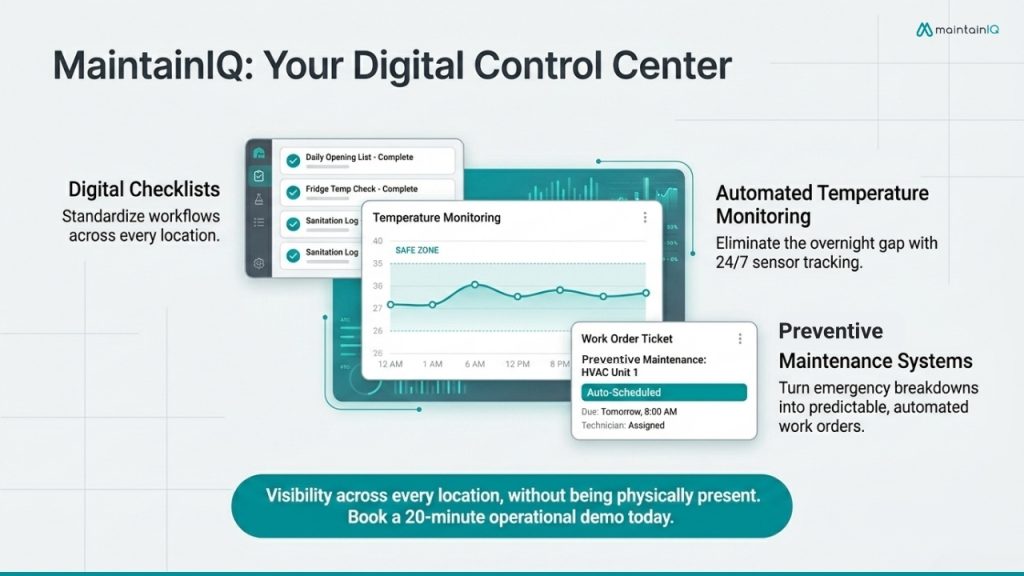
Opening and closing checklists — these set and maintain the daily standard. Move them to digital checklists first so you get completion data and accountability.
Temperature monitoring — especially if your stores sell prepared food. This is the #1 compliance risk in c-store operations, and it’s the area where paper fails hardest (overnight gaps, batch-filled logs, no alerts).
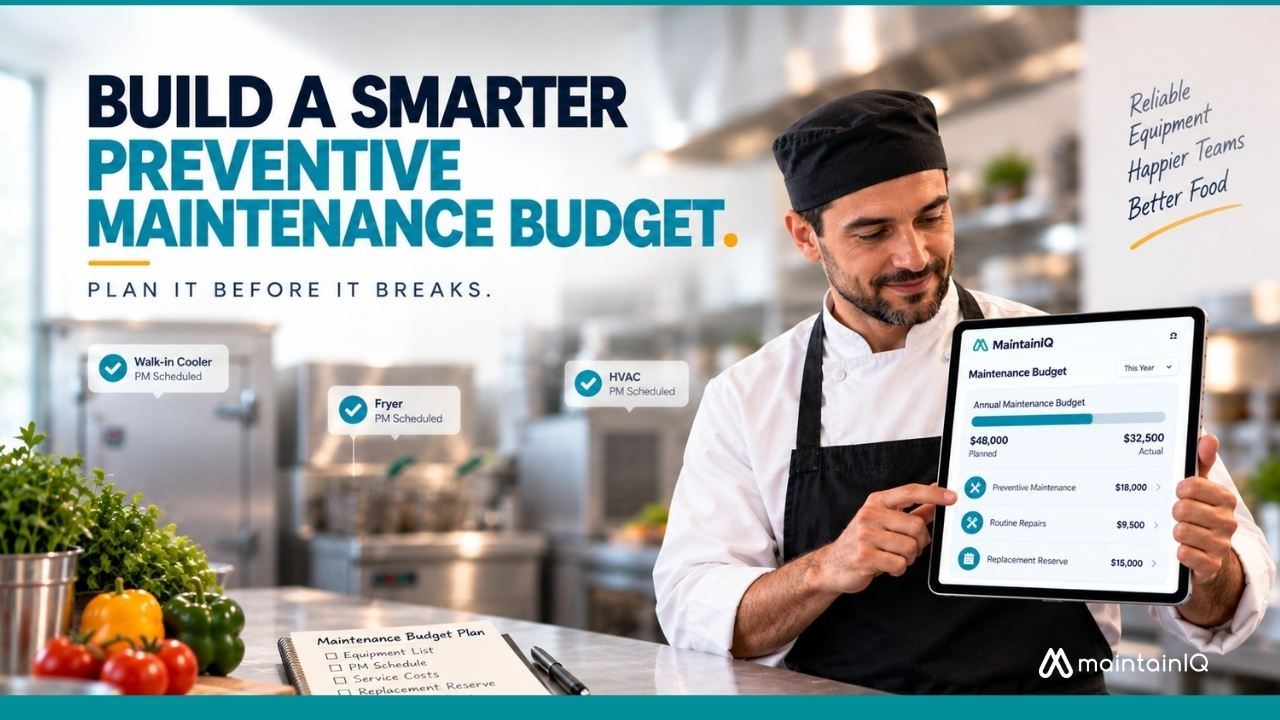
Equipment maintenance — set up recurring work orders for your highest-risk equipment: refrigeration, HVAC, and fuel dispensers. Preventive maintenance costs a fraction of emergency repairs and prevents the revenue loss that comes with downtime.
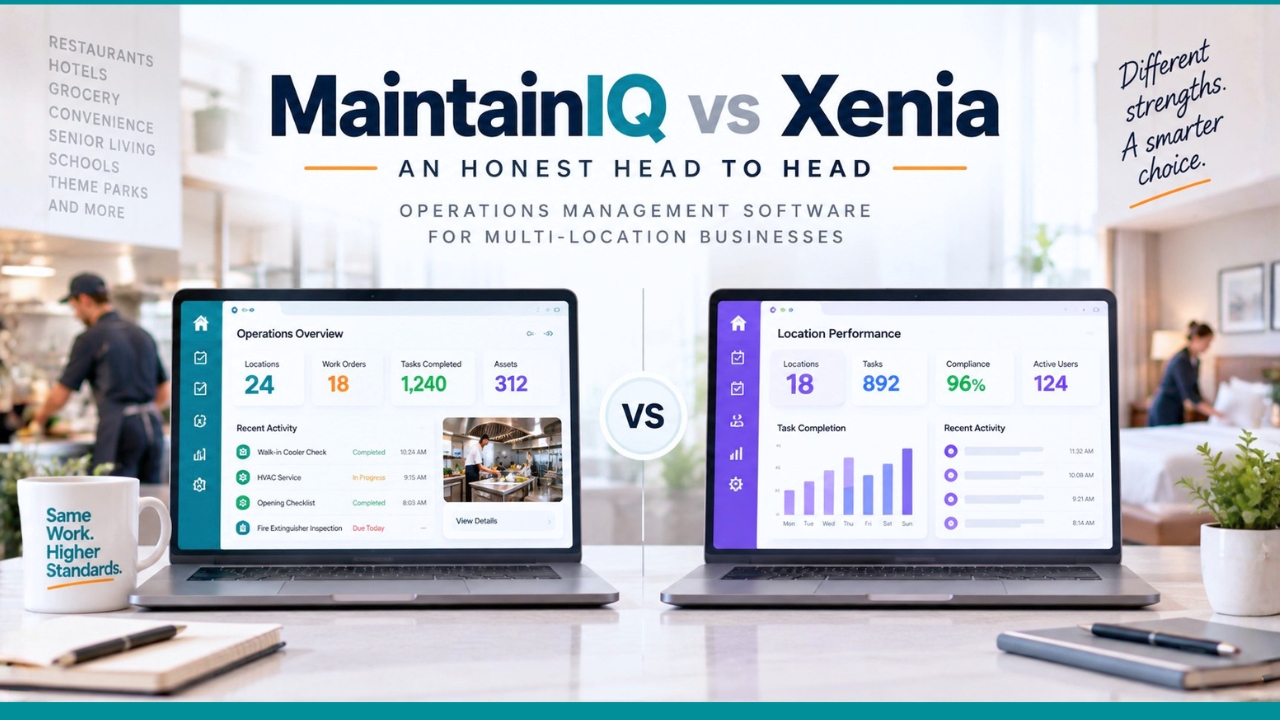
MaintainIQ brings daily checklists, temperature monitoring, preventive maintenance, internal audits, and corporate reporting into one platform — so every store runs the same operations program, and you have visibility across every location without being physically present.
Book a 20-minute demo to see how it works for convenience store operations.
Conclusion
A convenience store that runs well looks effortless to the customer. Behind that experience is a manager who built systems for every shift — opening procedures that set the standard, mid-shift checks that maintain it, and closing procedures that document the day and prepare for tomorrow.
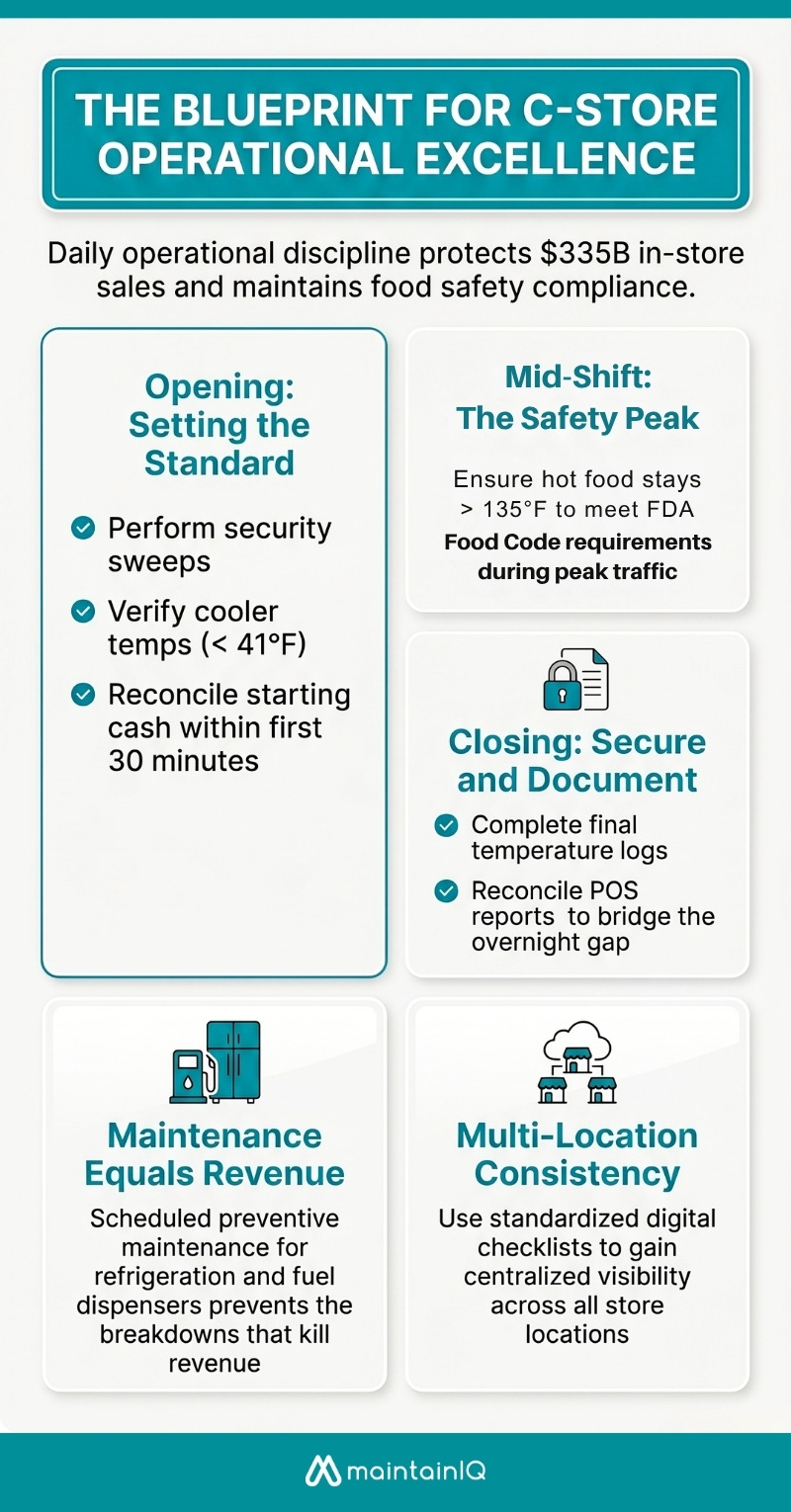
As foodservice becomes a larger share of c-store revenue and profitability, the operational bar rises. Temperature monitoring, food safety compliance, equipment maintenance, and consistent documentation are no longer optional — they’re the baseline for operating a modern convenience store.
And for operators managing multiple locations, the only way to maintain that baseline everywhere is through systems that run the same way at every store, every shift, whether you’re there or not.
The customers walking through your door expect consistency. Your operations need to deliver it.