You know that effective trampoline park maintenance isn’t just about keeping the equipment looking good; it’s a critical component of ensuring safety and smooth operations.
By establishing practices like daily inspections, preventive maintenance schedules, and thorough staff training, you can drastically reduce risks.
But what steps should you really take to protect your customers and reputation?
Understanding these best practices might just change the way you manage your trampoline park.
Table of Contents
Why Maintenance is Critical for Trampoline Parks
Trampoline parks are complex environments filled with interconnected springs, mats, and safety features that require meticulous upkeep to verify visitor safety. Regular maintenance is essential to prevent accidents, improve customer satisfaction, and ascertain regulatory compliance.
Thorough inspection and repair routines, you can catch potential issues early, saving costs associated with sudden breakdowns and lawsuits.
Document all maintenance activities to adhere to legal standards and demonstrate your commitment to safety.
Consistent upkeep doesn’t just protect customers; it builds trust.
Beyond Safety: How Good Maintenance Impacts Operations and Reputation
While prioritizing safety is pivotal, good maintenance extends its benefits far beyond just preventing accidents.
Maintaining a pristine environment allows guests to enjoy their experience worry-free.
This attention to detail directly enhances your brand reputation, portraying your facility as trustworthy and responsible.
1. Establish a Daily Safety Inspection Routine

To guarantee the safety of your trampoline park, focus on high-risk areas during your daily inspections. Use digital checklists to systematically verify that no critical safety steps are overlooked.
High-Risk Areas to Check Daily
Start by examining trampoline beds and springs for any signs of wear or damage, then verify that padding is securely fastened and intact.
Check the netting for tears and evaluate safety zones to confirm all protective measures are in place and functioning correctly.
Trampoline Beds and Springs
Examine trampoline spring integrity, listen for unusual sounds, and look for visible wear. Prioritize trampoline spring replacement if any damage is detected.
| Checklist | Risk Areas | Actions Required |
| Trampoline Bed Condition | Surface Stability | Inspect and clean |
| Trampoline Spring Integrity | Sound and Visual | Listen and look closely |
| Spring Replacement | Damage Spotted | Replace immediately |
Padding, Netting, and Safety Zones
Addressing trampoline safety involves more than just monitoring beds and springs. You need to form a daily inspection routine for padding, netting, and safety zones.
Prioritize:
- Ensuring proper mat placement to prevent gaps.
- Checking net integrity and attachment points.
- Verifying spring tension isn’t overly tight or loose.
- Inspecting padding for wear and tear.
- Updating safety signage for clear visibility.
Stay proactive to enjoy liberation in safety.
Use Digital Checklists to Avoid Missed Steps
While maintaining a trampoline park, forgetting even a single critical safety step can lead to serious consequences. Create customized checklists to streamline your daily safety inspection routine. Digital tools let you optimize checklist workflows, ensuring no steps are overlooked while maximizing efficiency. Improve data accessibility by using cloud-based platforms that your team can access anywhere, anytime.
| Task | Frequency |
| Inspect Trampoline | Daily |
| Check Safety Nets | Weekly |
| Assess Padding | Monthly |
Your dedication to thorough inspections grants you freedom from worry and empowers you to provide a safe environment. With the right tools, you’ll conquer safety challenges effortlessly.
2. Implement a Preventive Maintenance Schedule
To implement an effective preventive maintenance schedule at your trampoline park, focus on a structured plan that includes weekly, monthly, and quarterly tasks.

Regularly replace worn springs and padding, inspect support structures, and guarantee that safety nets are secure. This approach extends equipment lifespan and safeguards customer safety and compliance with industry standards.
What Preventive Maintenance Looks Like for Trampoline Parks
Implementing a preventive maintenance schedule for trampoline parks is essential to keeping equipment safe and extending its lifespan. Regular inspections and detailed plans enhance user safety protocols and guarantee peak equipment performance.
Key preventive maintenance steps include:
- Conduct thorough trampoline park inspections to identify wear and tear.
- Develop seasonal maintenance plans to address climate-related impacts.
- Implement user safety protocols to prevent accidents.
- Schedule routine checks for springs, frames, and mats.
- Track equipment usage and replace worn parts promptly.
With a proactive approach, you create a liberated space where visitors can freely enjoy jumping experiences.
Weekly, Monthly, and Quarterly Task Examples
A structured maintenance schedule guarantees trampoline parks remain safe, enjoyable, and efficient.
Each week, inspect mats, nets, and springs for wear. Update and refine your staff training schedules to confirm all employees are prepared for maintaining safety standards.
Monthly, audit safety protocols, checking compliance with current regulations. Employ recordkeeping best practices to log maintenance activities and observations accurately.
Every quarter, conduct thorough equipment inspections. This ascertains repairs or replacements are promptly and effectively executed, minimizing risks.
3. Train Staff Thoroughly and Regularly
Focus on training staff thoroughly in key areas such as safety protocols, equipment checks, and emergency response to maintain a secure environment.
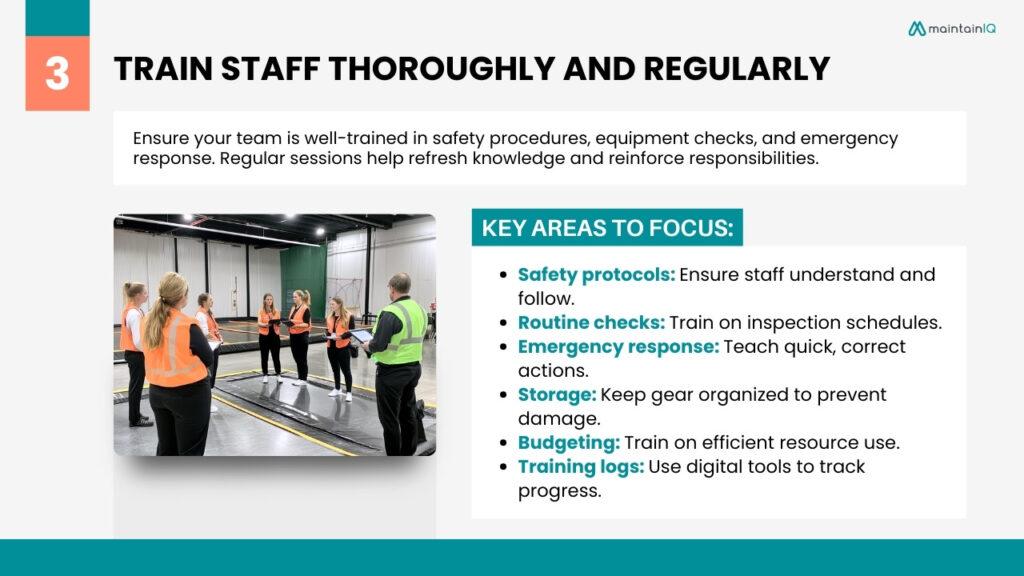
Guarantee team members are well-versed in these procedures by conducting regular training sessions and rejuvenating their knowledge periodically.
Keep training logs organized and up-to-date using digital tools to track progress and compliance efficiently.
Key Training Areas: Safety Protocols, Equipment Checks, Emergency Response
To guarantee a safe and enjoyable environment at a trampoline park, staff training must be thorough and ongoing, focusing on safety protocols, equipment checks, and emergency response procedures. Equip your team with the knowledge they need to maintain a liberated, worry-free atmosphere. Prioritize ongoing staff training for a committed workforce ready to act quickly.
Key areas to cover include:
- Safety protocols: Verify everyone understands and follows them diligently.
- Equipment checks: Schedule routine inspections to prevent malfunctions.
- Emergency response: Train staff to respond promptly and effectively.
- Proper equipment storage: Extend equipment lifespan.
- Maintenance budget planning: Allocate resources wisely to avoid unexpected issues.
Keep Training Logs with Digital Tools
More than ever, advancements in digital technology play an essential role in efficient training management at trampoline parks. Embrace technology to easily track staff training, ensuring every team member stays current. Digital tools let you review digital documentation and thoroughly record each training session.
This enables you to analyze performance trends over time, pinpointing areas needing improvement. By leveraging these tools, you establish a robust training ecosystem, optimizing staff efficiency and safety. Regularly update and verify logs to guarantee accuracy. Freedom from outdated methods leads to a safer, well-prepared staff and a more secure park environment.
4. Document Everything
Documenting all maintenance activities is crucial for ensuring safety and staying compliant with regulations. By adopting a digital maintenance system, you can efficiently store records, minimize potential liabilities, and streamline inspections.

Make it a routine to update and review your documentation regularly for maximum effectiveness.
Why Documentation is Crucial for Liability and Compliance
Although it might seem like an administrative burden, detailed documentation is paramount for protecting trampoline parks and minimizing liability risks. You need thorough records to safeguard your park and liberate you from future headaches.
This isn’t just paperwork—it’s your safeguard and a key to safer operations.
Consider the following documentation benefits:
- Track maintenance schedules consistently.
- Record detailed staff training sessions.
- Log customer incidents accurately.
- Maintain extensive safety inspections.
- Guarantee adherence to industry regulations.
With these practices, you can confidently manage your trampoline park.
Benefits of Going Paperless with a Digital Maintenance System
Shifting to a paperless, digital maintenance system streamlines operations and heightens safety standards in trampoline parks.
You gain the freedom from cumbersome paperwork, focusing instead on efficiently tracking maintenance tasks.
Imagine accessing and updating equipment records instantly, ensuring no step is overlooked.
5. Respond to Issues Immediately
You’re responsible for ensuring that any issues at the trampoline park are addressed immediately to maintain a safe environment and protect your reputation. Implement a system that quickly flags and escalates repairs, so nothing slips through the cracks.

This proactive approach minimizes risks and demonstrates your commitment to safety and customer satisfaction.
Don’t Delay Repairs: It’s a Safety and PR Risk
When issues arise at your trampoline park, addressing repairs without delay is critical to guarantee customer safety and maintain a positive public image. Quick responses minimize liability exposure and preserve your brand reputation.
Ignoring problems leads to equipment degradation and increased risk. To keep your park safe and popular, act immediately when you notice issues.
- Document each incident thoroughly.
- Prioritize repairs based on potential safety hazards.
- Communicate maintenance updates to your team.
- Verify that repairs meet safety standards.
- Follow up with regular inspections for ongoing safety.
Act swiftly. Your attentiveness keeps freedom-loving customers enjoying worry-free jumping experiences.
Set Up a System to Flag and Escalate Issues
Establishing a robust system to flag and escalate issues is paramount for ensuring immediate responses to potential safety hazards.
Start by implementing a digital platform where staff can track issues in real-time. Assign dedicated personnel to constantly monitor and categorize these problems based on severity, allowing for swift escalation.
Regularly audit this data to monitor trends, highlighting recurring concerns that might otherwise be overlooked. Prioritize problems with a clear protocol, ensuring the most critical issues are addressed first.
This systematic approach enhances safety and empowers your team, sparking a culture of vigilance and liberation from underlying risks.
6. Schedule Third-Party Safety Audits
Guarantee the safety of your trampoline park by scheduling regular third-party safety audits. Auditors carefully evaluate equipment integrity, staff training, and compliance with industry standards, while your well-maintained internal logs can substantially aid in demonstrating safety protocols.

Regular audits enhance your safety practices and build trust with your customers and employees.
What Auditors Look For in Trampoline Parks
To secure a safe environment, audits focus on specific safety and compliance elements.
You’ll need to pay careful attention to:
- Staff Qualifications: Are employees trained and certified according to industry guidelines?
- Equipment Inspection: Is regular maintenance in line with regulatory requirements?
- Emergency Procedures: Are protocols clearly established and practiced?
- Operational Layout: Is the park’s layout adhering to safety standards?
- Incident Reporting: Are thorough logs of past incidents maintained?
Safeguard your park meets these requirements to empower a secure and liberated experience.
How Internal Logs Support Your Audit Success
Although managing internal logs might seem like an arduous task, they’re imperative for the success of your third-party safety audits.
Embrace electronic records management to streamline documenting preventative maintenance.
Accurate logs help you track essential repair schedules and safeguard audit trail integrity. Stay liberated from paper chaos and concentrate on precision.
Enter maintenance checklists and incident reports digitally, allowing you real-time access to critical data.
Auditors seek well-maintained documentation of safety protocols. Your thorough records enhance your park’s credibility, ensuring a smoother audit and a safer, more enjoyable visitor experience.
7. Use Technology to Centralize and Simplify Maintenance
To optimize trampoline park maintenance, consider using digital checklist platforms like MaintainIQ. These tools allow you to efficiently manage and streamline maintenance tasks, ensuring nothing slips through the cracks.

When selecting a maintenance app, look for features such as real-time updates, automated reminders, and extensive reporting to enhance safety and operational efficiency.
Digital Checklist Platforms like MaintainIQ
Ever wonder how you can streamline your trampoline park’s maintenance routine?
Digital checklist platforms like MaintainIQ can be a game changer. Imagine managing everything at your fingertips with data visualization, making safety checks transparent and efficient. Centralized task scheduling lets you break free from chaotic paper trails. All equipment tracking is integrated into a single platform, ensuring nothing slips through the cracks.
- Optimize daily inspections effortlessly.
- Prioritize urgent tasks instantly.
- Analyze maintenance trends with visual data.
- Automate reminders for routine checks.
- Monitor equipment wear and tear proactively.
With these practical tools, guard your patrons’ safety and liberate your management team.
Features to Look for in a Trampoline Park Maintenance App
Digital checklist platforms revolutionize trampoline park maintenance, but choosing the right app to centralize and simplify your routine can amplify these benefits.
Look for an app with a user-friendly interface, making daily operations a breeze.
Guarantee it offers cloud-based data storage to access information from anywhere, promoting a seamless workflow and freeing you from physical constraints.
Customizable checklists are vital; they let you tailor tasks to meet specific safety standards, offering control over what truly matters.
These features streamline processes, safeguard guests, and maintain a well-oiled operation with newfound liberation and peace of mind.
Recap: Why Proactive Maintenance = Safer, Smoother Operations
Getting into the groove of proactive maintenance can transform your trampoline park into a beacon of safety and efficiency. By embracing a routine of forward-thinking upkeep, you adhere to regulatory compliance effortlessly and guarantee cost-effective operations. Your park becomes a haven, where visitor satisfaction naturally thrives.
Enjoy the liberation this proactive approach offers by considering these elements:
- Daily equipment checks: Spot potential issues before they escalate.
- Regular staff training: Empower your team with knowledge and skills.
- Scheduled deep cleaning: Maintain a pristine environment.
- Periodic safety audits: Keep systems in top shape.
- Feedback loops: Capture insights for continual improvement.
Frequently Asked Questions
How Can Trampoline Materials Affect Maintenance Needs?
Prioritize material durability, flexibility, and safety to guarantee minimal maintenance. Durable materials reduce repair frequency, flexible ones withstand stress, while safe materials prevent injuries. Emphasizing these aspects frees you from frequent maintenance hassles and improves user safety.
What Are the Benefits of Seasonal Trampoline Equipment Checks?
Seasonal checks ensure trampoline equipment stays secure and functional. Scheduled inspections facilitate preventative maintenance, reducing risks and downtime. This proactive approach liberates you from unexpected repairs, creating a safer, more reliable environment.
How Does Weather Impact Trampoline Park Maintenance?
You must consider how seasonal temperature fluctuations affect equipment. Develop moisture management strategies to prevent damage. Prepare for extreme weather by periodically checking structures, guaranteeing safety gear, and protecting surfaces to confirm trampolines remain safe and liberate your energy.
What Tools Are Essential for Trampoline Park Repairs?
You need tools for frequent trampoline frame inspections, precise safety net attachments, and streamlined padding replacement procedures. Stay safety-focused to guarantee everyone feels free to leap fearlessly.
How Can Customer Feedback Assist in Improving Maintenance Practices?
Use feedback for targeted maintenance staff training, ensuring repairs align with guests’ experiences and expectations, liberating operations from recurring safety issues while enhancing overall enjoyment.