Why Invest in a Commercial Kitchen Maintenance Plan?
Maximize efficiency and safety in your business with a Commercial Kitchen Maintenance Plan - your guide to smarter kitchen management.
Key takeaways
- Regular cleaning, adjusting settings and replacing worn parts help kitchen equipment last longer and break down less often.
- Under NFPA 96, hoods and exhaust systems are inspected monthly to annually depending on cooking volume, so match your plan to your kitchen.
- Scheduled check-ups by skilled technicians catch small issues before they turn into costly repairs or a closed kitchen.
- Well-maintained equipment cooks the same way every day, which protects food quality, service reliability and your reputation.
On this page
A commercial kitchen maintenance plan is worth the investment because it keeps your equipment running, catches small problems before they turn into costly repairs, lowers energy use and keeps you in line with health and fire safety rules. In practice, it is a written schedule of cleaning, checks and professional service for every piece of equipment, with a clear owner for each task.
If you are in charge of a commercial kitchen, think of a maintenance plan as your secret ingredient for success.
Regular upkeep makes equipment more reliable, prevents malfunctions and catches issues early to avoid costly repairs. Well-maintained machines also work more efficiently, which lowers energy costs.
Staying on top of maintenance also helps you meet health and safety regulations, which protects your reputation and your customers’ trust.
A maintenance plan is a smart business move that saves money over time because it keeps your kitchen running smoothly. Keep your kitchen in top condition with a consistent schedule, and you will see its value in the long-term health of your business.
What a Commercial Kitchen Maintenance Plan Covers
A good plan lists each piece of equipment, what your staff check and when, and what a professional services and how often. Some intervals come from fire codes, and most come from the manufacturer’s manual. Here is a starting point:
| Area or equipment | Staff checks | Professional service |
|---|---|---|
| Hood, filters and exhaust | Clean grease filters on a regular schedule | Inspection under NFPA 96: monthly for solid-fuel cooking, quarterly for high-volume cooking, semiannually for moderate volume, annually for low volume |
| Fire extinguishers | Monthly visual inspection under NFPA 10 | Annual maintenance |
| Refrigeration | Log temperatures every shift, check door gaskets | Condenser coil cleaning and refrigeration service on the maker’s schedule |
| Ovens, fryers and grills | Daily cleaning, watch for uneven heat or slow recovery | Calibration and gas or electrical checks on a set schedule |
| Dish machine | Check wash and final rinse temperatures each shift | Service and descaling as needed |
| Plumbing and drains | Report leaks and slow drains right away | Grease trap cleaning on the schedule your city requires |
High-volume cooking includes 24-hour kitchens, charbroiling and wok cooking. Low volume covers places like seasonal businesses or church kitchens. If you are not sure which group you fall into, ask your hood cleaning company or fire inspector.
Prolonging Equipment Lifespan
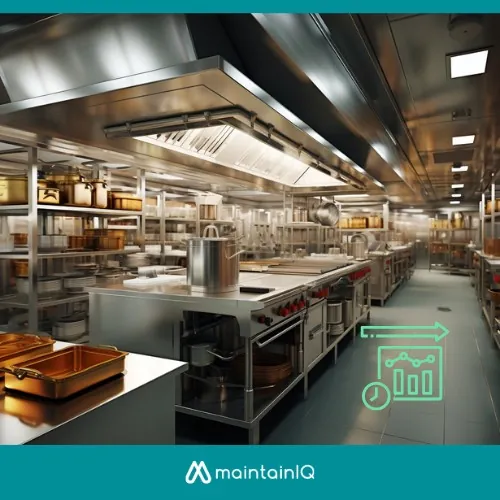
Regular maintenance helps commercial kitchen equipment last longer, work efficiently and keep its resale value. It is the same reason some restaurant ovens stay in top shape for years while others fail early.
A well-planned preventive maintenance schedule can prevent early equipment failures and reduce breakdowns that disrupt service.
Maintenance involves cleaning, adjusting settings, replacing worn-out parts and checking that everything runs smoothly. Small jobs done on time protect the big investment.
Enhancing Operational Efficiency
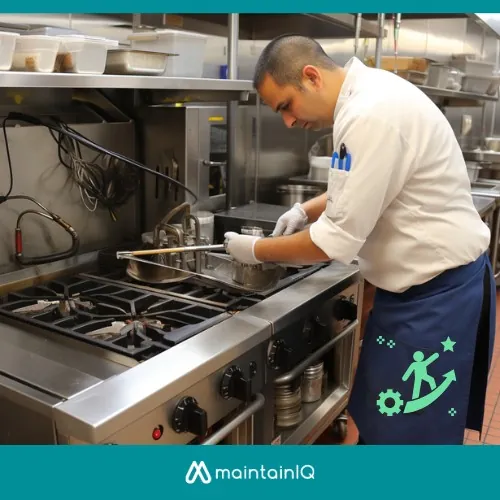
Regular maintenance of commercial kitchen equipment keeps business running efficiently and without interruption. Skilled technicians can head off expensive repairs and reduce downtime, which saves time and money over the long run.
| Benefit | Impact on Kitchen | Result |
|---|---|---|
| Lower Energy Consumption | Decreased Utility Expenses | Cost Efficiency |
| Prompt Issue Identification | Reduced Need for Large Repairs | Dependability |
| Stable Performance | Better Quality of Food | Happy Customers |
| Longer Equipment Life | Fewer Replacement Needs | Protected Investments |
| Streamlined Operations | Conservation of Time and Resources | Raised Productivity |
Committing to a maintenance schedule is a wise decision that leads to real improvements in efficiency.
Next, let’s look at why this commitment is also vital for meeting health and safety standards.
Ensuring Health and Safety Compliance
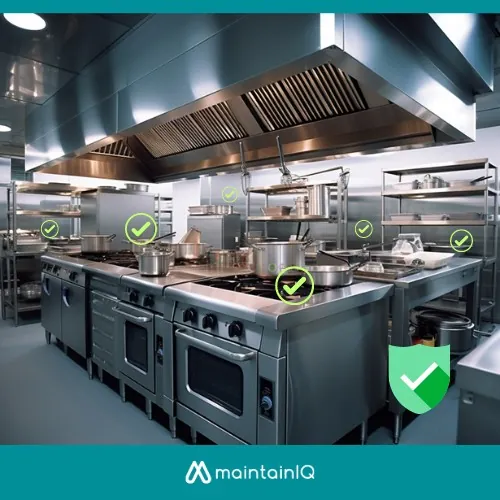
Maintaining a commercial kitchen is crucial for following health and fire safety rules, preventing accidents and keeping the kitchen clean.
Regular maintenance deals with issues before they become violations, and it saves you the cost of fixing them in a hurry after an inspection.
Well-maintained ventilation, gas connections and drains also stop bad smells and harmful fumes from building up in your kitchen, and they save you from surprise repair bills.
A stitch in time saves nine, and nowhere is that truer than in commercial kitchen maintenance. Stay ahead of problems to keep your kitchen safe and efficient.
Minimizing Unexpected Repair Costs
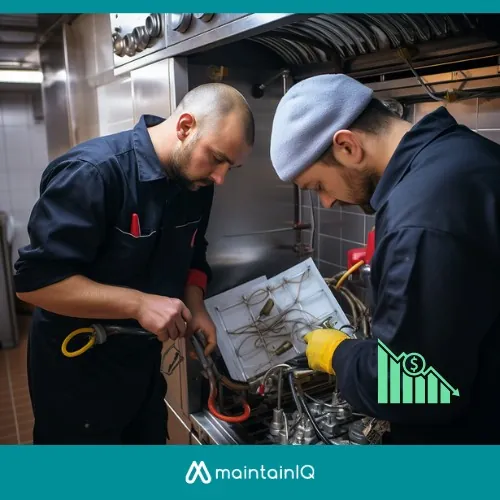
Regular maintenance of your kitchen equipment prevents surprise repair bills and keeps your kitchen running smoothly. This guide to preventive maintenance for restaurants walks through how to set it up. A plan helps you avoid costly repairs and budget shocks.
Here is why it is a good idea:
- Skilled technicians doing regular check-ups can spot minor issues before they become big, costly problems.
- Routine care helps your kitchen equipment run efficiently, which can extend its life and performance.
- Fixing issues early reduces the risk of expensive repairs or part replacements and prevents shutdowns.
Paying close attention to regular upkeep protects your investment and lets you keep offering quality service. That keeps your customers happy and coming back.
An ounce of prevention is worth a pound of cure, especially when it comes to kitchen equipment.
Retaining Customer Satisfaction and Trust

A clean, efficient kitchen keeps your customers happy and returning. A well-maintained kitchen means tasty, safe, high-quality food, which is exactly what diners are looking for.
Here is a breakdown of why a good maintenance routine matters:
| Aspect | Why Customers Care | How Regular Maintenance Helps |
|---|---|---|
| Service Reliability | No one likes unexpected closures. | Stops breakdowns before they happen. |
| Food Quality | Great food is why people dine out. | Keeps cooking equipment working well. |
| Safety and Hygiene | Diners want a clean place to eat. | Helps you meet health standards consistently. |
| Consistency | Customers expect the same good meal. | Avoids dips in food and service quality. |
| Reputation | Word of mouth can make or break you. | Keeps your good name intact. |
Use a commercial kitchen maintenance checklist to turn these goals into daily, weekly and monthly tasks, and bring in professionals for the service work your team cannot do safely.
Conclusion
Investing in a maintenance plan for your commercial kitchen is a wise move. It works like armor for your equipment and keeps everything running smoothly.
With a good maintenance plan, you prevent expensive repairs and build trust with your customers by always providing a safe, clean environment.
Regular upkeep keeps your kitchen running without hiccups and makes it more efficient and dependable. That shows up in your profits.
After all, a well-maintained kitchen is the backbone of any successful food service business.
MaintainIQ turns this plan into a schedule your team can follow. With its equipment maintenance software, you set a service frequency for each piece of equipment and see its last service, next due date and any overdue days, along with the preferred vendor, warranty dates and a full service history. Tasks can be assigned to a person or a role at each location.
Frequently Asked Questions
What Is the Importance of Planning in a Commercial Kitchen?
Proper planning is crucial for any food service business. A well-designed menu, a trained team and food safety checks lead to quality food, smooth operations and compliance with regulations. Every dish that leaves the kitchen reflects the planning behind it.
Why Is an Equipment Maintenance Plan Important?
Regular equipment maintenance reduces risks, improves performance and extends equipment life. Commit to a routine preventive maintenance schedule to prevent malfunctions, save money and reduce breakdowns. Preventive maintenance is an investment in your business.
Why Is It Important to Make Sure Commercial Kitchens Have a Cleaning Program in Place?
A clean kitchen is crucial for health standards, staff safety and customer satisfaction. It prevents contamination and shows that the kitchen is well managed.
Why Is It Important to Maintain Kitchen Equipment?
Regular maintenance of kitchen equipment prevents accidents, saves energy and extends its life. Treat your equipment like a valued team member, and it will keep your operations sharp and your food consistent.