Slash Your Restaurant’s Energy Bills With Preventive Maintenance Software
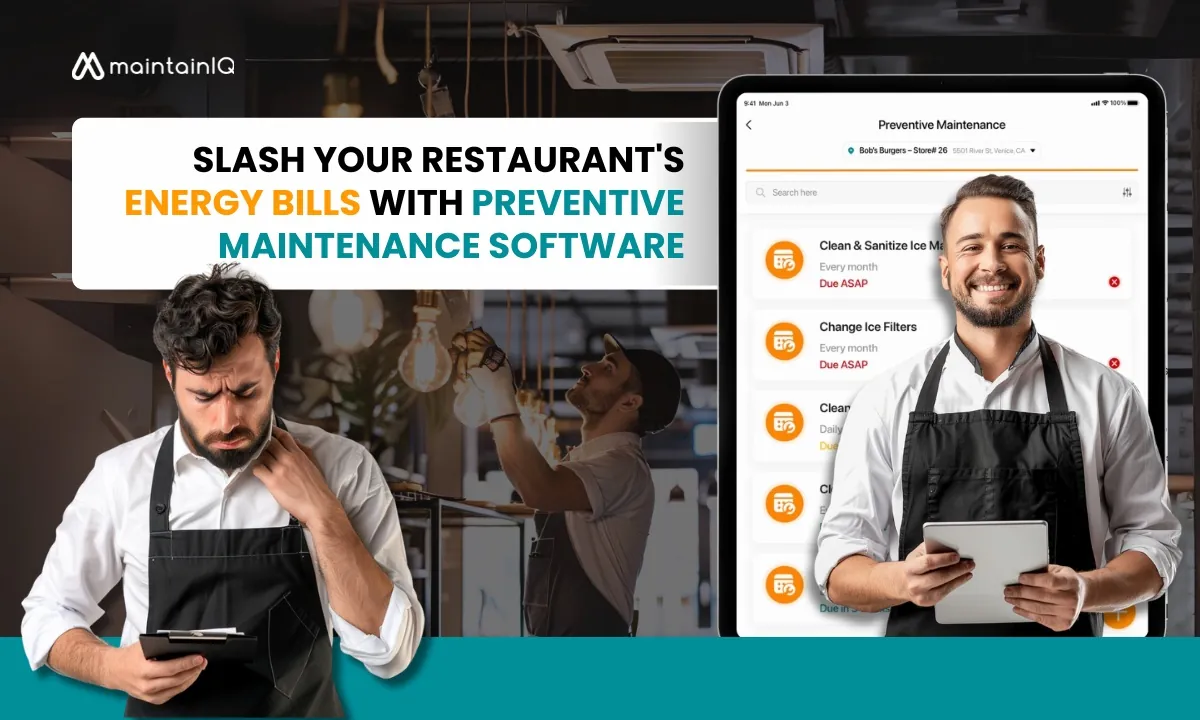
Slash energy bills with preventive maintenance software. See which kitchen equipment wastes the most power and how a simple PM schedule keeps it efficient.
Key takeaways
- Refrigeration runs around the clock, so dirty condenser coils and worn door gaskets waste energy every hour of the day.
- The cheapest energy wins are cleaning refrigerator coils, checking HVAC filters and calibrating thermostats on a set schedule.
- Start with an energy assessment to get a baseline, then put your highest-use equipment on the preventive maintenance schedule first.
- A sample schedule services refrigeration and dishwashers every 3 to 6 months and HVAC systems every 6 to 12 months.
On this page
You can slash energy bills with preventive maintenance software because it keeps the equipment that uses the most power (refrigeration, HVAC and the cooking line) clean, calibrated and serviced on time. Dirty condenser coils, clogged filters and drifting thermostats make machines run longer and harder, and you pay for every extra minute on your utility bill. The software’s job is simple: it remembers what is due, tells the right person, and shows you what got skipped.
How many dollars are slipping quietly out the back door of your restaurant, disguised as inflated energy bills? You’re likely no stranger to the cost of keeping your kitchen running, but a real share of those costs comes from equipment that is working harder than it needs to.
With preventive maintenance software, you keep equipment performing as designed and catch the hidden inefficiencies that have been draining your budget. This guide covers where restaurant energy goes, the maintenance tasks that save the most, what to look for in software, and how to build a simple energy-saving PM program.
The Energy Drain in Your Restaurant: Understanding the Problem
If you’ve been shocked by your restaurant’s energy bills, you may wonder where all that energy is going.
The truth is, your kitchen is harboring some serious energy hogs: refrigeration units that run 24/7 and older cooking appliances that silently drive up costs.
To manage your energy use, you first need to understand where the waste is happening and identify the hidden culprits behind your rising bills.
Hidden Energy Hogs: Identifying the Biggest Culprits in Your Kitchen
Energy waste in the kitchen is often overlooked, but it quietly drains your profits. Surprisingly, the biggest energy users aren’t always the most obvious ones.
The usual suspects:
- Aging, inefficient refrigerators and coolers with dusty coils or torn door gaskets
- Poorly maintained HVAC systems with dirty filters and belts that slip
- Pilot lights and burners left running all day when nobody is cooking
- Thermostats and oven controls that have drifted and no longer read true
To tackle these energy drains, you need to identify them first. That’s where preventive maintenance software comes in: it gives every piece of equipment a record and a schedule, so you can see which machines are overdue and plan targeted fixes.
Uncovering these hidden energy hogs puts you back in control of your energy use and your bills.
The Real Cost of Neglect: How Deferred Maintenance Impacts Energy Consumption
Behind the scenes, neglecting routine maintenance can seriously affect your restaurant’s profitability. Many of the common preventive maintenance scheduling mistakes come down to tasks that simply slip off the calendar.
When equipment isn’t properly maintained, it works harder, uses more energy and drives up utility costs. It’s like pouring money down the drain.
Neglected equipment also wears out faster, leading to expensive repairs or replacements sooner than necessary.
Preventive maintenance software helps you stay on top of upkeep, improve energy efficiency, and break this cycle of costly neglect before it eats into your profits.
Beyond the Bills: The Environmental Impact of Restaurant Energy Use
The energy drain in your restaurant is a problem for your profits and for the planet. As a restaurant owner, running an efficient kitchen is part of running a responsible business.
Every kilowatt-hour counts, and wasted energy adds to greenhouse gas emissions. Simple energy-saving habits for restaurants can noticeably reduce your carbon footprint.
Sustainable restaurant practices help the planet, boost your brand’s reputation, and appeal to eco-conscious customers.
By managing your energy use responsibly, you’re serving great food and contributing to a healthier future for the planet.
Preventive Maintenance: Your Secret Weapon for Energy Efficiency
The most reliable way to improve your restaurant’s energy efficiency is preventive maintenance.
Fixing small issues before they become costly problems leads to real savings and a longer life for your equipment.
Here’s how a proactive approach, plus a few easy maintenance wins, becomes your energy-saving toolkit.
The Proactive Approach: Stopping Problems Before They Start
Proactive maintenance helps restaurants prevent costly equipment failures and reduce energy waste. Regular maintenance helps you catch potential issues before they become major problems.
Here are a few examples of how preventive maintenance helps:
- Fewer equipment failures: Regular cleaning and inspections keep equipment running smoothly, reducing breakdowns and costly repairs.
- Energy efficiency: Energy checks and small adjustments keep equipment running as designed, which reduces energy waste and lowers bills. The payoff shows up on both the utility bill and the repair bill.
- Less downtime: Preventing issues before they happen keeps your restaurant running, which protects the guest experience.
Small Changes, Big Impact: Easy Maintenance Wins for Energy Savings
Small maintenance tasks can have a big effect on your restaurant’s energy use. Building regular kitchen equipment maintenance into your routine leads to steady savings.
Start by regularly cleaning refrigerator coils. It’s a simple task, and this guide to identifying and cleaning condenser coils walks you through it.
Next, check your HVAC filters (here is why restaurants should change their air filters more often) and calibrate your thermostats. These easy wins get you started.
| Quick win | Why it saves energy | How often to check |
|---|---|---|
| Clean condenser coils | Dust makes the compressor run longer to remove heat | Monthly look, clean as needed |
| Inspect door gaskets | Torn seals let cold air escape all day | Weekly |
| Change HVAC filters | Clogged filters make fans and blowers work harder | Per the manufacturer, often monthly in kitchens |
| Calibrate thermostats and oven controls | Controls that read wrong overheat or overcool | Every few months |
| Turn off idle burners and pilots | Flames left on heat the kitchen, not food | Every shift |
Plus, if you compare monthly utility bills before and after, you can track your progress and spot areas for improvement.
Don’t let energy bills hold you back. Take control with these easy maintenance wins.
Extending Equipment Lifespan: Getting the Most from Your Investment
Preventive maintenance extends the life of your equipment, delaying costly replacements and getting more from every dollar you spent on it.
A well-maintained kitchen offers:
- Better efficiency, with lower energy use and utility bills.
- Fewer breakdowns, because issues are fixed before they escalate.
- Longer equipment lifespan, which protects your investment.
Choosing the Right Preventive Maintenance Software: A Buyer’s Guide
When you set out to compare the features to look for in preventive maintenance software, the number of options on the market can feel overwhelming.
Focus on three things: the essential features, how the tool fits with the systems you already use, and mobile access for your team.
Essential Features to Look For
Look for software with the features that keep equipment maintenance on track and downtime low. Basic reminders are not enough; you need a tool that changes how maintenance actually gets done.
Here’s what to prioritize:
- Scheduling: Set a service frequency for each machine once, and the system works out the next due date and assigns the task. Good restaurant maintenance scheduling means nothing depends on someone’s memory.
- Due and overdue alerts: Clear signals when a task is coming up or late, so problems get handled before they become major headaches.
- Service history and reports: A record of what was done to each machine and when, so you can make informed decisions about repairs and replacements.
Integrating with Existing Systems: Streamlining Your Operations
Behind every successful restaurant is a web of systems and processes that keep operations running smoothly.
Before you buy, check how preventive maintenance software fits with those systems so your data stays consistent and nobody types the same thing twice.
Some tools connect to point-of-sale or accounting systems, and some do not. Ask each vendor what it actually connects to. For energy savings, what matters most is that equipment records, service history and due dates live in one place instead of in notebooks, texts and sticky notes. That alone cuts out most manual data entry and inconsistencies.
If you need the numbers somewhere else, an export to Excel usually covers it. That leaves you free to focus on what matters most: serving great food and giving guests a great experience.
The right preventive maintenance software helps you remove inefficiencies and lift your restaurant’s performance.
Mobile-First: Empowering Your Team with On-the-Go Access
Choosing preventive maintenance software with mobile access makes your team faster. When staff can see and update tasks from the kitchen floor, they respond sooner and fix more before it breaks.
Here’s what you can expect:
- Simple PM checklists: Staff open and complete checklists on a phone or tablet, so tasks get done on time.
- Issue reporting from the floor: Problems are logged the moment someone spots them, so a repair can be assigned quickly and downtime stays short.
- Due-date reminders: Everyone sees what is due today and what is overdue, without waiting for a manager to check a binder.
A maintenance routine that runs itself is one of the most dependable ways to slash those energy bills.
Building Your Energy-Saving PM Program: A Step-by-Step Guide
You’re ready to build an energy-saving PM program, but where do you start?
Begin with an energy assessment to get a baseline of your restaurant’s energy use. Think of it as a snapshot of where your power goes today.
Conducting an Energy Assessment: Knowing Your Baseline
A thorough energy assessment is the foundation of a successful energy-saving preventive maintenance (PM) program.
Measuring your baseline energy use is essential for improvement. An energy audit shows your high-use areas and how efficient your restaurant is today.
Here’s what you’ll discover:
- Where energy is being wasted: Are your lights, ovens, or HVAC systems energy hogs?
- Opportunities for improvement: Would upgrading to ENERGY STAR certified commercial kitchen equipment or tightening up HVAC maintenance make a real difference?
- A baseline for measuring progress: Track how well your energy-saving work is paying off and make decisions based on data.
With this knowledge, you can prioritize the changes that will lower your restaurant’s energy bills first.
Creating a Customized PM Schedule: Prioritizing Key Equipment
With your energy baseline set, create a preventive maintenance schedule for your restaurant that puts high-use equipment first.
Here’s a sample schedule:
| Equipment | Recommended PM Frequency |
|---|---|
| Refrigeration Units | Every 3-6 months |
| HVAC Systems | Every 6-12 months |
| Lighting Fixtures | Every 12 months |
| Dishwashers | Every 3-6 months |
Prioritize refrigeration units for regular maintenance to maximize energy savings and extend their lifespan. They run around the clock, so any loss in efficiency costs you every hour of the day. When a technician works on refrigerant lines, make sure they are certified under EPA Section 608, which covers refrigerant handling.
Empowering Your Staff: Training for Energy-Efficient Practices
Give your team the skills and knowledge to cut energy waste through proper equipment use and awareness.
Here’s what that looks like:
- Equipment training: Teach staff how to operate and care for equipment so it runs efficiently.
- Energy-awareness sessions: Show staff how their habits (doors left open, burners left on) affect energy use and utility costs.
- Recognition and incentives: Reward staff for energy-efficient habits to build a culture of sustainability and accountability.
Beyond the Bottom Line: The Added Benefits of Preventive Maintenance
While the financial savings from preventive maintenance (PM) are clear, the benefits go well beyond lower energy costs.
Regular equipment check-ups also reduce downtime and boost productivity, so you can spend more time on the food.
Minimizing Downtime and Maximizing Productivity
A broken cooler or a dead oven in the middle of service costs you sales and stresses your team. Preventive maintenance prevents these disruptions and helps you keep your ovens, coolers and fryers in top shape.
Here’s how:
- Minimize downtime: Find and fix issues before they become major problems.
- Maximize productivity: Keep your equipment in top shape, and your staff will work faster.
- Track your equipment: Keep a record of each machine’s service history and use it to decide when to repair or replace.
Improving Food Safety and Quality
A strong reputation is priceless, and one food safety incident can ruin it.
Preventive maintenance keeps coolers holding temperature and cooking equipment heating evenly, which lowers the risk of unsafe food and keeps dishes consistent.
Along with reducing energy use, regular maintenance keeps your kitchen safe and healthy.
Creating a Sustainable Restaurant: Reducing Your Environmental Footprint
Preventive maintenance helps reduce your restaurant’s environmental impact and supports your sustainability goals.
Here’s what that looks like:
- Lower energy use: Use less power and waste less.
- Better efficiency: Smoother operations, less downtime and better use of your resources.
- Improved brand image: Attract eco-conscious customers, build loyalty, and stand out from competitors.
Take Control of Your Energy Costs
You’re one step away from getting control of the energy costs that have been eating into your profits.
Here’s a simple way to start this month:
- List your biggest energy users: Walk the kitchen and write down every cooler, freezer, HVAC unit, oven, fryer and dishwasher.
- Set a frequency for each: Use the sample schedule above and each manufacturer’s manual.
- Assign an owner: Give every task a person or a role, so it is clear who does it.
- Knock out the quick wins: Clean coils, check gaskets, change filters and calibrate thermostats in the first few weeks.
- Compare your bills: Check your utility bills month over month to see what changed.
How MaintainIQ Streamlines PM for Optimal Energy Performance
Many of the biggest energy wasters in restaurants are equipment problems that regular maintenance would have prevented. MaintainIQ helps you keep that maintenance on schedule.
| Energy-Efficient Benefits | Your Current Struggle | MaintainIQ Solution |
|---|---|---|
| Reduced energy bills | Forgotten maintenance tasks | Preventive maintenance schedules with next due dates |
| Extended equipment lifespan | Inconsistent tracking | Overdue days and service history for each piece of equipment |
| Improved kitchen efficiency | Nobody knows who owns the task | Tasks assigned to a person or a role |
| Enhanced customer experience | Equipment downtime | Work orders created straight from the piece of equipment |
Our preventive maintenance app sets a service frequency for each machine, shows what is due and overdue, and records every service, so essential maintenance stops slipping. It is priced per location with unlimited users, and your team can use it on iPhone, iPad and Android.
Conclusion
Your restaurant’s energy bills can quietly drain your profits like a leaky faucet.
You can stem the tide with preventive maintenance software that keeps coils clean, filters fresh and thermostats accurate on a schedule nobody has to remember.
Doing this saves money and shows your commitment to sustainability.
Take control and slash energy bills with preventive maintenance software, and watch your bottom line improve.
Frequently Asked Questions
What Is the Typical ROI for Implementing Preventive Maintenance Software?
It depends on how much equipment you run, how old it is and how far behind maintenance is today. The savings come from lower utility bills, fewer emergency repairs and equipment that lasts longer. Compare a few months of utility bills and repair invoices before and after you start to see your own return.
Does Preventive Maintenance Software Require Extensive Technical Training?
No. Most tools are built for managers and line staff, not engineers. If your team can use a phone app, they can mark a task done, and managers can set up equipment and due dates in an afternoon.
Can Preventive Maintenance Software Integrate With Existing Restaurant Systems?
Some tools connect to point-of-sale, accounting or building management systems, and some do not. Ask each vendor what it actually connects to before you buy. For most restaurants, having equipment, due dates and service history in one place matters more than integrations, and an export to Excel covers most reporting needs.
How Often Should I Perform Energy-Related Preventive Maintenance Tasks?
Quick checks such as door gaskets, thermostat readings and visible coil dust can happen weekly or monthly. Plan full service on refrigeration and dishwashers every 3 to 6 months and on HVAC systems every 6 to 12 months, and follow each manufacturer's manual where it asks for more.
Are There Any Specific Certifications for Energy-Efficient Restaurant Operations?
Look for ENERGY STAR certified equipment when you replace appliances, and consider programs like Certified Green Restaurant if you want outside recognition. Both can help lower energy use and show guests you take sustainability seriously.